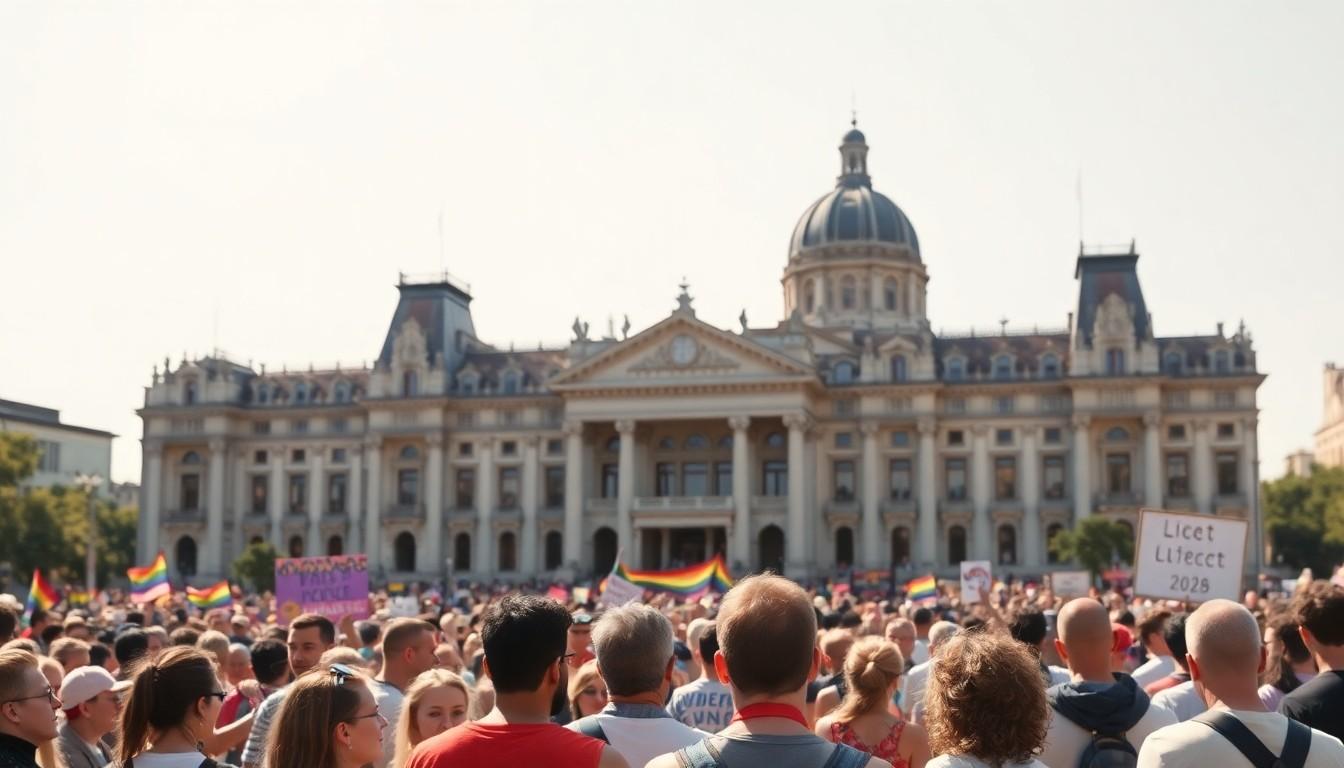
Celebrate, reflect, and keep pushing: tens of thousands turned out for Budapest Pride 2026, the first large-scale march since Viktor Orbán’s government fell , a moment that’s equal parts relief and reminder for Hungary’s LGBTQ+ community.
Essential Takeaways
- Huge turnout: Estimates put the crowd in the tens of thousands, with some journalists and officials saying around 100,000 people joined the march.
- First since change: This was the first major Pride after the Orbán era ended, and many saw it as a public reclaiming of assembly and visibility.
- Youthful energy: The march felt young and buoyant, with a festive, colourful atmosphere and a hopeful mood.
- Rights still in limbo: Legal and policy rollbacks enacted under the previous government haven’t been fully reversed, so celebration came with cautious demands.
- International attention: EU figures and foreign media were present, signalling wider political and symbolic significance beyond Hungary.
A massive, colourful show of relief and pride
The opening image was striking: a river of flags, banners and faces spilling through Budapest, full of colour and sound. According to international press coverage, tens of thousands marched, and one photographer estimated crowds close to 100,000. Journalists from outlets across Europe noted a buoyant, almost festival-like mood, but with a clear political edge.
People celebrated what felt like a regained freedom to gather and be seen. Yet beneath the confetti there was a familiar tension , joy tempered by the knowledge that legal and institutional changes made in the name of “protecting children” are still waiting to be undone.
Why this Pride felt different from past years
This year’s march wasn’t just another parade; it was the first large-scale public demonstration of LGBTQ+ visibility since a government change. Reports emphasised how the turnout reflected relief after years of restrictions and antagonistic rhetoric. European officials attended and commentators framed the event as part celebration, part test of Hungary’s new political climate.
The crowd skewed young, and many participants told reporters they felt freed to express themselves. Still, activists warned that reversing the previous government’s laws will take sustained pressure and legal work, not just a single weekend of euphoria.
What remains undone , and why it matters
Legal clarity is still missing. The European Court of Justice and EU bodies have already weighed in on Hungary’s earlier measures, and activists point out that court rulings don’t automatically restore everyday rights. Coverage from major papers noted calls for concrete steps: restoring access to information, ending discriminatory restrictions, and ensuring equal protections in education and public life.
If you’re wondering what to watch next, look for government statements, parliamentary proposals, and follow-up protests or advocacy campaigns. Change at this stage will be incremental and often technical, but it’s exactly where sustained civic energy counts.
The international spotlight , a boost and a pressure valve
International media and EU officials made a point of being in Budapest, and that visibility matters. It sends a message that the struggle is not only national, and it adds diplomatic pressure for reforms to be implemented. Coverage framed the march as a barometer of how quickly Hungary might return to more mainstream European norms on civil liberties.
That said, outside attention can’t replace local organising. Activists welcomed solidarity but also stressed that long-term progress will be driven by Hungarian groups, courts, and politicians.
Practical takeaways for supporters and visitors
If you want to support Hungary’s LGBTQ+ movement, small actions add up: donate to local NGOs, amplify their requests on social media, and keep an eye on legal developments reported by credible outlets. For visitors planning to attend future events, travel with a light bag, wear sensible shoes, and respect local organisers’ guidance , the atmosphere is festive but public spaces are still where rights are defended.
And remember: celebration and caution often live together in movements. This Pride was proof of both.
It's a small change that can make every march count.
Source Reference Map
Story idea inspired by: [1]
Sources by paragraph: