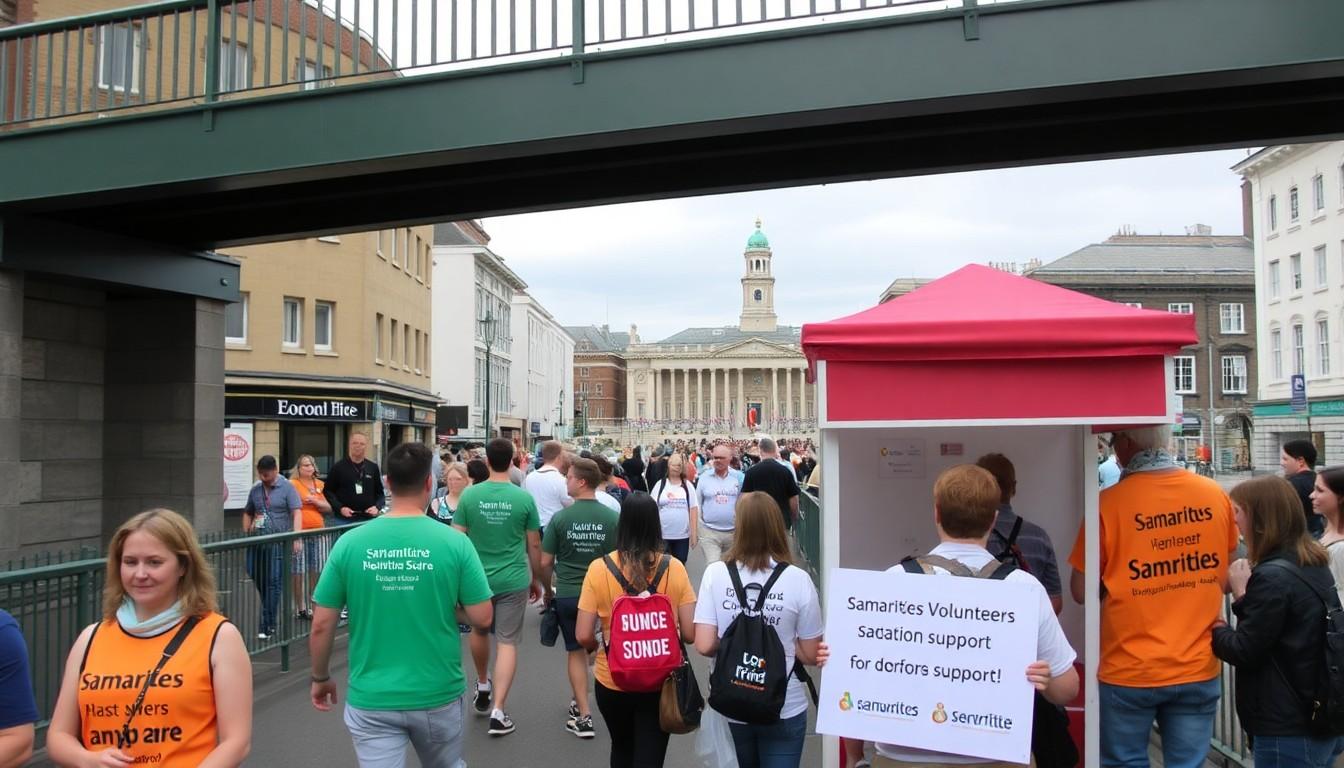
Spot a friendly face and a listening ear at Dublin Pride , Samaritans will be on Capel Street Bridge and Merrion Square to offer free, confidential support to anyone who needs it during the celebrations. It’s practical, visible help where crowds, emotions or old wounds might make Pride feel hard.
Essential Takeaways
- Where to find them: Samaritans will be on Capel Street Bridge on Friday night (26 June) and all day Saturday (27 June), plus at the Pride Parade endpoint in Merrion Square.
- What they offer: Face-to-face, non-judgemental listening for as long as someone needs, from trained volunteers.
- Proven demand: Last year volunteers supported around 250 people at Dublin Pride, often on topics like loneliness and family strain.
- Wider access: Samaritans are also available 24/7 by freephone 116 123 and online resources for those who prefer remote support.
Why Samaritans at Pride matters , not everyone finds Pride easy
Pride is loud, colourful and freeing for many, but it can also bring up big feelings or make crowds feel overwhelming. According to Samaritans’ Dublin team, having volunteers on-site offers a softer option: a quiet, anonymous chat with someone who’ll genuinely listen. That matters when you’re in the middle of a celebration but not feeling celebratory.
The presence of trained listeners on Capel Street Bridge and in Merrion Square gives a visible safety net. It’s practical: you don’t need an appointment, you don’t need to explain who you are, and you can step aside for a moment of calm. For people struggling with isolation or family conflict, that immediate human contact can be a low-barrier lifeline.
What to expect if you approach them , simple, patient, and private
Volunteers are there to listen, not to advise or press you into action. They’ll sit with whatever you share and offer a steady, patient ear for as long as it takes. Last year, volunteers spoke with hundreds of people about a range of issues, from loneliness to worries about acceptance.
If you prefer not to talk face-to-face, Samaritans also remind people about their 24/7 helpline and online options. It’s all about choice: pick the way of talking that suits your mood and energy on the day.
How Samaritans’ festival work fits into a bigger picture
Dublin’s Festival Branch is part of a wider festival programme , the group turns up at roughly seven events each summer, from music festivals to other Pride gatherings. This on-the-ground approach reflects a shift in support services: meeting people where they are, in noisy or intense environments, rather than waiting for them to seek out help later.
Their presence at events also highlights long-standing ties with the LGBTQ+ community. Samaritans began in the 1950s offering confidential support to people wrestling with sexual orientation and gender identity, and that commitment continues today. At Pride, volunteers bring both that history and up-to-date training to help attendees feel seen.
Practical tips for anyone heading to Pride who might need support
If you think you might need a chat during the weekend, plan a simple move: note the Capel Street Bridge and Merrion Square points, carry a small phone-charging pack in case you need to call later, and let a friend know you might take a short break from the parade. If crowds trigger you, step to the side and ask for a quiet spot , volunteers can help with that.
For people who’d rather not speak in person, save the number 116 123 or visit samaritans.ie before you head out. There’s no hierarchy of need here; reaching out is the important bit, whether it’s in person, on the phone or online.
Looking ahead , small gestures, big effects
Having Samaritans visible at Pride is a small organisational choice that can make a big difference to attendees’ wellbeing. It softens the edge of a big public event and offers a reminder that practical support is nearby. If nothing else, it gives people permission to admit they’re not okay , and that acknowledgement is often the first step to feeling better.
It’s a simple presence with a serious purpose: to listen, without judgement.
Source Reference Map
Story idea inspired by: [1]
Sources by paragraph: