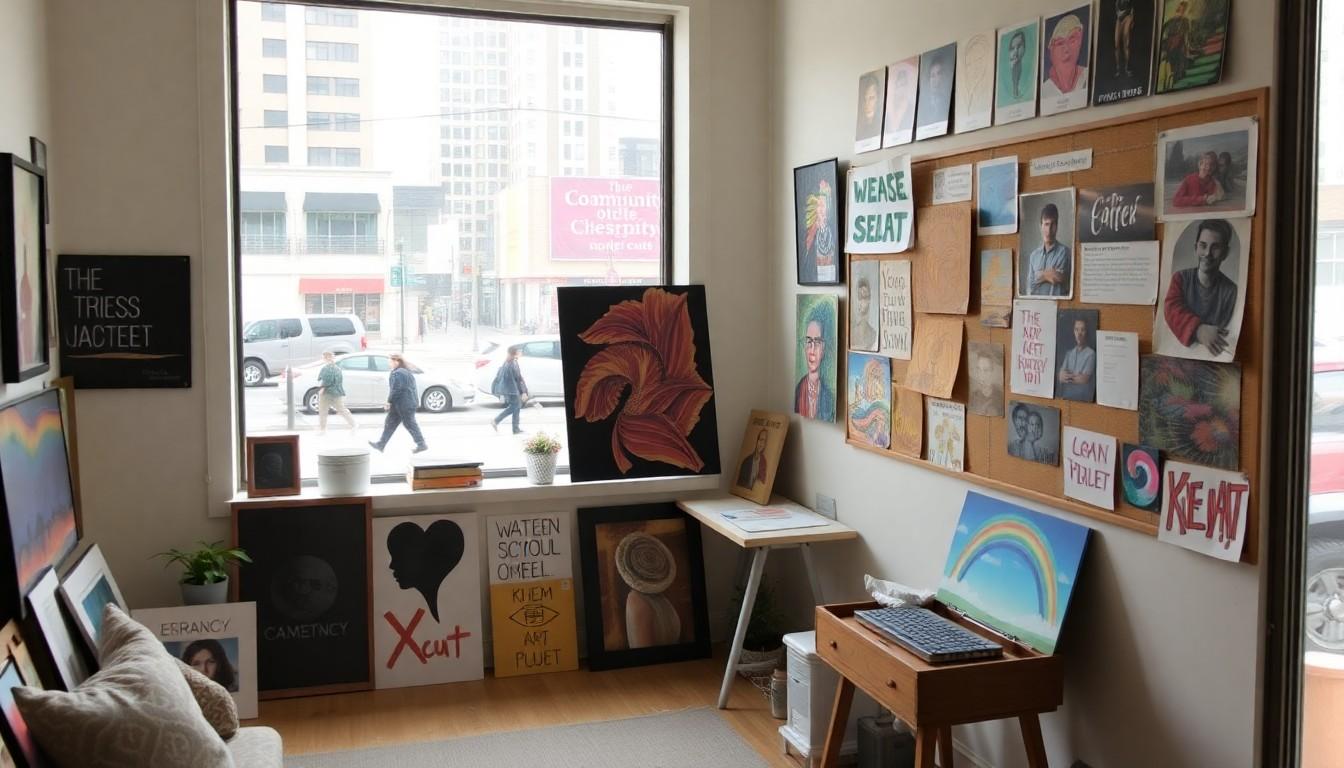
Notice how creative practice can become both witness and resistance , queer and gender-diverse therapists are reshaping studios into spaces of belonging, repair, and practical care where identity, history, and materials all matter. This matters for clinicians, clients, and anyone using art to stay connected to joy, memory, and survival.
Essential Takeaways
- Studio as witness: Artmaking can help people shape experiences they can't yet name, offering sensory pathways to identity and belonging.
- Queer kinship matters: Bringing queer histories, images, and cultural forms into practice expands recognition without assuming shared experience.
- Community is clinical: Chosen family, mutual aid, and creative gatherings distribute care beyond the therapy dyad and reduce isolation.
- Risk and specificity: Trans and gender-diverse young people often bear the heaviest weight of political restrictions on care.
- Practice shift needed: Training should emphasise reflexive artmaking, accountability, and studio response-ability over checklist competence.
Why the studio matters , art as early language and witness
Art was sometimes the first place clients saw themselves before words did, and that tactile, visual truth still holds power. Colour, form, and texture let people give shape to feelings that are otherwise nameless, which can be quietly liberating. The therapist’s job is to protect that experiment: to keep materials accessible, interpretations open, and the client’s authority intact. According to recent practice conversations, this trust in the studio makes therapeutic work feel less like interrogation and more like discovery. Practical tip: set up a small, low-pressure space with varied materials , clay, collage, paint , and let a client lead the process. The goal is making possible, not proving anything.
Bringing queer lineage into practice without assuming sameness
Queer cultural forms , songs, archives, images, rituals , can act like anchors in the studio, offering clients reference points they might otherwise lack. Therapists can introduce these resources gently, recognising that shared identity doesn’t equal identical experience. Ethical self-disclosure matters here: practitioners can mention queer kinship or influences while keeping the client’s process central, using personal artmaking and supervision to sort what belongs to the therapist. If you’re training or supervising, include exercises that map where your assumptions come from and how they shape what you notice in a client’s work.
Community-making as clinical care, not a cure-all
Chosen family, mutual aid, and creative networks do practical and emotional labour that therapy alone can’t provide. Community can witness, remember, and help people imagine futures they might not see on their own. But communities are complex; they can reproduce exclusion. Clinicians should help clients discern which spaces offer safety, recognition, and access , not just urge them to “find community.” Practical approach: co-create a checklist with clients that assesses safety, accessibility, and cultural fit before recommending groups or collectives.
Where the weight falls: political context and diverse vulnerabilities
In many places, policy and institutional decisions make access to care precarious, especially for trans and gender-diverse young people and for those without money or mobility to seek alternatives. That cumulative strain shows up as fear, grief, anger, and exhaustion. Different generations carry different histories: elders often bring survival knowledge and organising skill, while younger people may lean on online networks for identity development. Clinicians need to listen for these life-course rhythms. Clinically, prioritise concrete supports , signposting resources, helping with advocacy, and building networks of referral , as part of therapeutic care.
Rethinking training: from checklists to studio response-ability
What needs to change in professional education is clear: competence can’t be a tick-box. Trainers and supervisors should cultivate sustained reflexivity, encouraging clinicians to examine how their own histories shape interpretation. Studio response-ability means staying attentive to the client, the artwork, materials, and the social conditions that shape the work, without imposing predetermined meanings. Practically, that looks like reflexive artmaking exercises, robust supervision, and consultation that centres client authority. A simple training exercise: ask trainees to make a short piece about an assumed norm and then reflect on what surfaced, where biases appeared, and how they'd hold that knowledge ethically in session.
How people can use expressive practice outside therapy
You don’t need a therapist to benefit from creative practice. Free-form making can reconnect you with pleasure, contain grief, and make public or private protest possible , even when recognition is withheld elsewhere. Start small: a playlist that becomes a collage prompt, a five-minute daily doodle, or an archive-based project that links you to queer ancestors. These practices don’t have to be polished or political to matter; they simply need to be honest. If safety is a concern, keep work private or share within a trusted circle. Pleasure and small acts of presence are political too , they sustain the capacity for relationship and resistance.
It's a small change in approach that can make every studio, group, or sketchbook a safer place to belong.
Source Reference Map
Story idea inspired by: [1]
Sources by paragraph: