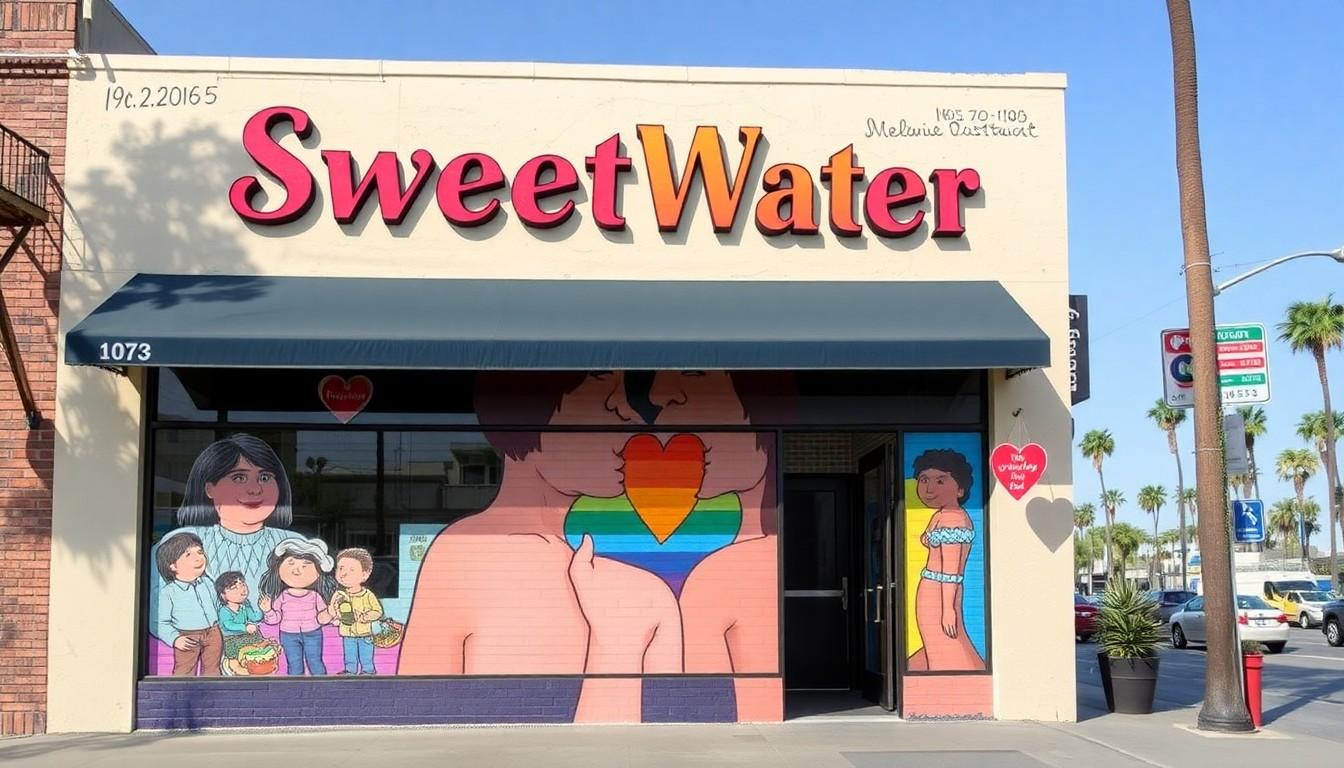
Shoppers and night owls are pausing to admire a new, 20-foot mural celebrating lesbian love and community in West Hollywood’s Rainbow District, unveiled outside the recently opened lesbian-focused venue SweetWater; it matters because public art still shapes who feels seen in our streets.
Essential Takeaways
- Big and visible: The mural is roughly 20 feet high and sits on the exterior of SweetWater, a new lesbian-centred bar and nightclub in West Hollywood.
- Artist-led: Painted by fine artist and muralist Melanie Posner, the piece grew from a public casting call and photoshoots; it’s personal, joyful and grounded in real people.
- Community signal: The artwork arrives as part of West Hollywood’s longstanding public art tradition and marks added lesbian-focused nightlife in a major LGBTQ+ neighbourhood.
- Emotional texture: Posner described the project as both a professional milestone and a deeply moving, personal achievement, noting she came out as a teen.
- Cultural moment: With dedicated lesbian spaces still relatively rare nationwide, the mural functions as representation, celebration and a new photo stop for visitors.
A bright, emotional welcome to SweetWater
The mural greets visitors with a splash of colour and an unmistakable warm, proud tone that reads like a welcome hug. Melanie Posner, the artist behind the work, has said this project moved her to tears, which comes through in the piece’s tender, intimate energy. According to local reports, the mural was commissioned by SweetWater as a permanent exterior landmark for the venue. For residents and tourists alike, it’s the kind of artwork that invites a double-take, a selfie and a conversation.
How the mural came together , from casting call to public display
This didn’t happen overnight. Posner ran a public casting call and staged photoshoots to capture authentic moments of queer affection and friendship that anchor the mural’s imagery. She’s credited SweetWater with supporting her creative process from concept to completion, and that collaborative approach is visible: the figures feel lived-in and specific rather than generic. Local outlets note the project’s development began earlier in the year, reflecting careful planning rather than a last-minute publicity splash.
Why location matters , the Rainbow District as a living backdrop
Placing a large-scale sapphic mural in West Hollywood’s Rainbow District is a deliberate act of visibility. This neighbourhood is internationally known for LGBTQ+ history and nightlife, and public art has long helped tell that story. City tourism and council sources track the area’s identity through murals, events and venues, and this new piece slots neatly into that tradition. For many, seeing lesbian love highlighted on a prominent wall in the gayborhood is both symbolic and practical , it signals welcome, belonging and a sense that lesbian culture has a visible home.
What SweetWater’s opening means beyond the mural
SweetWater’s grand opening over Pride Weekend put a physical venue behind the imagery, creating a one-two cultural moment: new nightlife plus a new landmark. Coverage of the launch describes the bar as one of the few dedicated lesbian spaces in the area, which makes the mural more than decoration , it’s an announcement. For patrons who’ve missed dedicated spaces, the combination of club and mural offers a place to gather, be seen and make memories with a backdrop that honours their stories.
Choosing art that represents , practical notes for other venues
If you run a venue and want a similar impact, start with community-led casting and design so the end result feels authentic; Posner’s approach shows how inclusive processes strengthen the work. Think about scale and sightlines too , a high, visible wall becomes part of the neighbourhood fabric. And don’t underestimate the ripple effects: murals become meeting points, social-media destinations and, importantly, proof that visibility can be made permanent.
It's a small change that helps make every visit feel more visible, joyful and rooted in community.
Source Reference Map
Story idea inspired by: [1]
Sources by paragraph: