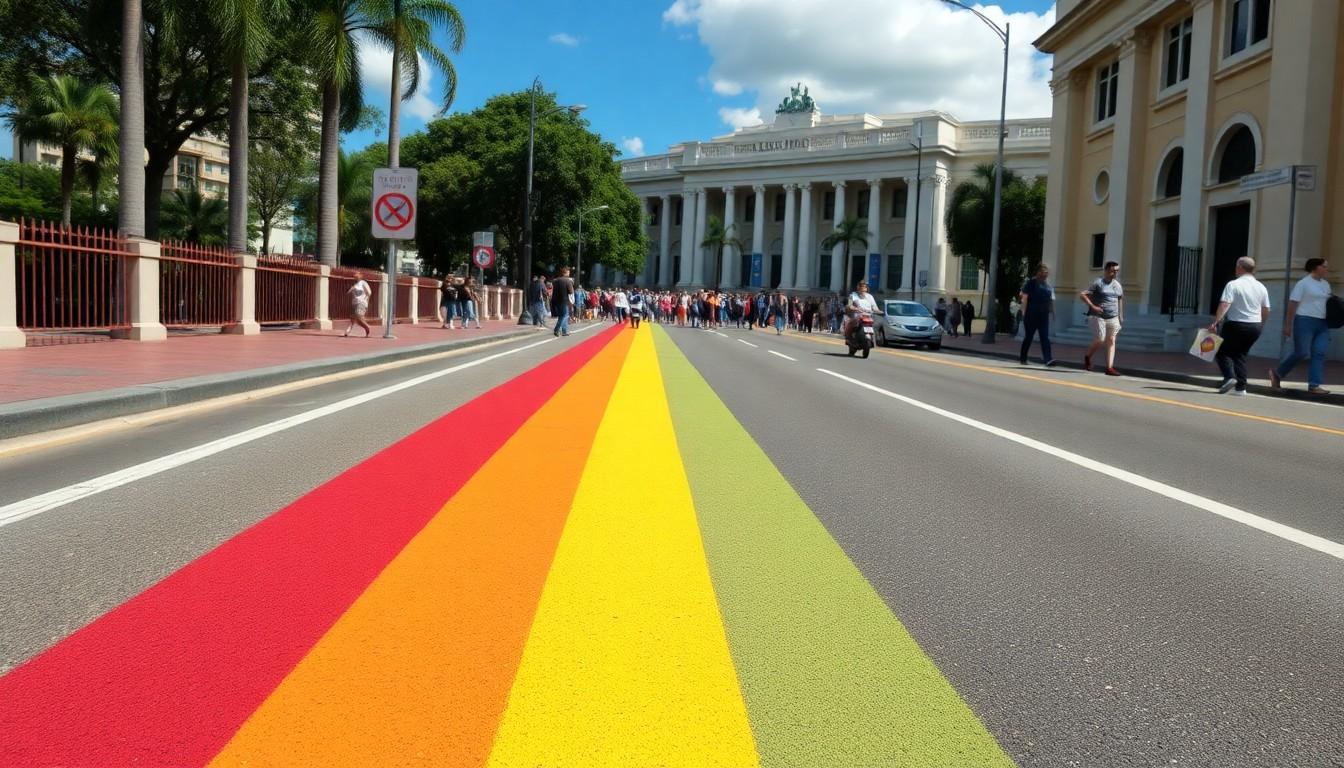
Shoppers and residents are stopping to look , Tabaco City’s new Rainbow Road has turned a crescent-shaped service lane into a bold, sweeping statement of acceptance, thanks to volunteers, artists and city leaders. The installation is one of the country’s largest Pride projects and a visible invitation to talk about inclusivity where people live.
Essential Takeaways
- Community-powered project: Volunteers, artists, students and advocates joined local government calls to paint the service road into a rainbow, creating a striking visual along the Edcel C. Lagman Legislative Building.
- Quick, colourful work: The painting took about a week to complete and now serves as a venue for civic events, including a ceremonial Walk with Pride and a Pride march.
- Symbol over statute: Tabaco’s Rainbow Road celebrates belonging, though the city itself has not yet enacted a local anti-discrimination ordinance specifically for the LGBTIQ+ community.
- Legal protection nearby: Residents are covered by the Albay provincial Anti-SOGIE Discrimination Ordinance passed in 2021, offering some legal backing despite the lack of a city-level law.
- Civic theatre and morale boost: The installation acts as a public reminder that visibility can shape everyday conversations about respect, unity and diversity.
A splash of colour with a civic heartbeat
Tabaco’s crescent service road now reads like a public mural you can walk on, not past. The paint is bright and visible from the legislative building, and locals say the change is hard to ignore , good for selfies and better for sparking conversation. According to the city’s vice mayor, the aim was more than decoration: it was to create a visible statement of respect and equal opportunity for all.
The project was organised as a community activity called Paint with Pride, and volunteers turned out in force. The work was finished in roughly a week, demonstrating how quickly a small civic intervention can alter the mood of a neighbourhood.
Events and visibility: Walk with Pride and the march
Tabaco used the new road as a stage, launching it formally with a Walk with Pride: Walk for Inclusivity ceremony and later hosting Pulse of Pride: Pride March 2026 along the colourful band. These events made the installation both symbolic and functional, turning a painted lane into a gathering place for celebration and solidarity.
Local leaders leaned into that symbolism during council sessions, framing the road as a reminder that acceptance is the root of peace. For residents, the road provides a public backdrop for gatherings and a daily nudge toward greater visibility.
Law and symbolism: what the painting can , and can’t , do
Painted stripes can change the feel of a street, but they don’t create legal protections. Tabaco City hasn’t passed its own anti-discrimination ordinance aimed specifically at the LGBTIQ+ community yet, so the Rainbow Road functions mostly as a cultural statement rather than a substitute for policy.
That said, people in Tabaco are not without legal cover. The province of Albay passed an Anti-SOGIE Discrimination Ordinance in December 2021, which extends protections to residents. It’s a reminder that symbolic acts and legal instruments work in different ways , visibility can push politics, but law provides enforceable rights.
Why quick, public art matters in local politics
Public painting projects are low-cost, high-visibility ways for cities to signal values to residents and visitors. They can humanise policy debates and give momentum to quieter campaigns for equality. Tabaco’s Rainbow Road shows how civic theatre , the kind people can walk across , helps make an abstract idea like inclusivity feel tangible.
If you’re thinking of creating something similar in your area, keep it community-led, plan for durable materials and tie the artwork to events so it moves from spectacle to social habit.
What’s next for Tabaco and similar initiatives
This kind of project tends to lead to questions: will the city follow the symbolism with local ordinances? Will maintenance keep the colours fresh? And can the momentum born from painted lanes translate into lasting policy change?
For now, Tabaco’s Rainbow Road is a vivid, public invitation to treat difference with dignity. It’s visible, photogenic and immediate , and for many residents that’s already meaningful.
It’s a small change that can make everyday life feel more inclusive.
Source Reference Map
Story idea inspired by: [1]
Sources by paragraph: