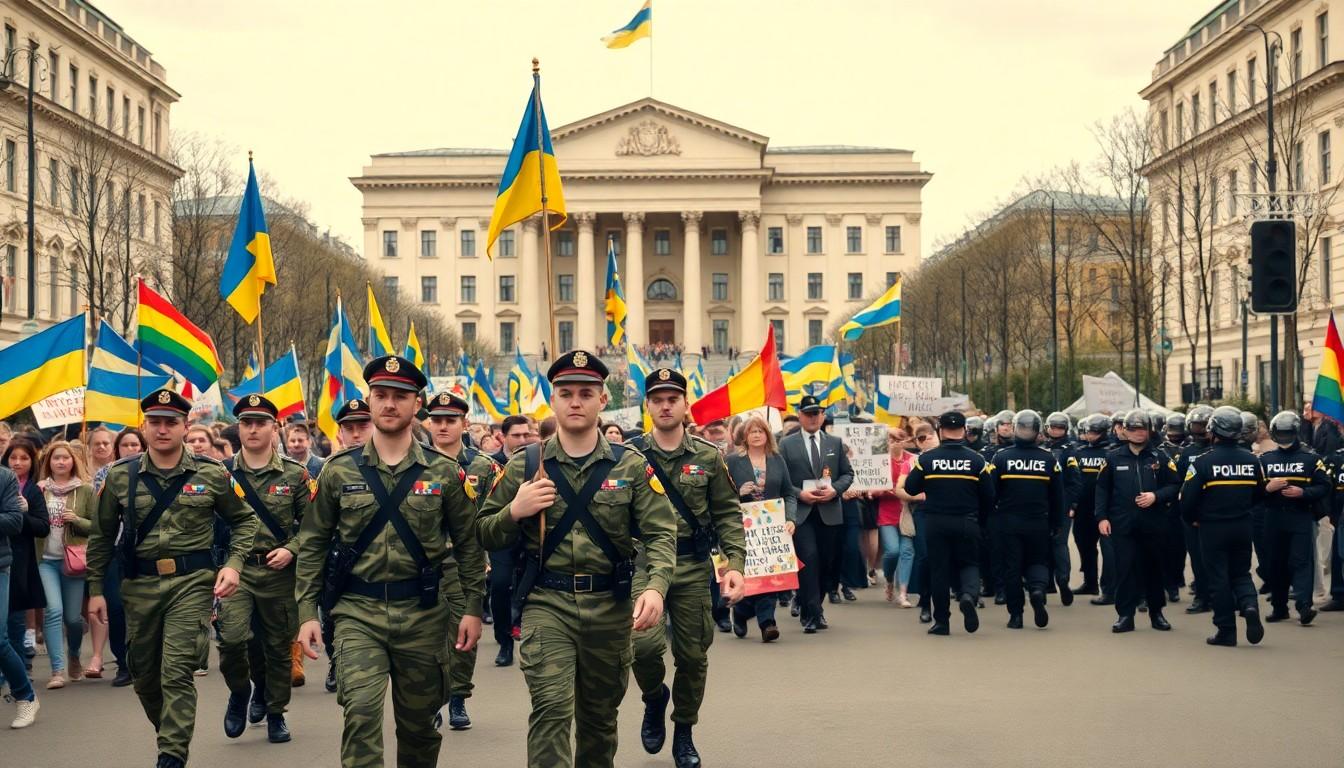
Shoppers aren’t the story this summer , Ukrainians are. Thousands gathered in Kyiv on 21 June for the 10th Kyiv Pride, led prominently by queer soldiers and veterans demanding legal recognition and protections while the country is still under martial law. It mattered because it mixed frontline sacrifice with calls for civilian rights, under the shadow of air‑raid alerts.
Essential Takeaways
- Largest turnout since 2022: Organisers said about 5,000 people marched, the biggest Kyiv Pride turnout since Russia’s full‑scale invasion. It felt both solemn and defiant.
- Soldiers at the front: LGBTQ+ service members and veterans carried photos and names of comrades killed in combat, emphasising equal rights for those who fight for Ukraine.
- Security and tension: Heavy police presence, anti‑riot barriers and a simultaneous far‑right counter‑demonstration underlined ongoing social friction.
- Air‑raid disruption: The march concluded amid drone attacks and air‑raid alerts, with people told to shelter, illustrating the odd coexistence of protest and wartime reality.
- Policy spotlight: Activists renewed demands for same‑sex partnership recognition and better hate‑crime protections while Kyiv seeks to bolster its democratic credentials.
Soldiers leading Pride gives the day a different kind of courage
The strongest image from Kyiv Pride was of uniformed queer soldiers and veterans carrying portraits of fallen comrades, a stark, moving mix of grief and pride. It made the march feel less like a festival and more like a civic claim: those who defend the country want the same rights as everyone else.
According to local reporting, organisers framed the event as a unifying act, bringing activists, diplomats, allies and the military together. That unity is as much symbolic as tactical , it signals to domestic sceptics and international partners alike that LGBT+ rights are part of Ukraine’s vision for its future.
For readers wondering what this means practically: soldiers are asking for legal recognition of partnerships so benefits, hospital visitation and inheritance rights aren’t lost when they return from the front. It’s a straightforward ask with complex social baggage.
A march under martial law , why Kyiv still allowed it
It’s unusual to see such large public gatherings when martial law is in force, but organisers and authorities agreed to allow the procession. That decision speaks to Ukraine’s desire to showcase democratic norms even during war.
Reports note a heavy police presence and anti‑riot fencing to keep far‑right counter‑protesters at bay. For many attendees the security felt reassuring; for others it was a reminder that progress isn’t linear. The contrast between celebrating civil rights and protecting those celebrations from violence was visible all day.
If you’re thinking of attending similar events in fraught settings, check official channels for reroutes and shelter instructions, and leave bulky items at home to speed security checks.
Counter‑protests and the domestic culture war
A crowd of “traditional family values” supporters and far‑right activists staged a counter‑demonstration earlier the same day, underlining a persistent culture war. Speeches at that gathering leaned on religious language and family rhetoric, the kind of framing that resonates with conservative voters.
Observers have pointed out that Ukraine’s political and social landscape has shifted since 2022. According to analysts, the war has in some ways accelerated acceptance , communities close to the frontlines often report more pragmatic attitudes , while also hardening certain nationalist elements opposed to liberal reforms.
If you’re tracking how social attitudes change in crisis, this is a vivid case: shared danger can create solidarity, but it can also magnify grievances that politicians and activists must navigate carefully.
Air‑raid alerts interrupted the march , life in two realities
Midway through the event, attendees were asked to shelter as air‑raid sirens sounded and drone attacks were reported over Kyiv. That jolt from parade to panic is the daily reality for many Ukrainians: civic life and wartime precautions coexisting uneasily.
Organisers managed to end the march safely, and many people dispersed to subway stations and other shelters before the alerts cleared. The imagery of people singing or holding banners while sirens wailed in the background is likely to stay with international audiences.
For humanitarian groups and campaigners, that dual reality complicates mobilisation but also strengthens arguments: people are fighting and dying for a country they want to be inclusive. It’s a potent moral claim on both domestic politics and international sympathy.
What comes next , law, recognition and international eyes
Kyiv Pride’s demands are concrete: legal recognition of same‑sex partnerships, better hate‑crime protections and equal access to benefits , especially for service members. President Zelensky has signalled support for expanding LGBT+ rights this month, which gives activists momentum, but legal change takes time and political capital.
International attention matters. Ukraine’s global image as a democratic, pluralistic state influences aid, partnerships and support. Pride marches like this one are both a domestic plea and a message to allies: Ukraine is still fighting for the values it says it defends.
If you’re wondering how to help from abroad, trusted NGOs and human‑rights organisations are a good place to start; they can channel support for legal aid, shelters and advocacy efforts that translate public sympathy into tangible change.
It's a small change that can make every march and service member safer.
Source Reference Map
Story idea inspired by: [1]
Sources by paragraph: