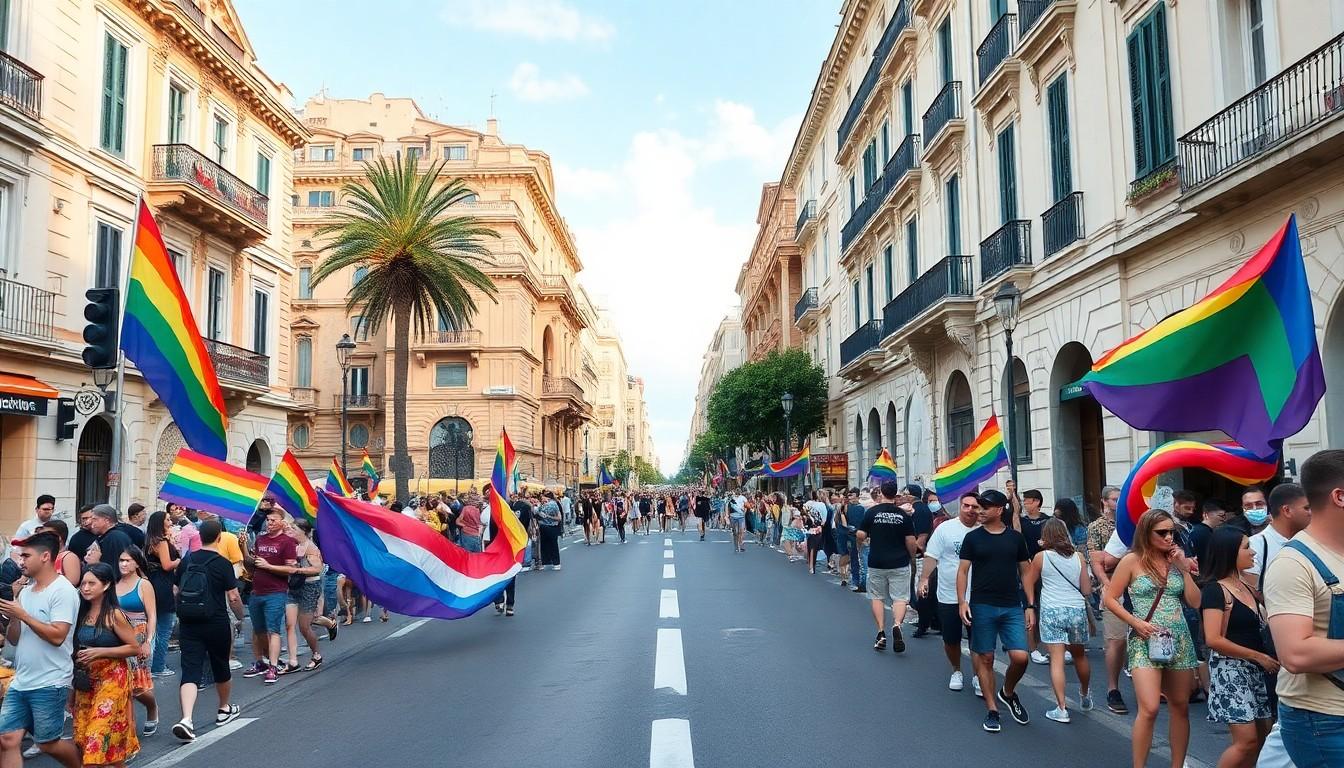
Watchers of queer politics in Naples are seeing Pride split into two distinct parades this June, and it matters: one mainstream, sponsored parade marks 30 years on 27 June, while a grassroots Arrevutamm Pride marches on 20 June claiming a transfeminist, anticapitalist agenda and grassroots democracy.
Essential Takeaways
- Two Prides: Naples will host the official Napoli Pride on 27 June and Arrevutamm Pride on 20 June, reflecting a clear organisational split.
- Different vibes: The official parade leans institutional and sponsor-friendly, while Arrevutamm positions itself as queer, transfeminist, and anti-capitalist, with a louder protest tone.
- Core disputes: Tensions centre on transparency, decision-making, representation of trans people, and political stances including solidarity with Palestine.
- Grassroots methods: Arrevutamm stresses open assemblies and a political manifesto; organisers say anyone can join meetings without formal adhesion.
- Community impact: The split highlights a wider debate across Italy about whether Pride should celebrate or confront, and how to keep material demands visible.
A clear split , two dates, two approaches
Naples will see two different Pride events this month, and the contrast is almost tactile: one feels curated, polished and backed by partners; the other aims to be raw, noisy and explicitly political. According to local organisers, Arrevutamm grew from months of friction with the historic Napoli Pride coordination, and insists its parade revives a protest-first spirit with visible solidarity lines. Observers say this isn’t just local drama , it’s a pattern in many cities where activists debate the balance between visibility via big events and rooted, material demands.
Why organisers broke away , more than one issue
The split did not appear overnight. Arrevutamm activists point to a string of grievances: opaque finances, centralised decision-making and what they see as insufficient attention to trans voices and to international solidarity. The Palestinian question became a flashpoint, but organisers are clear it was one of several unresolved issues. They say their project answers years of unsuccessful attempts to reform the traditional coordination from within, and now seeks a new, participatory model built around collective assemblies.
What each Pride says it stands for
The official Napoli Pride frames itself as intersectional, antifascist and transfeminist, noting alliances with groups like Antinoo Arcigay Napoli and regional partners. It also marks the city’s 30th anniversary of the first parade, with a larger calendar of events leading up to the 27 June march. Arrevutamm, by contrast, published a manifesto and speaks in the language of struggle , housing, healthcare, work rights and anti-capitalism , arguing that Pride should be a tool for demanding tangible change rather than a sponsor-friendly showcase.
How this affects people on the ground
For participants the choice can feel personal: some will prefer the scale and visibility of the main parade, others the radical inclusivity and bottom-up structure of Arrevutamm. Practical tips: check routes and schedules, look at each event’s platform to see whether your concerns , medical access for trans people, workplace discrimination, international solidarity , are listed, and consider joining an assembly if you want to shape the programme. If you’re coming as an ally, listen first; local groups can tell you where your presence is most needed.
Bigger trend , institutionalisation versus reclamation
Naples is an emblematic case of a national conversation: many Pride movements in Italy and beyond wrestle with sponsorships, celebrity stages and the risk of depoliticisation. Some organisations defend partnerships as necessary to fund programming and visibility, while breakaway groups argue that such models can dilute demands. The outcome in Naples could influence other cities where activists are weighing whether to reform from within or forge new paths.
It's a small change that can make every march mean more to those who need rights, care and recognition.
Source Reference Map
Story idea inspired by: [1]
Sources by paragraph: