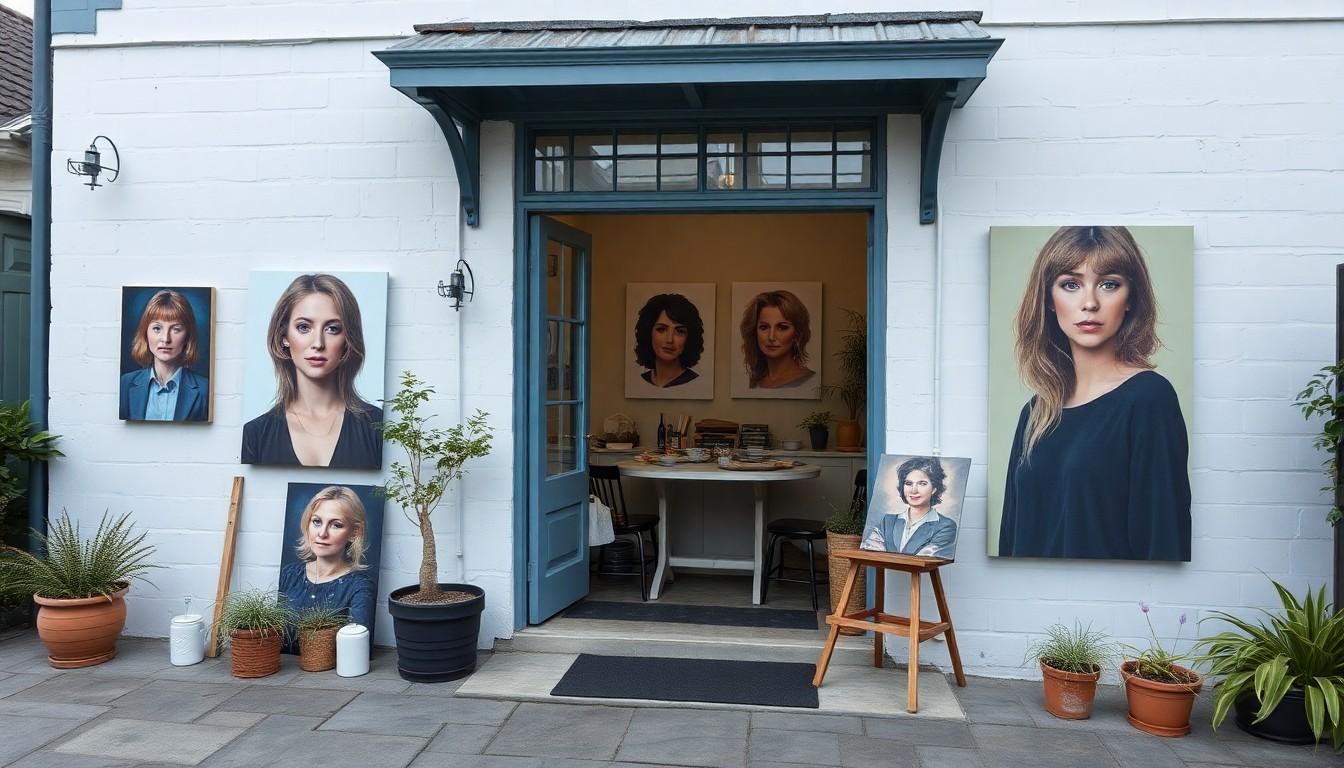
Shoppers of stories and lovers of faces are discovering a striking new body of work: Geelong artist Stacey Bennett has painted 100 portraits of lesbians from across Australia, pairing each portrait with intimate conversations to create a living archive that matters for visibility, history and connection.
Essential Takeaways
- Project scale: Bennett completed 100 portraits over nearly two years, interviewing and photographing each sitter first, creating a rich archive of stories and faces.
- Emotional texture: Portraits are painted with layered inks and oil pastels, prioritising feeling over perfect realism; many sessions were emotional and candid.
- Diverse voices: Sitters range from an 83-year-old widow to a young Kamilaroi and Murrawarri woman, and include trans women, highlighting intersectional experiences.
- Purposeful visibility: The series aims to provide role models and historical record for younger queer people who grew up without visible lesbian figures.
- Practical result: Bennett now hopes the collection will be shared widely as a resource for community connection and education.
A bold idea that became a national archive
When Bennett began sketching closeted women from old Hollywood, she realised how hard it was to find everyday lesbian stories, not just celebrities. She started posting online callouts and, before long, had people from across Australia volunteering to be painted. According to the ABC, she set aside hours to really listen to each person, and those conversations became as important as the painting itself.
How the portraits capture real lives, not poses
Bennett photographs sitters mid-thought, searching for an authentic moment rather than a staged smile. She layers marks, inks and pastels to suggest memory and feeling, not photographic likeness alone. The result is portraits that feel tactile and alive, with a soft, often moving quality that invites you to sit with the story behind the face.
Intersectionality on canvas , stories you don't often see
The sitters include an 83-year-old carer who loved and lost, a 24-year-old Indigenous woman navigating multiple cultural worlds, and trans women who spoke about uncertainty and acceptance. Bennett deliberately left room for complexity within the term "lesbian", acknowledging evolving conversations around gender and identity. Those diverse experiences make the series a more honest snapshot of contemporary queer Australia.
Why visibility still matters , practical impacts
Bennett says that if she had seen 100 profiles at 14, she would have felt less alone; that's the practical rationale behind the project. For teachers, librarians or youth workers, the portraits and accompanying stories could be used as conversation starters or classroom resources to broaden young people’s sense of who belongs in queer history. For families, they offer accessible entry points to discuss identity, ageing, care and love.
What the portraits teach about listening and empathy
The process changed Bennett as much as it documented others. She learned to listen to understand, and many sessions were so emotional both artist and sitter cried. That intimacy gives the work its power: these are portraits made from attention, not just observation. The collection stands as both art and oral history , a quiet, persistent form of community-building.
It's a small cultural shift with outsized warmth: more faces, more stories, less loneliness.
Source Reference Map
Story idea inspired by: [1]
Sources by paragraph: