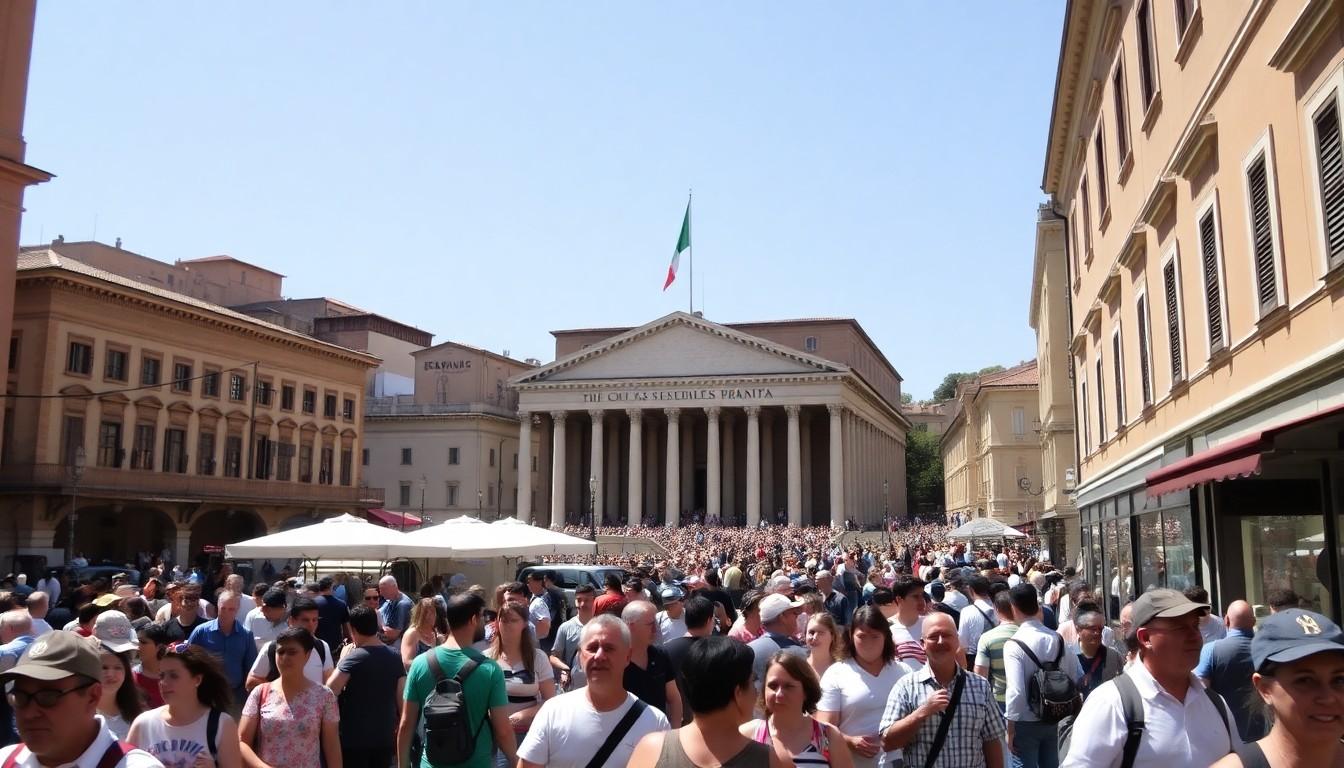
Shoppers, tourists and locals turned out as Rome hosted one of Italy’s largest Pride marches, with tens of thousands marching from Piazza della Repubblica to the Baths of Caracalla; organisers, activists and political figures converged to demand equality, while music, spectacle and heated debate kept the day vivid and newsworthy.
- Massive turnout: Tens of thousands joined the Rome march, forming a long, colourful procession across central streets with floats and loud music, though some observers say numbers felt lower than in recent years.
- Clear political message: The parade foregrounded constitutional rights , equality and health protections , with banners invoking Articles 3 and 32 and the slogan “La Repubblica è di chi la abita.”
- Diverse presence: From grassroots groups (Gender X, Mario Mieli, Famiglie Arcobaleno) to unions, companies and even kosher community activists, the route mixed celebration with contested politics.
- Sensory notes: Thumping electronic beats, bright floats, hand-painted placards and a faint tang of festival street food; the atmosphere moved between party and protest.
- Practical vibe: If you plan to join future Prides, bring water, wear comfortable shoes, and expect tight security near politically sensitive contingents.
A march that felt both festive and fiercely political
The Rome parade stretched across the city with a vivid, serpentine energy, packed with music and colour and the occasional shower of confetti. According to local organisers, the Roma Pride float opened the procession and prominently marked the 80th anniversary of the Republic, blending celebration and civic argument. The feel was at once like a giant street party and a political demonstration, with slogans and constitutional references woven into the choreography.
Events in Rome followed a national wave of Pride activity, from Palermo to Varese, signalling that summer remains the season for visibility. For visitors and residents, the mix of floats, DJs and placards made the day sensory and immediate , loud, bright and occasionally confrontational.
Why the constitution took centre stage
Organisers placed Articles 3 and 32 of the Italian Constitution front and centre, arguing that the promise of equality and dignity still needs defending. This framing turned the procession into a civic litany as much as a celebration: banners read “Giù le mani dai nostri diritti” and speeches stressed health autonomy and equal recognition for families.
That approach helped shift the conversation from identity alone to the legal protections activists want. It’s a useful template for other Pride committees aiming to anchor visibility in concrete policy asks rather than only spectacle.
Contested presences and security realities
Not every moment was harmonious. Keshet, an association representing Jewish LGBTQ+ people, marched on foot after a tense negotiation with organisers and the municipality; the group had declined to sign a statement condemning violence in Gaza, which sparked debate in the run-up to the event. Their presence drew both protective policing and vocal reactions from the crowd, including many Palestinian flags.
Meanwhile provocateurs, among them known conservative campaigners, attempted to stir trouble and were removed. That mixture of protest and counter-protest is now a familiar feature of large European Pride events, and it underlines why organisers increasingly coordinate closely with city authorities on routes and security.
When commerce, culture and activism collide
The parade line-up featured typical activist stalwarts and some unexpected players: trade unions and community groups marched beside corporate-branded trucks, film producers and even a student housing promoter. For some this felt like progress , visible support from businesses and institutions , while others sniffed at the marketing gloss on a movement born from dissent.
If you’re sceptical, look for the core activist contingents and grassroots floats; they tend to keep the political pulse alive. For visitors, that clash of commerce and cause is part of the modern Pride spectacle: slick stages and earnest placards coexisting in a crowded city square.
Tips for attending next time , practical and sensible
Arrive early to bag a good spot for the best atmosphere and photos, and wear comfortable shoes , the route is long and the pavement can get hot. Pack water, a light sunhat and a small flag or banner if you want to participate visually; be mindful of security checks near sensitive groups. If you plan to join a specific contingent, check organisers’ guidance for meeting points and rules about floats.
For families, quieter sections of the route and daytime activities around the Colosseum and cultural events are usually more relaxed than the main procession.
It’s a vivid reminder that Pride remains a public, performative and political space , and that attending can be as much about listening as dancing.
It's a small change that can make every march feel safer and more meaningful.
Source Reference Map
Story idea inspired by: [1]
Sources by paragraph: