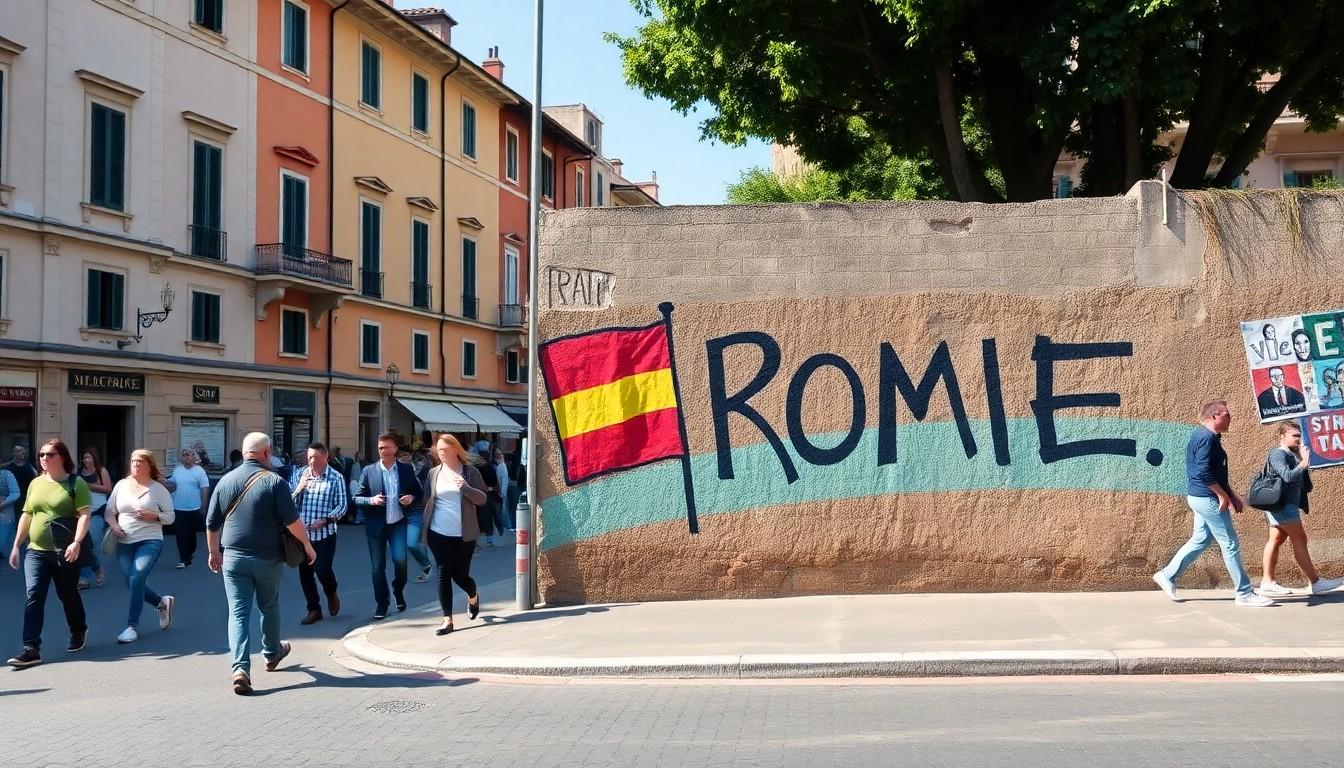
Shoppers and marchers spotted a new mural by aleXsandro Palombo on Via San Giovanni in Laterano, debuting during Roma Pride 2026; the work reimagines a classic film scene to probe inclusion, antisemitism and LGBTQ+ rights, and it’s stirring strong reactions across the city.
Essential Takeaways
- Bold image: The mural reworks the famous Roman Holiday scene, pairing Audrey Hepburn with a Hamas militant while Hepburn waves a rainbow flag, creating a striking visual contrast.
- Artist’s intent: Palombo says the piece questions shrinking spaces of freedom and the universal nature of rights, and flags rising antisemitism even in traditionally inclusive spaces.
- Local friction: The artwork arrives after controversy at other Italian pride events, including disputes over access for Jewish LGBTQ+ groups, making timing sensitive.
- Emotional tone: Reactions range from praise for its satire and provocation to discomfort and criticism about mixing an icon of liberty with an armed figure.
- Practical note: The mural sits in Rome’s Gay Street, a high-visibility spot during Roma Pride, meaning it will be seen by many visitors and coverage outlets.
A provocative image that stops you in your tracks
Palombo’s new mural grabs attention with a familiar, soft-focus cinematic moment twisted into something sharp and uncomfortable, the kind of image that makes you pause and smell the paint as much as the symbolism. According to reports, the artist replaces Gregory Peck’s character with a militant while keeping Audrey Hepburn’s smile and a rainbow flag, a collision of tenderness and menace. That deliberate shock is designed to force a conversation about who’s welcome in spaces meant to defend liberty.
Why the timing matters: background to a tense Pride season
This mural didn’t appear in a vacuum. Rome’s Pride week and related events have been shadowed by disputes over participation and the definition of inclusion, including recent allegations that Jewish LGBTQ+ groups were denied access to some Pride platforms. Coverage from outlets tracking Roma Pride shows organisers and communities wrestling with competing narratives about solidarity, safety and political expression. Palombo’s piece lands squarely in that debate, asking what inclusion actually looks like when people inside a movement feel excluded.
Satire, symbolism and the risk of offence
Palombo uses satire and paradox to link a global pop-culture icon to questions about repression and extremism; he explicitly frames the militant as representing an organisation that denies LGBTQ+ rights. That choice is meant as critique, and it amplifies a broader conversation about antisemitism resurfacing in spaces once held as safe. But mixing an adored film image with a violent symbol is always risky, and some viewers find the juxtaposition troubling rather than clarifying. Expect split reactions: some will applaud the courage, others will call it unnecessarily provocative.
What this means for Rome Pride visitors and organisers
For anyone attending Roma Pride or passing down Via San Giovanni in Laterano, the mural is more than an artwork , it’s a statement that will prompt talk, selfies and likely more reporting. Organisers face the practical challenge of balancing free expression with a duty of care to diverse communities, while visitors can prepare by reading local guidance, sticking with official routes, and respecting the complex feelings the mural evokes. If you’re photographing the piece, be mindful of on-the-ground tensions and the range of opinions around it.
Looking ahead: art, protest and the shape of inclusion
Palombo’s work is part of a long tradition where public art stokes civic debate; whether it helps build bridges or sharpens divides depends as much on the conversations that follow as on the image itself. As Rome continues to host Pride events and international attention grows, this mural is likely to be cited in discussions about the boundaries of inclusion, freedom of expression, and how communities handle internal disagreements. It’s the kind of creative provocation that keeps the city talking.
It’s a small change on a street wall, but it’s bound to make big conversations louder.
Source Reference Map
Story idea inspired by: [1]
Sources by paragraph: