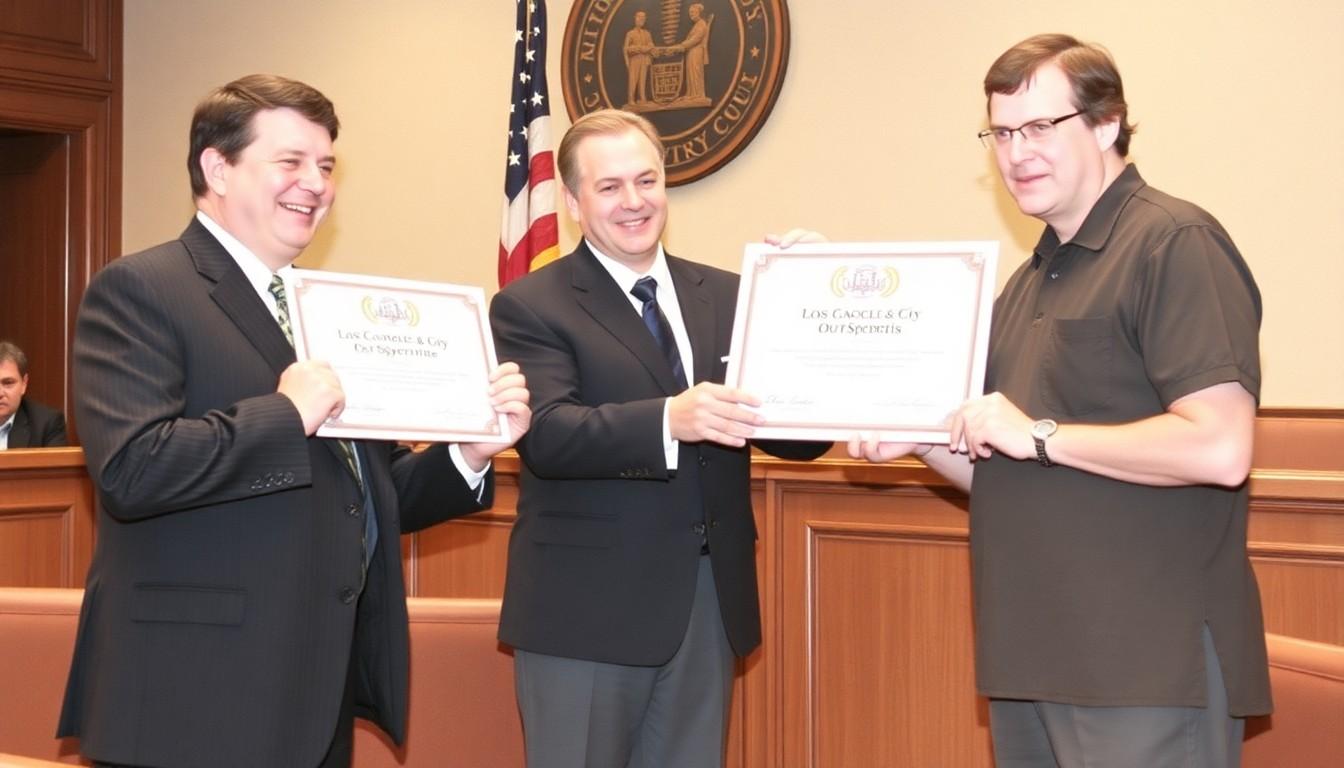
Celebrate with Outsports: Los Angeles honoured the queer sports outlet this Pride Month, recognising 25 years of trailblazing journalism and a curated “Portraits of Olympic Pride” display that spotlights out athletes aiming for the 2028 Games. It’s a small ceremony with big meaning for LA’s LGBTQ sports scene.
Essential Takeaways
- Official recognition: Outsports received a Certificate of Recognition from the Los Angeles City Council during Pride Month, presented on June 5.
- Local pride: Councilwoman Traci Park and colleagues commended Outsports for 25 years of coverage that broadened visibility for LGBTQ athletes.
- Gallery exhibit: Outsports curated a City Hall bridge-gallery display featuring 20 out athletes with Olympic potential for 2028.
- Diverse roster: The exhibit spans 14 sports and athletes from 10 countries, with a strong US presence and varied backgrounds.
- Roots in LA: Outsports began in Los Angeles in 1999 after founders met at LA Pride; the recognition ties back to that local origin story.
Why this ceremony matters: more than a certificate
City Hall felt quietly celebratory when the certificate was presented, a tidy and official nod that still packs emotional weight. According to statements read on the council floor, the award recognises a quarter-century of storytelling that mainstream sports coverage often missed. For a niche outlet turned essential beat, this is validation that the work has mattered to people here and beyond.
Outsports’ founders started the site after meeting at LA Pride in the 1990s, and that origin story came up repeatedly as a throughline for why the city chose to honour them. It’s one thing to run a website; it’s another to change the conversation about who belongs in sports.
The “Portraits of Olympic Pride” , a hopeful, visual shout
Walking the bridge gallery in City Hall, you’d see 20 crisp portraits and brief bios of out athletes likely to chase the 2028 Los Angeles Olympics. The display reads like a promise: queer athletes are here, visible and aiming for the biggest stage. The selection mixes sports, genders, ethnicities and nationalities, which keeps the message simple and powerful.
If you visit, expect a human scale exhibit , intimate photos and quick reads, not a museum retrospective. It’s designed to introduce you to names you might hear a lot about in the next few years, from established stars to rising hopefuls.
Who’s on the list , notable names and what they represent
The roster includes established figures and emerging talent across 14 sports, from swimming and gymnastics to BMX and fencing. Names such as Ana Marcela Cunha and Paige Bueckers sit alongside newcomers and refugee athletes, showing the spectrum of queer sporting experience. That mix underscores an important point: visibility isn’t a single story, it’s many.
This isn’t just symbolic. For athletes, being seen in civic spaces like City Hall can translate to more public support, sponsorship interest and broader acceptance. The exhibit quietly argues that representation has ripple effects beyond the framed photograph.
How this ties into a bigger trend in sports media
Outsports’ honour also mirrors a broader shift: mainstream sports outlets and civic institutions are increasingly recognising LGBTQ stories as central, not sidebar. Industry observers have tracked a slow but steady expansion of queer representation in professional leagues, coaching ranks and executive roles, and this civic recognition is part of that ecosystem.
For readers, that means more coverage, more role models and a sports world that increasingly reflects the fans and players it serves. Outsports helped push that needle by telling stories others overlooked, and the council’s award is a civic thumbs-up for that effort.
Practical takeaway for supporters and sports fans
If you want to back this momentum, a few simple things help: follow and share coverage of out athletes, attend local Pride and sports events, and keep an eye on civic programming like gallery exhibits that raise visibility. For parents and coaches, visibility in places like City Hall can be a useful conversation starter with young athletes about inclusivity and belonging.
Outsports’ recognition is a reminder that local roots can grow into national influence , and that showing up matters.
It's a small change that can make every cheer a bit more inclusive.
Source Reference Map
Story idea inspired by: [1]
Sources by paragraph: