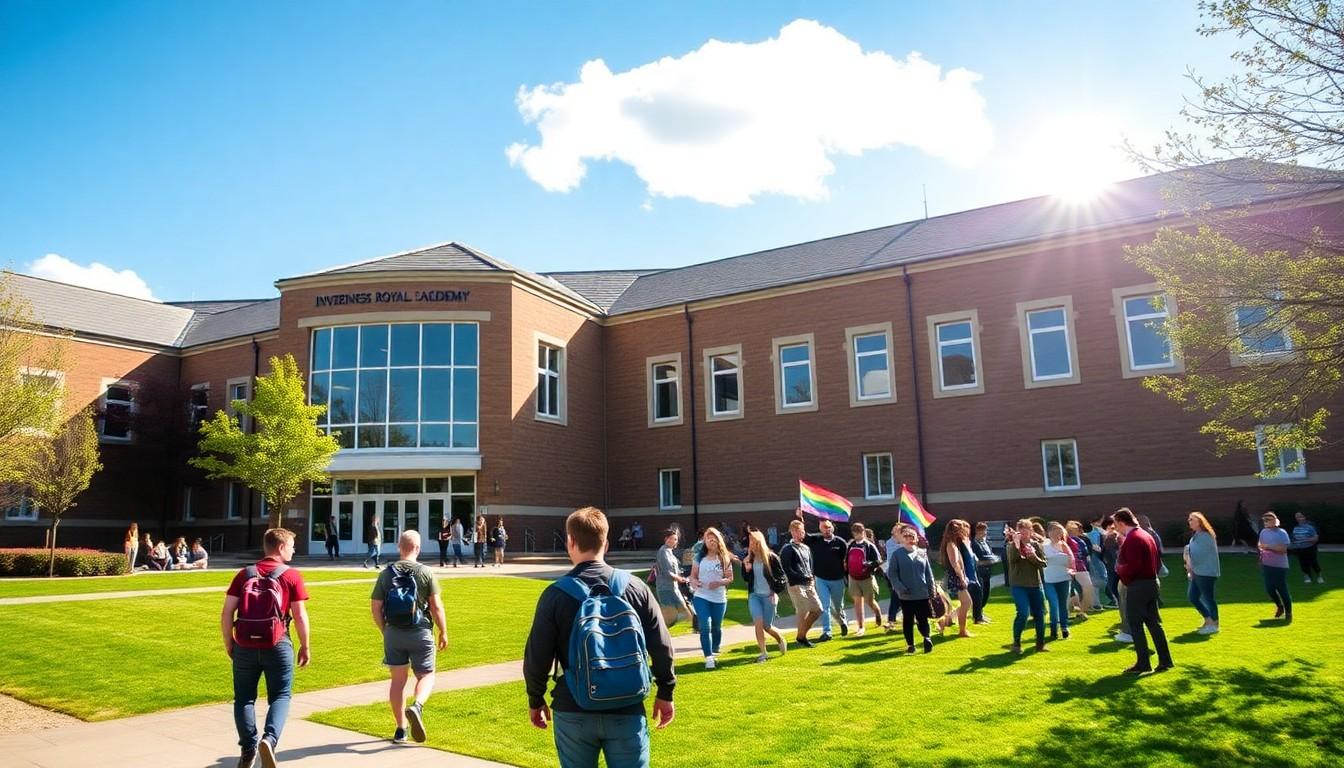
Shining a spotlight on youth-led Pride, Inverness Royal Academy staged a colourful, inclusive event that drew around 100 pupils from across the Highlands , a welcome, visible answer to findings that rural young LGBT+ people often feel isolated and unwelcome.
Essential takeaways
- Strong turnout: Around 100 pupils and staff attended, coming from Inverness Royal Academy and neighbouring schools, creating a lively, communal atmosphere.
- Student-led energy: Pupils organised the event, with visible joy and “smiles on everyone’s faces,” and activities including a reading station of LGBT+ books.
- Rural need: Recent research shows LGBT+ young people in rural Scotland report fewer safe spaces and social options, so regional gatherings matter.
- School support: Head teacher and teachers emphasised compassion, inclusivity and safety as core school values, not political indoctrination.
- Practical feel: The event mixed social time, resources and welcome messages, making it accessible, warm and reassuring for newcomers.
A colourful gathering with a clear purpose
The Pride event at Inverness Royal Academy felt upbeat and tangible, from the rainbow balloon arch to the reading station that invited pupils to linger and talk. Organisers said it was “incredible” to see so many students enjoying themselves, and you could tell the room felt lighter and less lonely than a regular school day. Events like this are sensory as well as social: colours, books and familiar faces make a difference.
Why rural Pride events still matter
Reports from LGBT+ Youth Scotland highlight that young people in rural areas often feel their communities are less welcoming and offer less to do, which can heighten isolation. Bringing together pupils from Alness Academy, Culloden Academy, Nairn Academy and beyond creates a regional network , a one-day antidote to the weekday quiet. It’s a simple but powerful fix: if you can’t find a club locally, travelling a short distance to meet peers changes everything.
Students led it , and that changes the tone
Pupils did much of the planning, and organisers spoke about being scared when they first arrived at high school and how seeing a club would have helped. That student ownership matters: it shifts events from “for them” to “by them,” which feels authentic and empowering. For younger pupils thinking of coming out or joining, seeing peers running things can be the nudge they need.
School backing turns goodwill into safety
Teachers and senior leaders framed the event around compassion and inclusion, not persuasion. The head teacher stressed the importance of creating an environment where everyone feels safe to learn, and staff described watching students grow more confident. That institutional backing is crucial , it reinforces that clubs and Pride activities are about wellbeing, not politics.
How this connects to wider trends , and what to do next
Across the Highlands and other rural areas, LGBT+ youth groups are gradually appearing in schools after decades of legal and cultural change. But many schools still lack clubs, so regional meet-ups are a useful bridge. If you’re a parent, teacher or pupil looking to start something, the practical steps are straightforward: find allies among staff, link with an existing club for advice, advertise sensitively, and offer low-pressure meet-ups with resources like books or buddy systems.
It's a small change that can make every school corridor feel safer.
Source Reference Map
Story idea inspired by: [1]
Sources by paragraph: