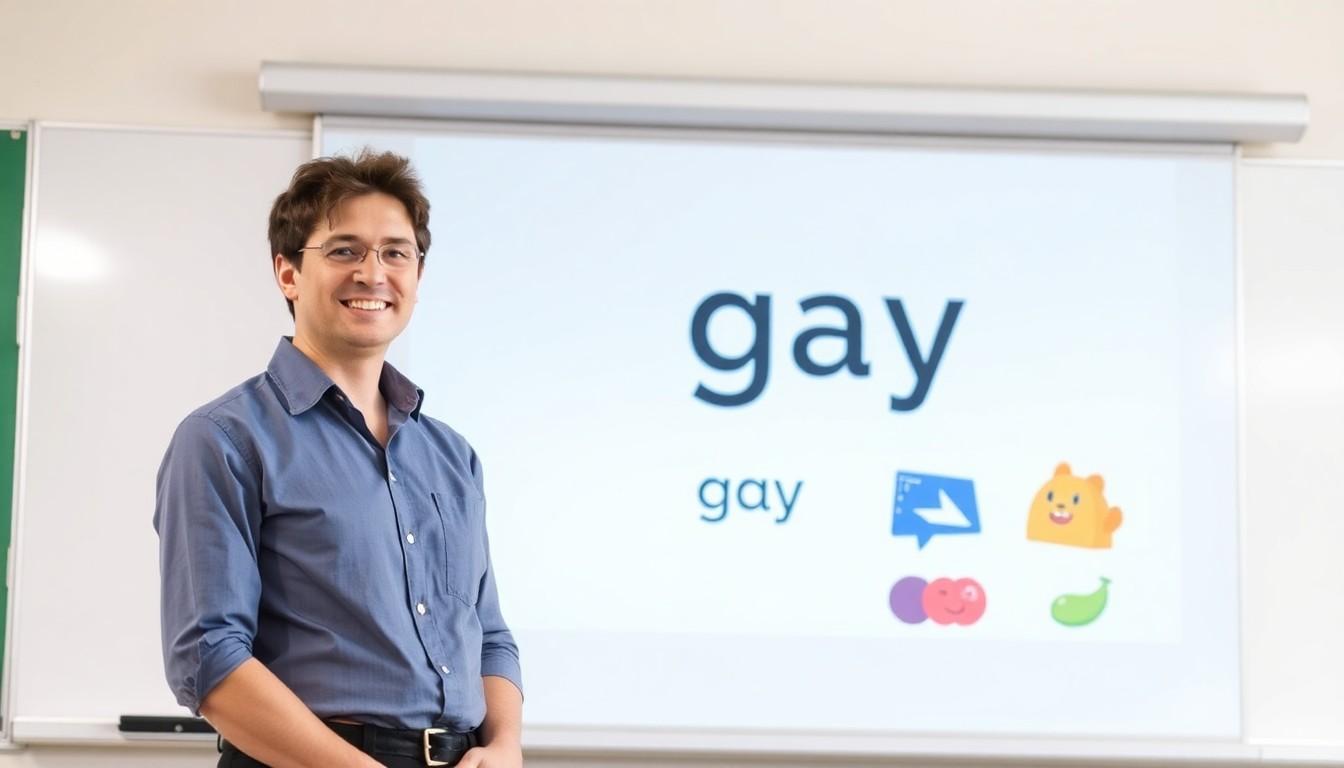
Watch a Texas math teacher turn a loaded word into an upbeat, teachable moment as students learn what “gay” actually means , simple, clear, and surprisingly joyful for classrooms and parents who want kinder language at home.
- Viral moment: A classroom clip of a math teacher explaining the meaning of “gay” has racked up hundreds of thousands of views and warm praise online.
- Clear definition: The teacher starts with a simple explanation , liking the same gender , and uses examples to separate identity from clothing or hobbies.
- Playful classroom vibe: Students shout answers, clap, and react with delight, making the lesson feel inclusive and low-pressure.
- Practical takeaway: The approach models how to correct casual, hurtful language without shaming kids , quick, visual cues help the point stick.
A straight teacher who made a noisy, tender classroom moment
The clip opens with a teacher cutting through the afternoon chatter: “Do y’all know what it means?” He’s met with blurted-outs and laughter, and you can almost feel the classroom hum , warm, a bit rowdy, honest. According to coverage at LGBTQ Nation and Upworthy, the teacher, Christian Shearhod, begins by asking a student to define “gay” and keeps returning to that tidy, human definition: liking the same gender. The choice to start simple makes everything that follows feel grounded and easy to follow.
Using everyday examples to separate identity from style
Shearhod runs through a PowerPoint of scenarios , painted nails, pink clothes, crop tops, Barbie , and asks the class whether those things are “gay.” The kids, encouraged to shout, repeatedly say no. It’s a neat trick: by pairing playful images with an anchored definition, he helps kids understand that garments and toys aren’t sexual identities. Reporters note the contrast between the loud classroom energy and the quiet logic of the message, which lands precisely because it’s accessible.
Why this lesson resonates beyond one school
The video has struck a nerve online , tens of thousands of likes and hundreds of comments praising the teacher’s method. Coverage from comicsands.com and Upworthy highlights that the clip isn’t just a feel-good snippet; it’s an example of how teachers can defuse prejudice in plain language. For families and schools where children hear “that’s gay” as shorthand for “silly” or “bad,” seeing a low-drama correction gives a realistic template anyone can use.
Practical tips for parents and teachers who want to copy this approach
If you like the idea but aren’t sure where to start, keep it short and visual. Begin with a clear definition, ask simple yes/no questions, and use familiar images that separate activity or style from who someone is. Praise correct answers, let kids react, and close with a positive image to reinforce acceptance. Media reports suggest that a playful tone , not a lecture , helps children internalise the idea without feeling accused.
He’s more than a viral clip , a pattern of gentle advocacy
Shearhod isn’t a one-off on social media. Journalists tracking his work point out previous posts where he defends kids’ choices, including a viral moment when he took his then-three-year-old for a manicure after a teacher said nail painting was “only for girls.” That continuity matters: viewers see this lesson as part of an ongoing practice of modelling inclusion, not just a single teachable moment. It’s also a reminder that small classroom interventions can echo far beyond the school gates.
It's a small change in how we talk that can make every classroom , and home , a bit kinder.
Source Reference Map
Story idea inspired by: [1]
Sources by paragraph: