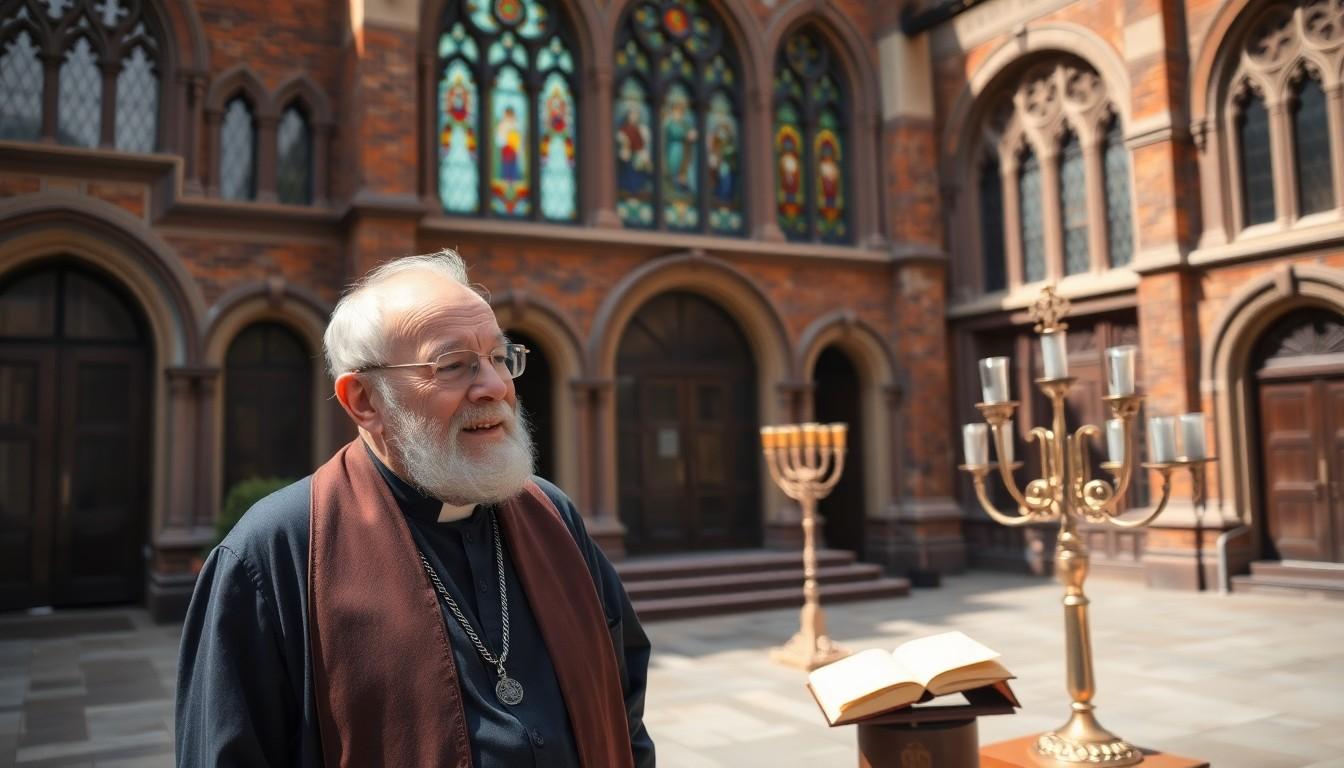
Remembering religious leaders who chose compassion over condemnation , how Reform rabbis in the 1980s and 1990s comforted gay Jews during the AIDS crisis, changed liturgy, and helped create lasting community practices that still matter today.
Essential Takeaways
- Immediate compassion: Reform rabbis in cities like San Francisco publicly rejected punitive religious interpretations of AIDS and offered pastoral care to grieving communities.
- New liturgy: The modern Mi Shebeirach healing prayer was rewritten in that era to ask for wholeness and blessing, born from households full of loss and care.
- Practical organising: Synagogues mobilised hospice volunteers, meal delivery and blood drives when institutions and governments failed to respond.
- Lasting rituals: Practices such as the open-hand invitation on Friday nights began as concrete responses to housebound congregants and continue in many communities.
- Civic impact: Jewish religious support helped some people build lives , including same-sex marriages and families , before civil law recognised them.
Why these sermons mattered: a clash with televangelist fury
The 1980s saw religious leaders like Jerry Falwell and Pat Robertson offer public messages that framed AIDS as divine punishment and urged punitive policies, including quarantine and moral blame, notes PBS and contemporary reporting. Such rhetoric created a climate of fear that seeped into schools, workplaces and police practices, so tenderness from other pulpit voices felt revolutionary and urgent. For gay Jewish congregants, a rabbi who named pain rather than sin offered not just solace but survival.
Two sermons that changed Jewish life
On Kol Nidre in 1985, rabbis in San Francisco delivered simultaneous but complementary messages: one describing the dying and deserving of compassion, another calling AIDS an earthquake that demanded human response. Those sermons signalled a theological pivot in Reform Judaism toward inclusion, writes archives of queer religious history. The effect rippled beyond one city , it recalibrated how synagogues understood pastoral duty and communal responsibility.
From grief to new practices and prayer
Faced with weekly funerals and families in crisis, congregations turned to hands-on support. Volunteer hospice programmes, meal trains and even women-led blood drives filled gaps left by institutions and public health policy. Out of sorrow came liturgical change: the Mi Shebeirach was adapted to ask for wholeness, not simply physical healing, a version that lives on in thousands of sanctuaries today. That tweak in language matters: it honours dignity amid loss.
How ritual innovation became ordinary
The Friday-night gesture of extending an open hand so people can voice names of those in need began as a practical way to include housebound loved ones. Now it's commonplace in many communities, but knowing its origin makes it feel less routine and more chosen. When congregational customs grow from crisis, they carry memory and obligation; they also teach current leaders how ritual can respond to real human need.
Why this history matters now
Anti-LGBTQ and antisemitic rhetoric has evolved but not disappeared; recent years show worrying overlaps in vitriol directed at both communities. Remembering how religious leaders once countered fear with compassion offers a blueprint for clergy and congregations today. It also gives gay Jewish kids a story that says: your tradition said “yes” before the law did. That reassurance can be quiet but consequential.
It's a small change in practice and language that made every blessing feel more like rescue.
Source Reference Map
Story idea inspired by: [1]
Sources by paragraph: