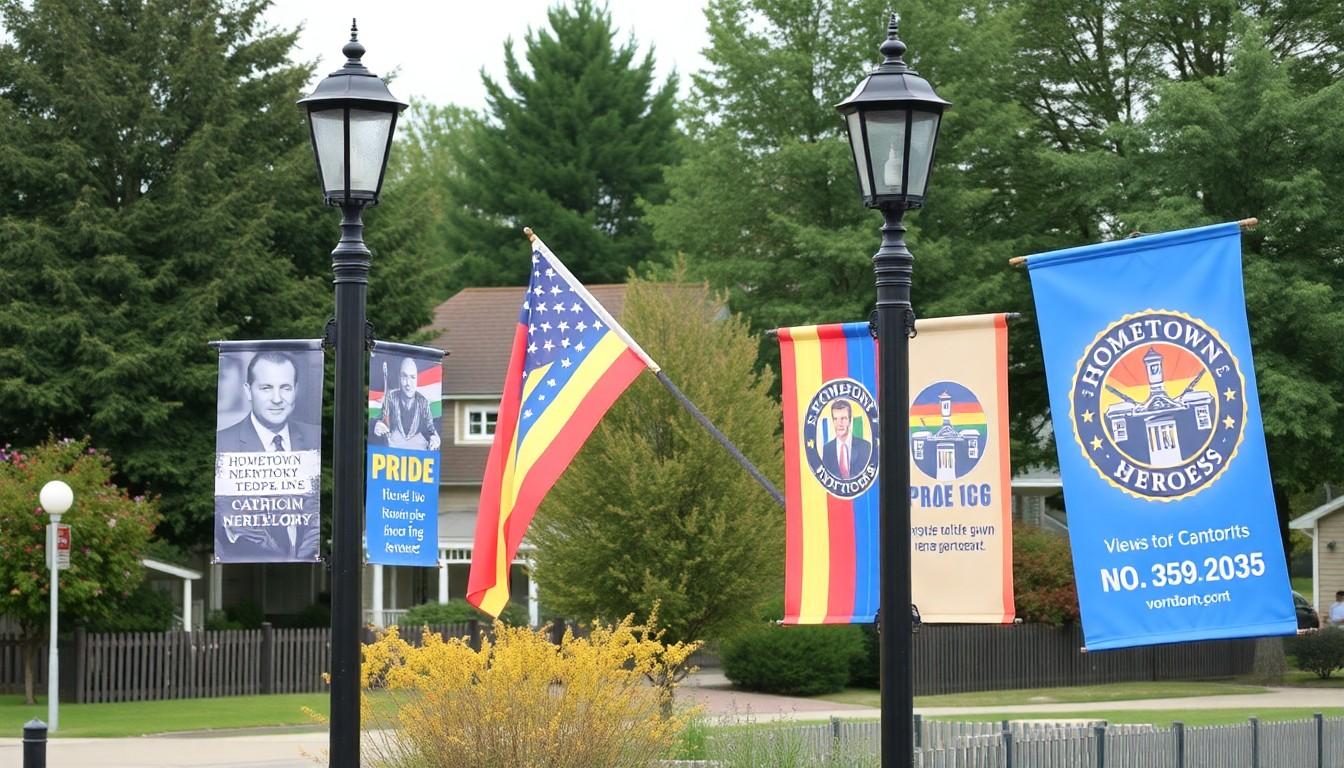
Shoppers, residents and visitors noticed Pride flags going up , then coming down , in Northport, Long Island, sparking a debate about respect, display space and how communities balance Pride with veterans’ tributes. Here’s what unfolded, who objected, and the practical compromise that followed.
Essential Takeaways
- What happened: Pride flags were removed from lamp posts after the American Legion objected to them hanging above Hometown Heroes veterans’ banners, prompting local controversy.
- Mayor’s stance: Northport’s mayor said she supports both the Pride community and veterans, and approved moving banners so both can be shown without sharing poles.
- Emotional tone: Residents expressed pride and frustration; some veterans and neighbours felt the American flag or veterans’ banners should take visual precedence.
- Practical result: Pridefest plans to hang flags on other, unused poles and the village agreed to pay for mounting hardware , a simple logistical fix with symbolic weight.
- Community note: Organisers argue limited pole access led to the clash, and they’ve offered an alternative to ensure visibility for all groups.
A tiny village, a big symbolic tangle
Northport’s colourful summer streets looked much like any small-town Pride display , rainbows fluttering above Village Park , until some of those flags were taken down. The move landed amid complaints that rainbow flags were placed above Hometown Heroes banners that honour local veterans, and the imagery touched a raw nerve for some residents.
According to local reporting, the American Legion wrote to the village board saying the placement “diminishes the recognition and prominence” of veterans’ tributes. That’s a familiar sentiment in many towns where public symbols carry outsized meaning, and it quickly morphed into a public debate.
Mayor seeks middle ground , and stresses safety
Mayor Donna Koch told reporters she supports the Pride community and veterans, and authorised removing flags from specific posts while arranging a compromise. She also said a man entered the police station and threatened to remove flags himself, a move the village warned could be treated as a hate crime.
The mayor’s approach shows how leaders try to balance competing community feelings: acknowledge both sides, reduce immediate tension, and find a practical fix that avoids escalation.
Pride organisers push back over pole allocation
Pridefest representatives argued the issue wasn’t the flags themselves but a months-long allocation of lamp posts to the Hometown Heroes programme , from May through November , which left little room for other groups to display banners. That limited access is what they say set the stage for the conflict.
Their response was constructive: Pridefest plans to hang the removed flags on other available poles, and they pointed out there are enough lamp posts in the village for multiple displays. It’s a reminder that many disputes are driven by logistics rather than intent.
A logistical fix with symbolic importance
The practical compromise is straightforward: move some Hometown Heroes banners, install additional hardware paid for by the village, and use separate poles for Pride flags so none appear visually above veterans’ tributes. Pridefest has also said it will use unused posts and fill Village Hall to show support.
Small adjustments like these are low-cost but symbolically significant. They preserve honour for veterans while allowing Pride to be visible during its peak month. That balance matters to residents who want both respect for service and an inclusive community.
What this means for other towns
Local leaders elsewhere can take a cue: conflicts over public displays often come down to rules and space, not simple opposition. Clear calendars, transparent allocation of poles, and early community consultation can head off disputes. If you’re organising banners, check local permit windows and offer alternatives before tensions rise.
And remember, flags and banners are shorthand for values , a little planning goes a long way towards keeping neighbourhoods united.
It's a small change that can make every display feel more respectful.
Source Reference Map
Story idea inspired by: [1]
Sources by paragraph: