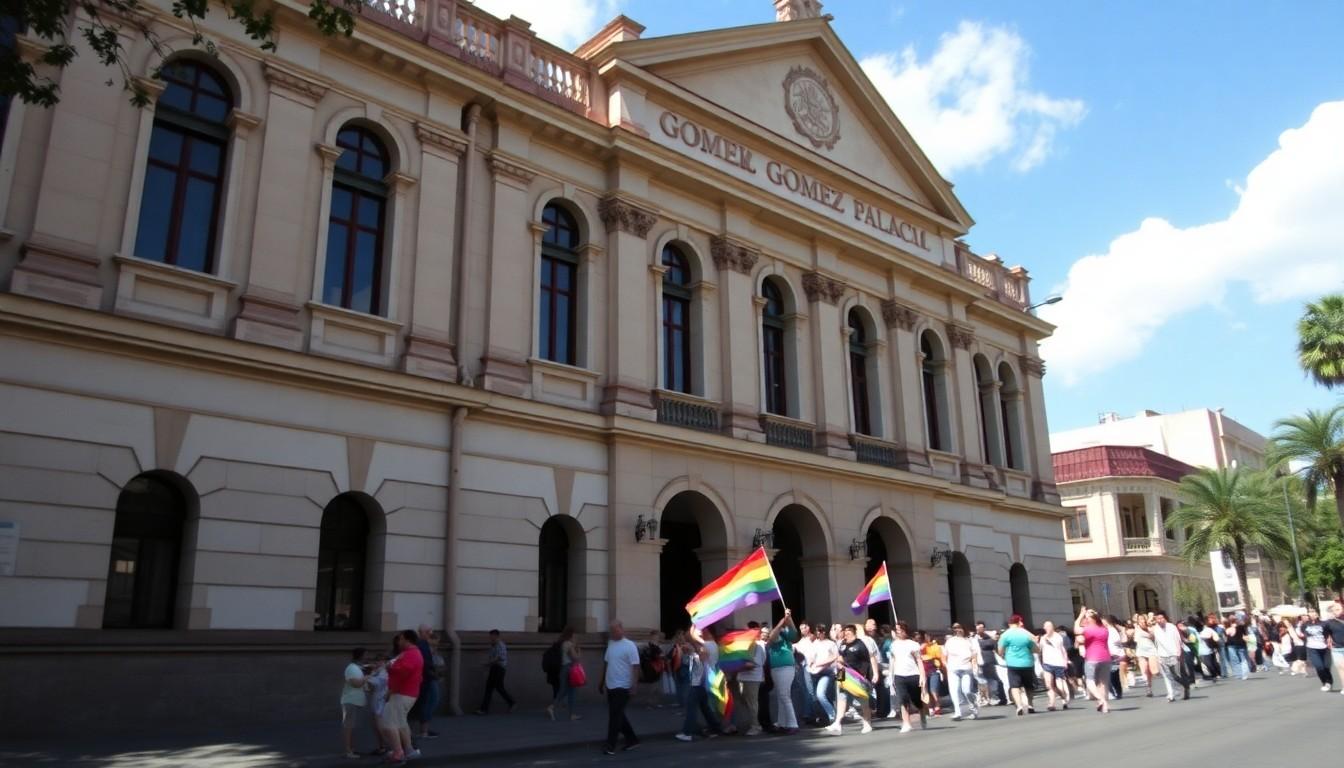
Shouting, dancing and demanding rights, marchers in Gómez Palacio and Lerdo turned out for the fourth Laguna de Durango Pride to press for a gender identity law and equal access to health, education and work , a vivid mix of celebration and insistence that identity must be a legal right.
Essential Takeaways
- Visible turnout: Hundreds marched from Parque Victoria’s domed square to the Eiffel Tower replica, finishing with drag performances and music.
- Clear demands: Organisers called for a Ley de Identidad de Género in Durango and for recognition of transfeminicide as a crime.
- Public safety presence: The procession moved along Boulevard Miguel Alemán with traffic and public safety support; human-rights officials observed.
- Everyday equality: Protesters stressed access to health, education and work on equal terms, noting current reliance on amparos to change birth certificates.
- Local barriers: Activists point to Durango’s conservative history and centralised capital politics as reasons for legislative delay.
A colourful march that was as much protest as party
The scene was loud, bright and human , drag shows, giveaways and people waving rainbow flags at the replica Eiffel Tower closed out a march that began under the Parque Victoria dome. According to local reports, the route down Boulevard Miguel Alemán felt celebratory but firm, with music and chanting turning a stroll into a message. For many, the sensory mix of glitter and rhetoric underlined a simple point: pride gatherings are joyous, but they’re also the place to demand change.
Why they’re asking for a gender identity law now
Durango still requires people to go to court to change legal sex on birth certificates, a hurdle most states have removed with administrative processes. Activists at the march made that legal limbo the centrepiece of their demands. The idea is practical: administrative reforms make transitions less costly, less public and less traumatic. Organisers argued that a Ley de Identidad de Género would cut through red tape and affirm personhood , not a luxury but a right.
The urgent issue of transfeminicide and the legislative logjam
Speakers at the march raised another pressing demand: recognise transfeminicide in criminal law. Activists said Durango has not advanced on this, and that talks with deputies haven’t yet moved into committee discussion. Local defenders, including visiting activists who’ve met members of the state legislature, confirmed the conversation hasn’t produced legal proposals. So the mood was slightly weary: celebration tempered by the sense that promises haven’t translated into statutes.
Politics, religion and regional representation , why progress stalls
Durango’s conservative reputation and the strong influence of the Catholic Church were named as reasons for legislative delays. Activists also flagged a political geography problem: the capital’s dominance means the Laguna region lacks proportional influence in the state congress. The result is a feeling that, even when allies meet with deputies, momentum fizzles. Organisers urged unity among activists, academics and civil society to keep pressure on lawmakers before the next legislative term resets.
How the march balances safety and visibility
The event moved with the accompaniment of traffic officers and public safety personnel, and the state’s human-rights commission sent observers. That combination is practical , it keeps the route open and the crowd safe , but it also sends a political signal: authorities can protect public expression without quashing it. For people still hesitant to attend Pride, activists emphasised that the march is a safe space to show up as you are, even if you’re not ready to come out more broadly.
It's a small, colourful push with a big ask: make identity easier to recognise in law, and make equality a lived reality.
Source Reference Map
Story idea inspired by: [1]
Sources by paragraph: