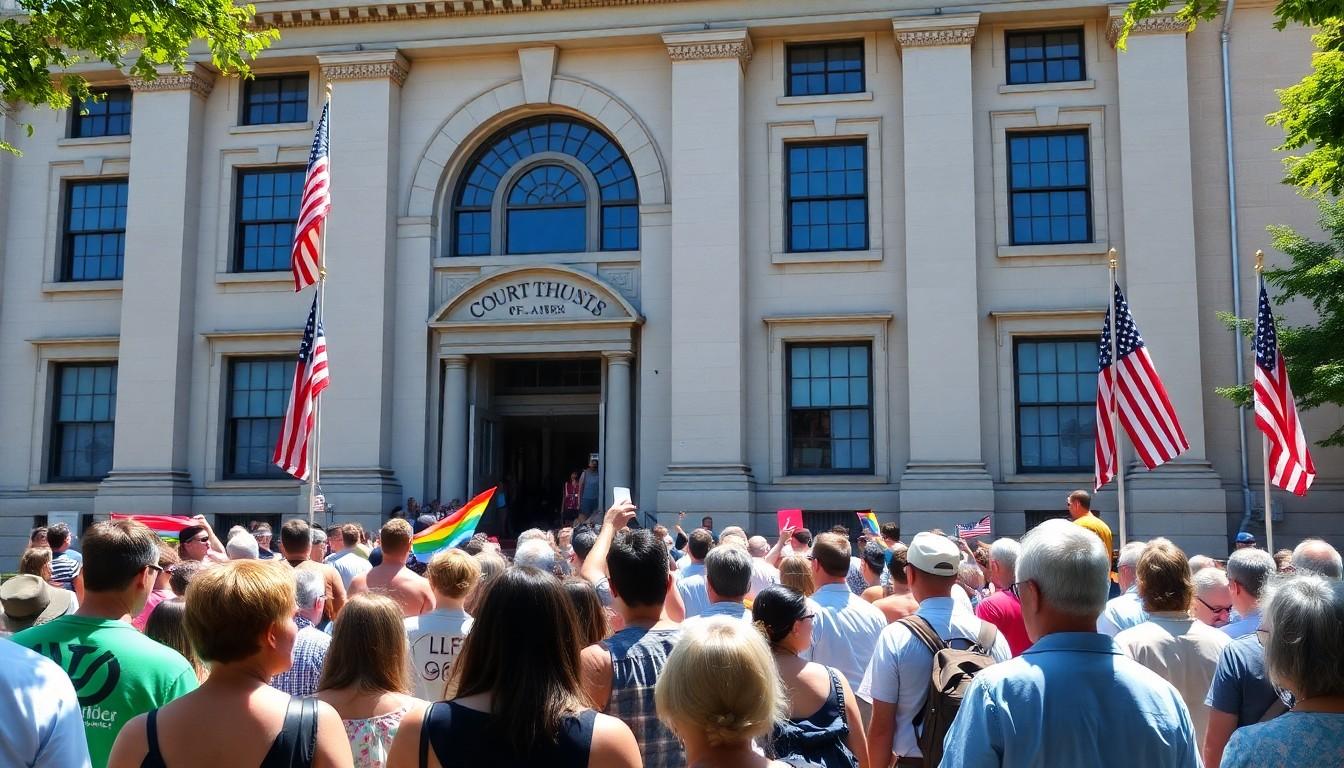
Shoppers and commuters noticed a lively Pride Month protest outside the Westmoreland County Courthouse as local LGBTQ-plus groups rallied to be seen, heard and counted , organisers say the events matter because rights and recognition are under threat at state and national levels.
- Local turnout: Around 20–30 people gathered early, with larger related demonstrations planned later in June; the mood was hopeful and vocal.
- Visible emotions: Supportive honks and friendly waves contrasted with a few hostile gestures; organisers accepted both with calm resolve.
- Clear message: Activists pressed county leaders for a Pride proclamation and protested recent policy moves affecting trans people and athletes.
- Follow-up actions: Rally Westmoreland has scheduled a larger “All of Us” protest on 27 June; community organisers encourage allies to join.
A small morning crowd, a loud message
Grassroots organisers led a compact, cheerful protest outside the courthouse that read like a neighbourhood gathering with purpose. People waved signs, read a “people’s proclamation” and greeted passing cars that honked in support, creating a bright, immediate scene. According to participants, the event was about visibility: being seen as neighbours, coworkers and churchgoers, not a stereotype.
The protest grew from frustration over recent political moves, and the mood mixed urgency with everyday warmth. Organisers told the crowd they staged their own proclamation because county commissioners wouldn’t issue an official Pride Month statement. That DIY approach made the moment feel both defiant and intimate.
If you’re thinking of attending similar events, expect a compact crowd, handmade signs and lots of personal stories , the kind of protest that’s conversational as much as it is political.
Why organisers say this matters now
Local leaders pointed to policy changes and proposed bans as a catalyst for action. They framed the rally as a response to national and state-level pressure on trans rights, including limits on healthcare access and athletic participation. For many attendees, the protest was a way to say loudly: we belong.
This isn’t just theatrical outrage. Activists view small, visible demonstrations as part of a wider push to influence elected officials and local institutions. By turning up at the courthouse, they’re signalling that inaction equals acceptance of policies they oppose.
Practically, if you want to support trans rights locally, showing up is meaningful , even a handful of allies can change the tone of public spaces and local conversations.
The mix of support and hostility , what to expect
The afternoon saw plenty of encouraging responses from drivers and passersby, but organisers also endured occasional insults and an extended middle finger from a motorcyclist. That contrast , warm honks next to hostile gestures , is familiar to many community protests, and the group took it in stride.
Organisers emphasised de-escalation and outreach rather than confrontation. That calm response helped keep the event peaceful and focused on its message. If you plan to attend, bring water, a sun hat and the expectation that not everyone will agree , but that civil presence matters.
Bigger demonstrations and the “All of Us” connection
Rally Westmoreland isn’t stopping with this single event. They’ve linked up with national “All of Us: Truth, Equality & Freedom” actions and scheduled a larger protest at the same courthouse later in June. The aim is to collect more voices, amplify local stories and build momentum ahead of civic decisions.
Momentum matters in community organising. A single declaration or small rally can seed a larger movement when activists keep calling on residents and officials to respond. Expect organisers to ask for volunteers, social shares and simple, visible participation.
How locals and allies are responding
Supporters at the protest came from nearby counties, and allies turned up with friends and family. The atmosphere was conversational , strangers swapping why they came and what they hoped to change. That human side is what organisers say will change minds more than slogans alone.
If you want to help but aren’t ready to march, consider small actions: share verified information on local policy, attend a meeting, or bring a friend to a future rally. Those quiet choices add up.
It's a small change that can make every civic voice count.
Source Reference Map
Story idea inspired by: [1]
Sources by paragraph: