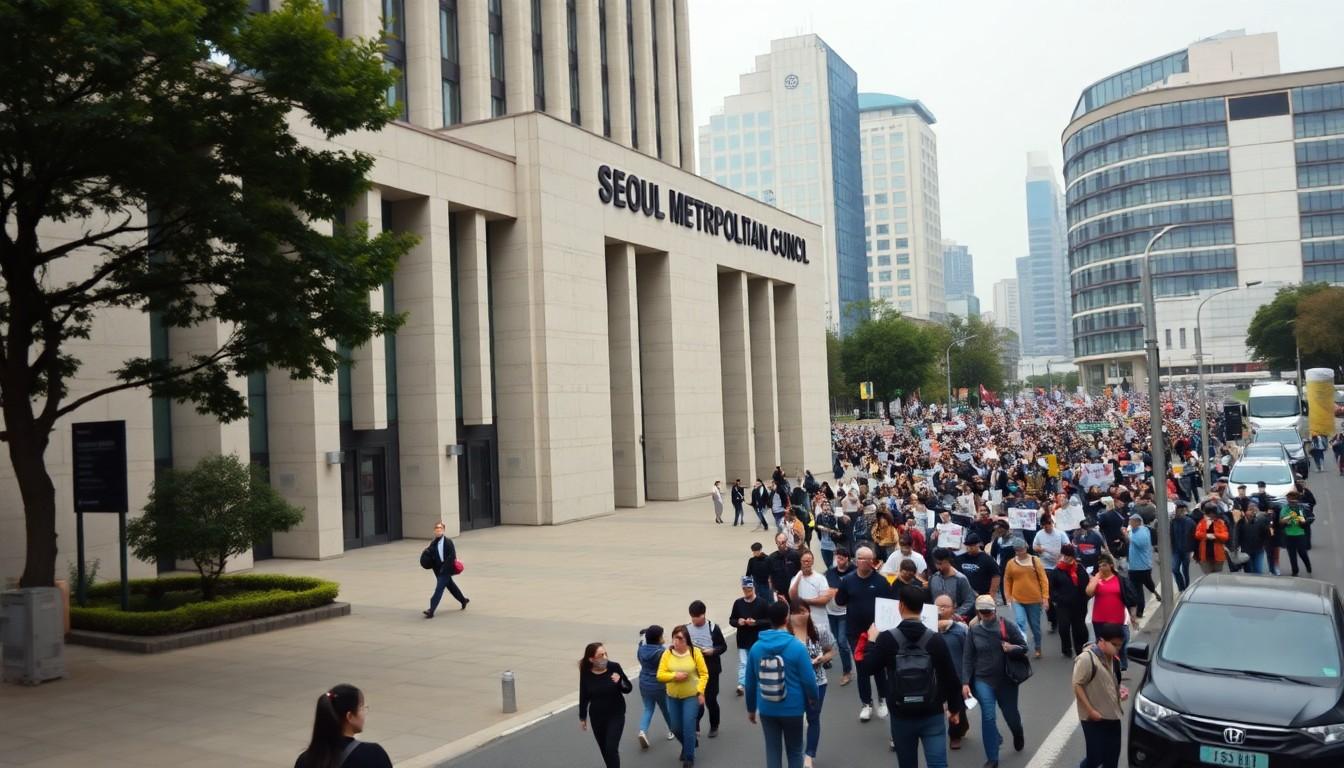
Shoppers and sightseers watched as Seoul’s flagship queer festival drew tens of thousands, while a large Christian-led counter-rally marched nearby , a vivid, noisy snapshot of South Korea’s culture wars that matters for politics, law and everyday city life.
Essential Takeaways
- Huge turnout: Organisers estimated about 50,000 people at the Seoul Queer Parade, creating a colourful, crowded route along Ujeongguk-ro.
- Mass counter-rally: A Christian group held a simultaneous rally of roughly 30,000 near the Seoul Metropolitan Council, producing tense scenes and traffic congestion.
- Clashes of ideas: Speakers at the counter-protest framed their cause around opposing the Anti-Discrimination Act and the legal recognition of homosexuality.
- City impact: Downtown Seoul experienced major congestion and a heavy police presence; the events were loud, visible and peaceful for the most part.
- Public debate: The day highlighted how social movements and conservative groups are shaping public opinion and policy conversations in South Korea.
A vivid weekend: Pride’s colours and a loud counter-protest
The Seoul Queer Festival filled Ujeongguk-ro with banners, neon and a party atmosphere, while about 600 metres away Christian demonstrators gathered in front of the Seoul Metropolitan Council. Organisers put the Pride attendance at about 50,000, a figure that matched scenes of dense crowds, music and performances. Meanwhile, the counter-rally , billed as “Marriage Between Men and Women, a Healthy Republic of Korea” , drew an estimated 30,000 people, and their march plans stretched into the city. The contrast was striking: bright floats and placards on one side, a sombre, chanting bloc on the other.
Why the Anti-Discrimination Act was at the heart of it
Speakers at the counter-protest framed their message around resisting what they described as attempts to legalise homosexuality under the guise of humanism, and they explicitly objected to anti-discrimination measures. That made the rally about more than street presence , it was a political statement aimed at pending or potential legal changes. According to reporting from national outlets, the debate over an Anti-Discrimination Act has become a lightning rod in South Korea, pitting rights advocates against socially conservative groups.
How the city coped , traffic, policing and public space
Downtown Seoul saw significant congestion as the two events unfolded within walking distance of one another. Police were visibly deployed to keep routes open and to prevent clashes, and most media reported the gatherings remained largely peaceful. For residents and commuters it was disruptive: roads rerouted, public transport busier than usual, and a heightened atmosphere in central Seoul. If you were planning to be in the area, expect delays and a lot of noise whenever big demonstrations are reported.
What this says about shifting social attitudes
The size of both crowds suggests South Korea’s culture wars are intensifying rather than cooling. Pride organisers point to growing visibility and support for LGBTQ+ causes, while conservative Christian groups are mobilising mass events in response. International and domestic reporting noted that these rallies are part of a broader pattern: as social movements gain public space, counter-mobilisation follows. That dynamic can shift politics, influence legislators and change the rhythm of public debate.
Practical takeaways for visitors and locals
If you’re in Seoul during high-profile demonstrations, plan around them: check local news, expect traffic and give extra time for journeys. If you’re attending a march, bring water, wear comfortable shoes and be mindful of space and differing viewpoints around you. And if you follow the policy angle, watch how these demonstrations feed into parliamentary debates about anti-discrimination protections , these events aren’t just spectacles, they’re pressure points.
It’s a vivid reminder that public space is where ideas meet, and small choices , to march, protest or legislate , can change life in a city.
Source Reference Map
Story idea inspired by: [1]
Sources by paragraph: