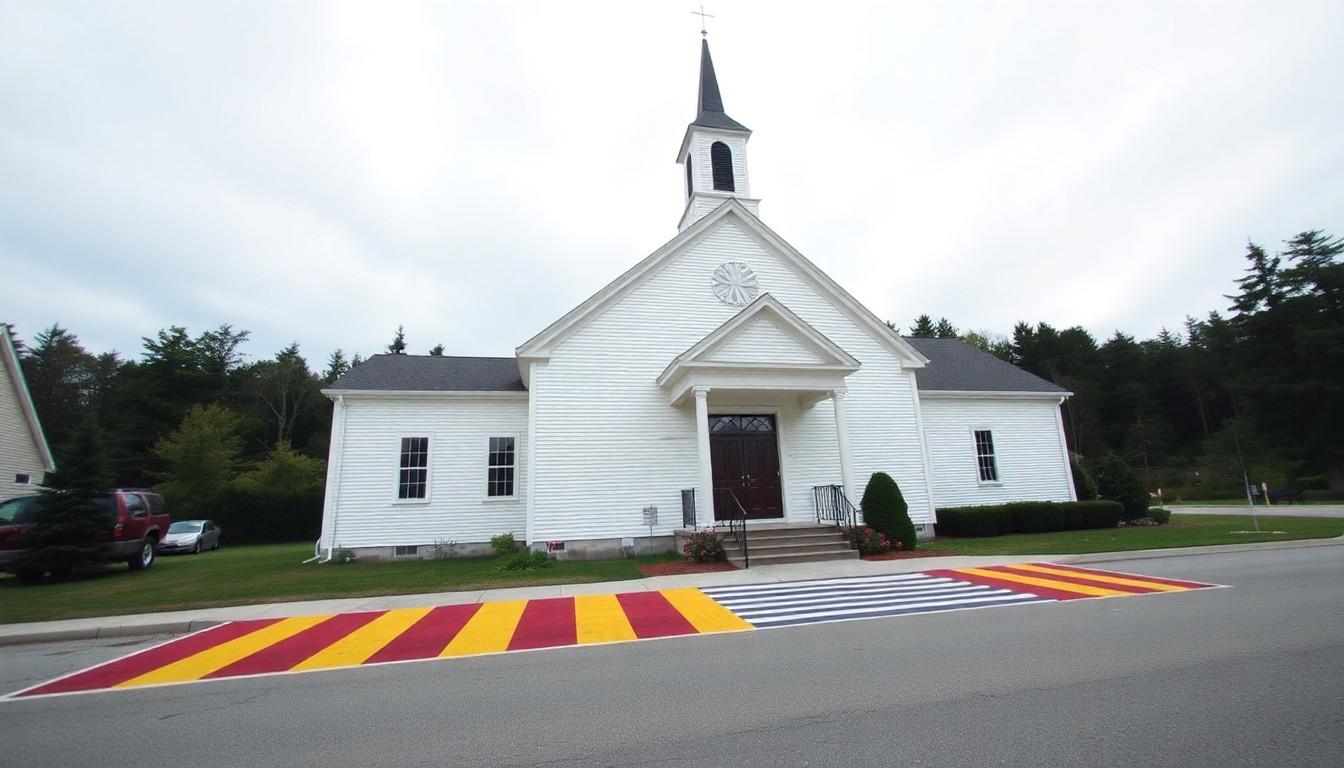
Celebrate with Cumberland’s Congregational Church as it marks 25 years of saying “welcome” , a local story about faith, community and why open-and-affirming churches still matter for LGBTQ+ people today.
Essential Takeaways
- Historic decision: Cumberland UCC voted to be Open and Affirming in 2001, a public pledge to welcome LGBTQ+ people in all aspects of church life.
- Trailblazing leadership: Diane Bennekamper served 21 years as Maine’s first openly gay minister, helping shift attitudes inside and beyond the pews.
- Visible symbols: The church marks Pride with services, rainbow doors and helped inspire a rainbow crosswalk nearby , clear, everyday reminders of welcome.
- Growing trend: Today more than half of Maine’s UCC churches carry Open and Affirming statements, and those declarations draw new members.
A quiet white church with a loud message
On Main Street in Cumberland, the Congregational Church looks traditional and calm, but its choices have made noise far beyond its steeple. Walk inside and you’ll hear people talk about rainbow socks, kept mementos and the memory of nearly every hand raised in 2001 when the congregation voted to become Open and Affirming. That sensory image , pews full of community, the soft rustle of programmes, the low murmur of welcome , is the reason this small church’s decision still feels important.
How one vote changed who felt at home
Back in 2001, the choice wasn’t an obvious one. The church had already made a bold move by calling Diane Bennekamper , openly gay and later pastor emerita , but formally declaring Open and Affirming required conversation, panels and some hand-wringing. The process made the abstract concrete: it stopped being about “them” and became about neighbours, children and members of families who’d been part of the congregation for years. That kind of local debate is exactly how change sticks.
Leadership that made acceptance visible
Leadership matters in tiny towns as much as in cities. Bennekamper’s two-decade ministry, and the later stewardship of Rev. Allison Smith, turned a policy into practice: weddings, pastoral care, youth work and public visibility. The church now stages Pride worship services and propped up eight painted doors in the town centre to reinforce the message that God’s love opens doors. These visible acts , a rainbow crosswalk, a colourful instalment of doors , turn a theological statement into something tangible people pass every day.
Why Open and Affirming still matters in 2026
Legal wins like marriage equality were huge, but the terrain keeps shifting, particularly around the rights and dignity of transgender youth. When a congregation publicly pledges welcome, it offers not only spiritual comfort but social safety and advocacy. For families with trans relatives, for queer young people testing their identity, an Open and Affirming church can be the first place they breathe easier. That’s why these statements aren’t just symbolic; they’re practical lifelines.
How these churches attract and keep people
Declarations of welcome clearly influence who walks through the doors. In Cumberland, people who’d hesitated to join a church found themselves drawn by the church’s long-standing stance. New members often say the welcome is immediate , the handshake, the inclusive language, the events for Pride month. If you’re church-hunting or advising someone who is, look for a congregation that pairs statements with action: visible outreach, inclusive ceremonies and partnerships with local groups such as the neighbouring community church.
It's a small change that can make every Sunday feel safer and more honest for more people.
Source Reference Map
Story idea inspired by: [1]
Sources by paragraph: