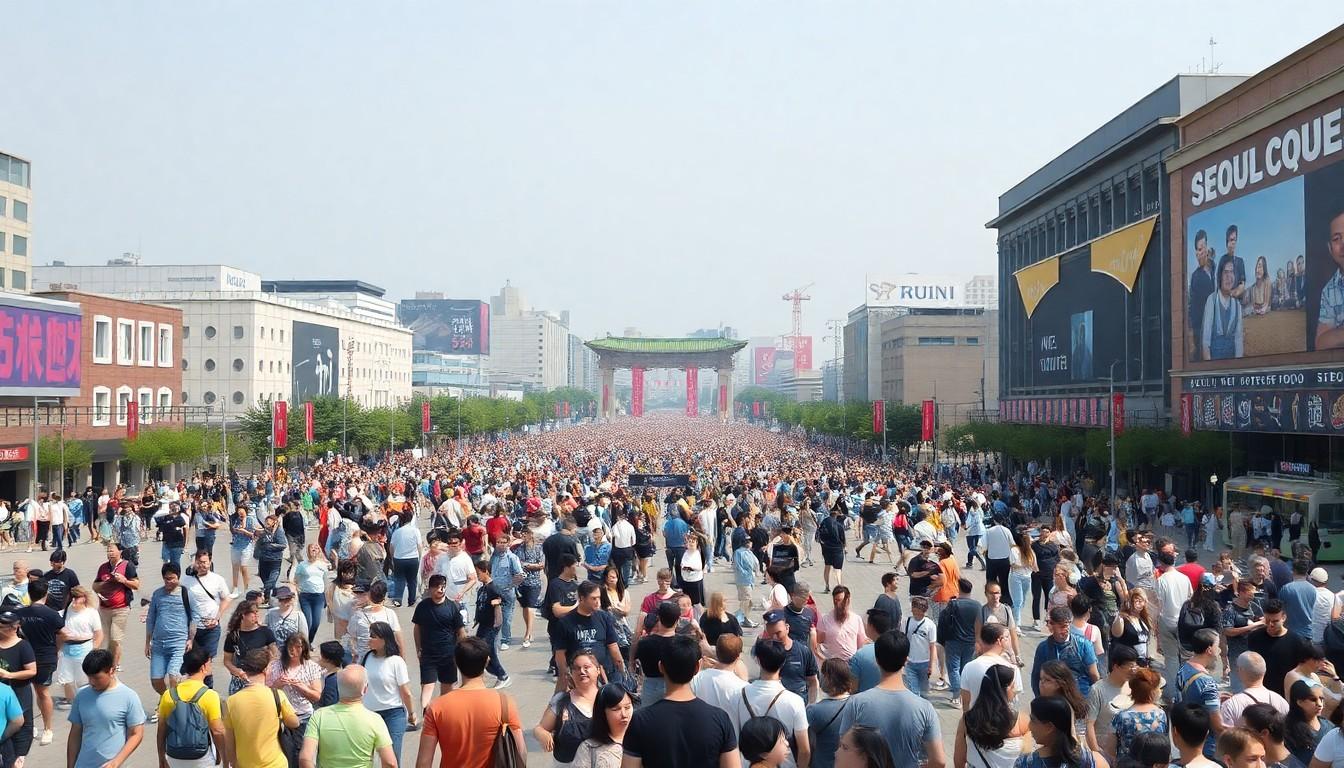
Thousands turned out in central Seoul for the annual Seoul Queer Culture Festival, a vivid mix of colour, speeches and a nearby counter-rally , a reminder that visibility remains the movement’s most powerful tool in a country where same-sex marriage isn’t yet legal.
Essential Takeaways
- Big turnout: Organisers and city data put the combined crowd at around 15,000 people, with festival stalls, a stage and a 3km parade route.
- Purposeful visibility: Festival leaders say the parade and events aim to make queer people visible across communities, creating space for coming out and connection.
- Counterpoint nearby: A conservative Christian group staged a counter-rally roughly 700 metres away and planned its own march, but no clashes were reported.
- Everyday detail: The festival opened with around 70 booths from mid-morning, offering everything from information to colourful, hands-on stalls.
- On-going struggle: Same-sex marriage remains unrecognised and anti-discrimination legislation has repeatedly stalled, so the festival doubles as both celebration and political statement.
A vivid centrepiece for visibility , what happened on the day
The parade was the heart of the festival, a three-kilometre route that gathered crowds in a warm, noisy celebration of community. The organisers set up a stage and roughly 70 booths from the late morning, so the area hummed with music, chatter and the smell of street food. According to the Seoul city administration’s real-time data, around 15,000 people were in the vicinity at the event’s peak, which underlines how public presence has become the festival’s clearest achievement. For many attendees, visibility isn’t vanity; it’s safety and recognition.
Why this festival still matters politically
South Korea does not legally recognise same-sex marriage, and efforts to pass comprehensive anti-discrimination laws have repeatedly hit roadblocks. That legal backdrop means this festival functions as both street party and protest. Organisers emphasise that being visible , marching, staffing booths, speaking from the stage , helps shift public perceptions and keeps political pressure alive. For people who’ve been hiding, the festival can feel like an invitation to breathe a little easier, as one participant said, hoping for a day when couples can marry openly.
The counter-rally and a calm distance
A conservative Christian group held a counter-rally a short walk from the main festival site and announced plans for their own march. The gatherings were roughly 700 metres apart, a separation that appears to have helped prevent confrontations; police and organisers reported no clashes as of the parade’s mid-afternoon. That calm doesn’t erase tensions, but it does show how crowd control, careful planning and visible policing can reduce the risk of violence while allowing both sides to make their voices heard.
How the festival has evolved , local context and trends
Over recent years the Seoul Queer Culture Festival has broadened from a niche event into a major annual fixture, with larger turnouts, more booths and higher-profile programming. Local groups and international visitors now treat it as a barometer of social change, while conservative pushback remains a consistent counterweight. Organisers have increasingly focused on creating family-friendly zones, information booths and legal advice stands, reflecting a shift from purely celebratory to more practical community support.
Practical tips if you’re planning to go next time
If you’re thinking of attending, go prepared: wear comfortable shoes for the parade, bring water and a small umbrella for shade, and plan a meeting spot in case your group scatters. Visit the information booths early to pick up maps and mental-health or legal-support resources. If you want a quieter experience, arrive before the parade starts when stalls are open but crowds are smaller. And remember, being visible is optional , participation can be as simple as listening, learning, or waving from the sidelines.
It’s a small change that can make every step toward recognition feel a little safer and a lot louder.
Source Reference Map
Story idea inspired by: [1]
Sources by paragraph: