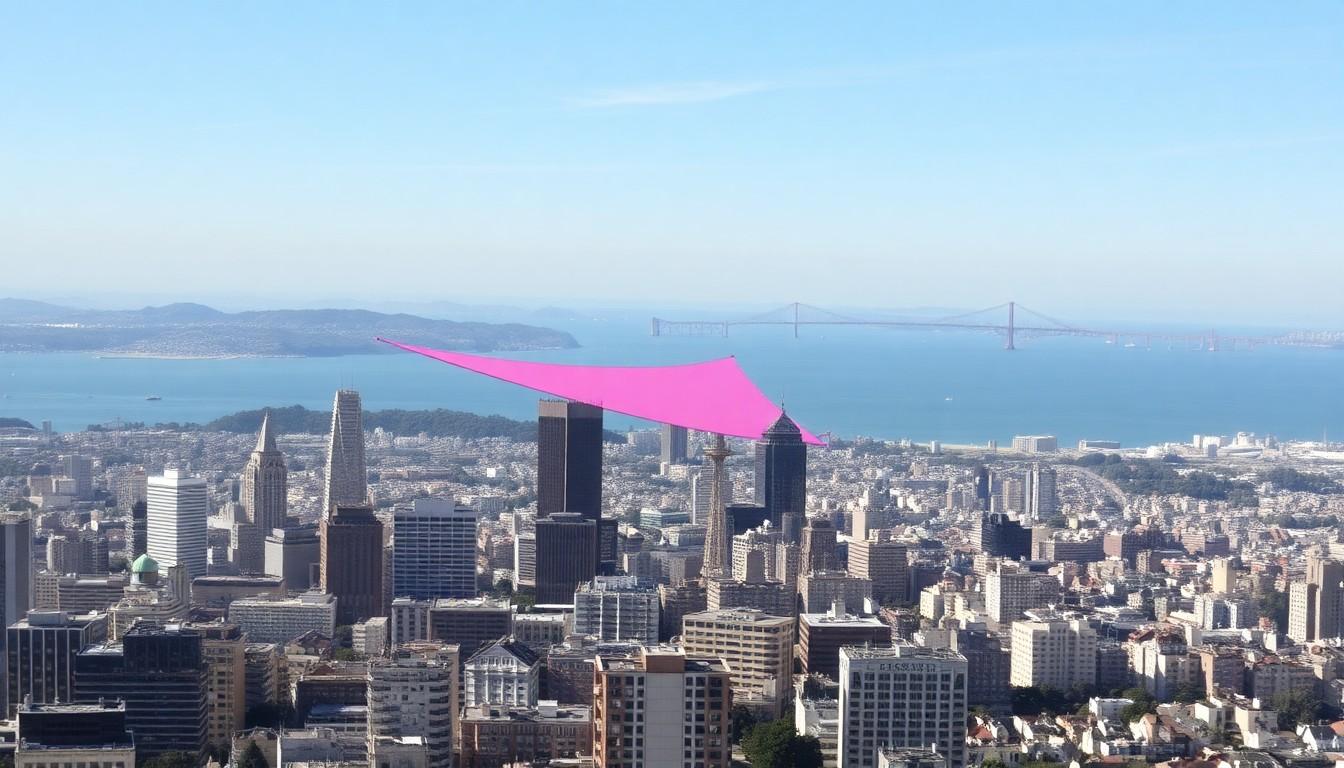
Shoppers are turning their heads again at Twin Peaks , the 31st annual Pink Triangle has returned, a vast, visible memorial and community project that marks Pride Season 2026 and reminds San Franciscans why history, memory and visibility still matter.
Essential Takeaways
- Huge and visible: The Pink Triangle on Twin Peaks covers nearly an acre and can be seen for about 20 miles, making it a striking, high-impact memorial.
- Historical weight: The symbol recalls the badge of shame forced on gay men in Nazi concentration camps and now serves as a warning against renewed persecution.
- Community-built: Hundreds volunteer to lay out 175 tarps and shiny sailcloth borders; helpers get a commemorative T-shirt and take part in a ceremony.
- Events and partners: The installation featured a commemoration with the Pride Band and civic speakers; sponsors include Kaiser Permanente, Levi Strauss & Co., and the Gilead Foundation.
- Volunteer need: The take-down on 28 June still needs hands , even an hour helps; donations are tax-deductible via the project’s fiscal sponsor, San Francisco Pride.
A giant triangle with a small, sharp memory
The first sight of the Pink Triangle feels both celebratory and solemn , the shiny pink sailcloth flashes in the sun, but the story behind the shape is heavy. According to history sources, the inverted pink triangle was once a marker of persecution in Nazi camps, used to identify and brutalise gay men. That memory is exactly why the Twin Peaks project hits differently than a banner or float: it’s public, permanent for a few days, and unmissable. For locals, the installation is a visual mnemonic , a way of saying, we remember, and we’re watching.
How a community makes an acre of meaning
The Pink Triangle is as much about people as it is about plywood and tarps. Organisers describe hundreds of volunteers assembling 175 tarps and hundreds of feet of five-foot-wide sailcloth to form the outline. Volunteers earn the project’s fashionable T-shirt; wear it by choice, not coercion, and that contrast is part of the point. The event has long been a ritual of cooperation and remembrance, and this year’s build and the later tear-down on 28 June keep that civic muscle in motion. If you can spare an hour to help fold and load, organisers say it’ll make a meaningful difference.
Symbols in tension: shame and hope
The Pink Triangle and the Rainbow Flag sit in an uneasy, instructive pair. One began as a stigma; the other was designed by Gilbert Baker as an antidote of colour and optimism. Over the years, activists and historians have reclaimed the triangle as a teachable reminder, while the rainbow continues to signal celebration and inclusivity. That contrast matters now: with renewed attacks on LGBTQIA+ rights and the specific targeting of trans people and drag events, public displays that invoke history act as both memorial and alarm bell.
Ceremony, culture and the politics of Pride 2026
This year’s dedication included music from the Pride Band and speakers ranging from civic leaders to community icons, reinforcing the display’s dual role as art and advocacy. According to local Pride schedules, the ceremony blends performance with testimony , and those voices returned to a familiar theme: vigilance. Sponsors from big healthcare names to local businesses helped underwrite the project, underscoring how mainstream support can prop up grassroots memory projects. The message at the mic was clear: remembering the past helps resist the present day’s erosions.
How to experience or support the project
Want to see it in person? Drive up or find a viewing point with a wide sightline; the triangle is visible from many vantage points across the city on clear days. If you can’t make it, consider donating through the project’s online giving page , contributions are tax-deductible because San Francisco Pride holds the funds. And if you want to help hands-on, sign up for the take-down shift on 28 June; even one hour folding tarps helps preserve the art for next year and keeps the community connected.
It's a small change of habits that keeps memory alive , show up, fold a tarp, or tell someone the triangle’s story.
Source Reference Map
Story idea inspired by: [1]
Sources by paragraph: