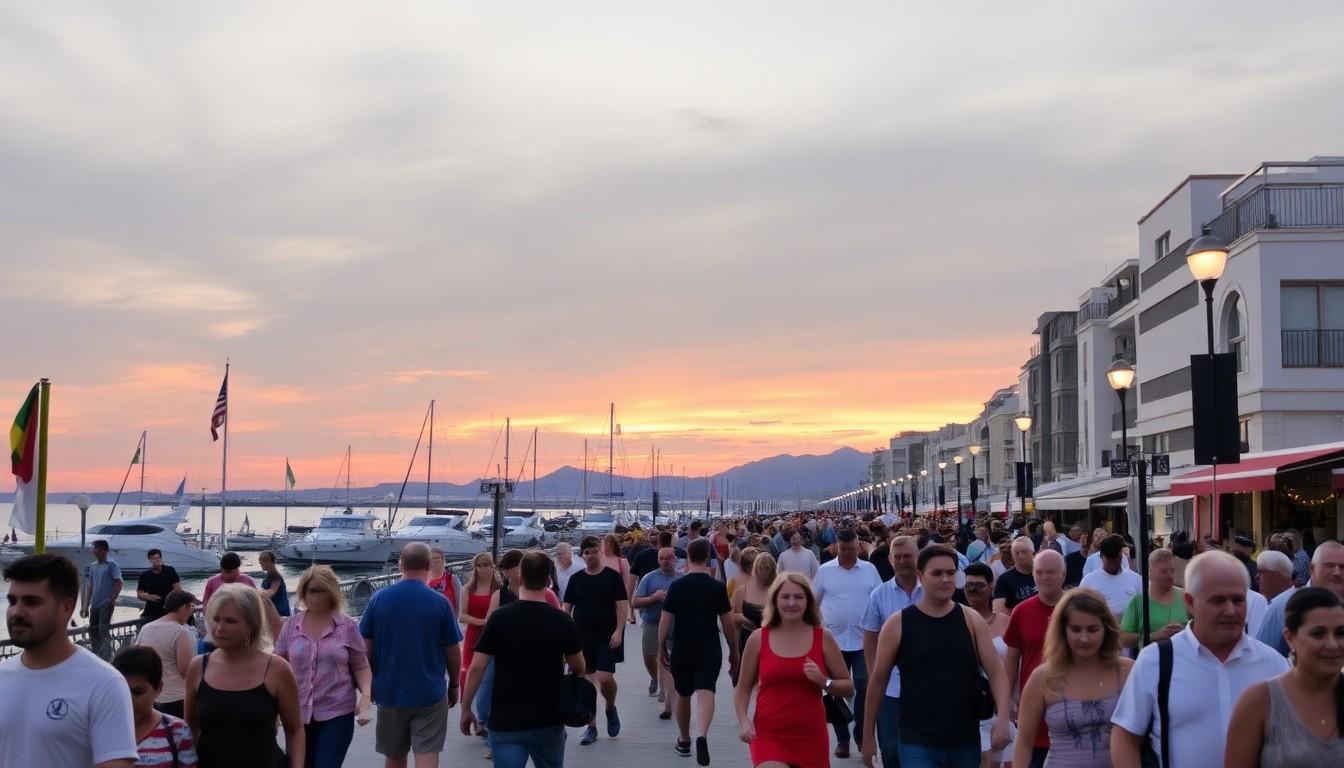
Shining a light on a long‑neglected corner of Italy, organisers are staging Catanzaro’s first ever Pride on 8 August along the Lido seafront , a landmark moment for Calabria that aims to change how the region is seen, support people still living in the closet, and push for concrete rights and local solidarity.
Essential Takeaways
- Historic first: Catanzaro will host its inaugural Pride parade on 8 August, the only regional LGBTQIA+ march scheduled in Calabria for 2026.
- Grassroots roots: The event grew from a year‑long “Road to Pride” programme of public meetings, book talks and community organising.
- Political manifesto: The march defines itself as transfeminist and intersectional, linking LGBTQIA+ rights with anti‑racism, class issues and disability access.
- Local support: The city council is backing the event financially and organisationally, while fundraising and sponsor searches continue.
- Contested space: The Pride has already provoked pushback from political opponents, underlining how symbolic the parade will be for visibility and local debate.
A first step that feels like a big one
The simplest fact carries weight: Catanzaro has never had a Pride parade until now, and that absence is a texture you can almost feel , a quieter city where many still hide their identities. According to organisers, the decision to host the march on the Lido seafront was deliberate: a busy, visible stretch where the message can’t be overlooked. That kind of public presence matters , people told organisers they wanted to see themselves reflected in the city again.
Born from Road to Pride: how years of groundwork paid off
This isn’t an overnight campaign. The Catanzaro event grew out of Road to Pride, a rolling series of events over the last year that included book presentations and public conversations aimed at building trust and networks. Organisers like Giovanni Carpanzano describe the process as “built from below”, with associations, trade unions and citizens gradually joining. That long game helped create the local conditions to ask a conservative city to accept , and fund , a Pride.
A manifesto that refuses to be narrow
Organisers have framed the march as explicitly transfeminist and intersectional, arguing that homophobia and transphobia don’t sit alone but interlock with racism, class bias and ableism. The political platform calls for rights such as legal recognition for same‑sex families, marriage equality, and a national law against homolesbotransphobia, while also campaigning for easier gender‑affirmation paths. For people who’ve felt isolated, the manifesto’s reach is a signal that the parade wants to speak for multiple struggles, not just parade floats.
City backing and grassroots funding , a pragmatic mix
Local government support is notable: the municipality of Catanzaro is contributing to costs and logistics, and organisers say talks are underway with the regional council, the university and a range of local associations. At the same time, there’s an ongoing crowdfunding push and a search for sponsors aligned with Pride values. That hybrid approach keeps the event connected to the community while also giving it institutional legitimacy , useful if the aim is to make the parade an annual fixture.
Controversy tells you why this matters
Not everyone is pleased. Voices from right‑wing parties have already attacked public spending linked to the Pride, and political rows have underscored how charged the event is. Organisers also take a stance on international issues , endorsing the “No Pride in Genocide” campaign and denouncing violence against Palestinians , which situates Catanzaro Pride in a broader global conversation and explains why it will ruffle feathers. Those tensions show the event isn’t just celebratory: it’s a political act that will test local solidarity and public debate.
What this means for people living in Calabria
For many Calabresi who’ve felt forced to leave the region to live openly, the parade aims to offer a different choice: visibility without exile. Organisers report that people from outlying provinces have already reached out seeking support, and the open seafront route was chosen to maximise everyday encounters. If the goal is both culture change and practical help, the parade’s visibility could be the start of more services, networks and safer public life for LGBTQIA+ people across the region.
It's a small change that can make everyday life feel less hidden and more possible.
Source Reference Map
Story idea inspired by: [1]
Sources by paragraph: