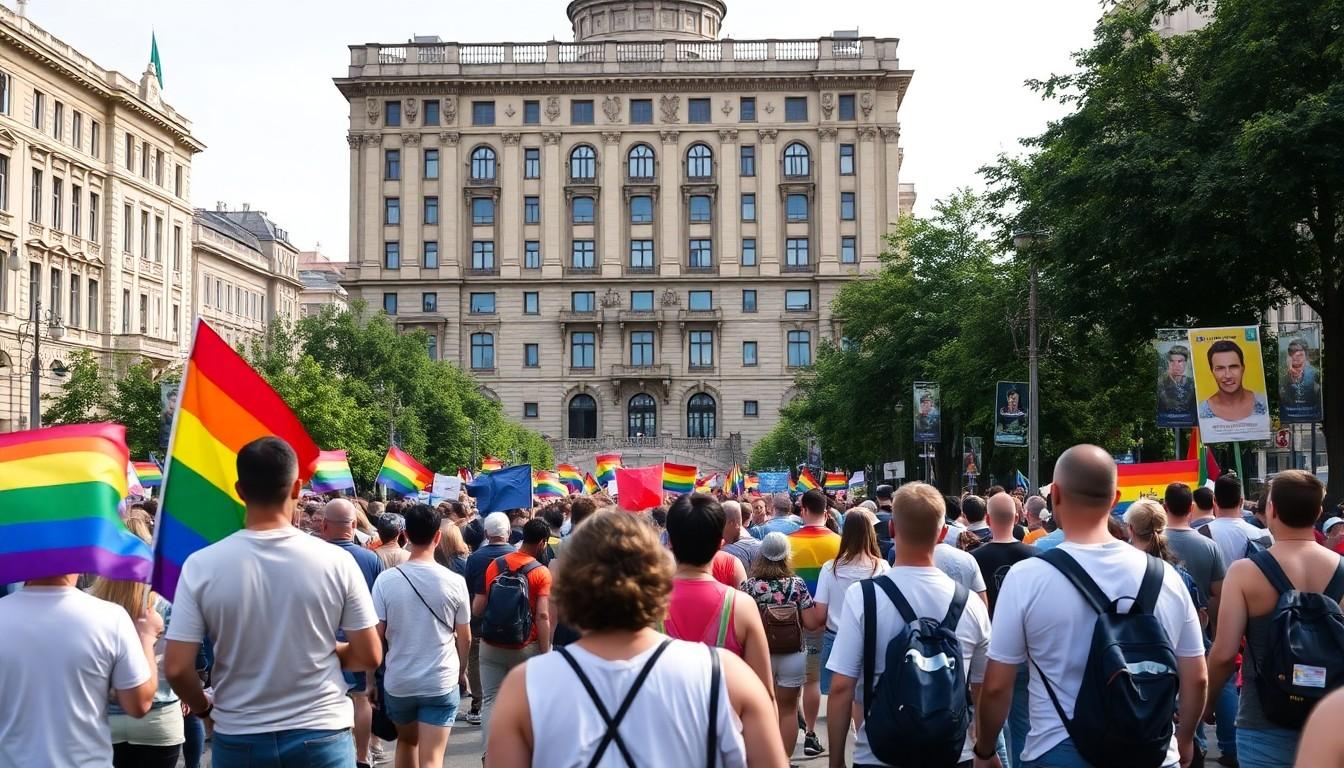
Shoppers, students and families turned Calea Victoriei into a ribbon of colour as Bucharest Pride 2026 kicked off , organisers expect around 30,000 people to march for visibility, rights and joy. Here’s what to know about the ALL OF US theme, who’s taking part and why this year’s parade matters across Romania.
Essential Takeaways
- Big turnout expected: Organisers signalled about 30,000 people were invited to join the two‑hour march along Calea Victoriei, bringing flags, balloons and handmade placards.
- Theme explained: ALL OF US frames the festival as a call for unity and inclusion across sexual orientation, gender identity, disability, religion, age and ethnicity.
- Groups involved: MozaiQ and Accept are among the main voices promoting visibility, solidarity and legal recognition for LGBTQIA+ people in Romania.
- National ripple: Sister marches and events are planned in Cluj, Braşov, Iaşi, Oradea and Timişoara, showing the movement isn’t limited to the capital.
- Legal context: Activists point to European Court of Human Rights and EU Court of Justice rulings as foundations for anti‑discrimination and legal recognition claims.
A bright, noisy start on Calea Victoriei , and a clear message
The procession began with a colourful crowd gathering early on Calea Victoriei, wearing bright outfits and waving small flags and balloons, giving the street a celebratory, expectant hum. Organisers from MozaiQ invited people to bring friends, family, colleagues and even pets , a simple line that underscores Pride’s dual purpose: protest and party. According to reports, the march is scheduled to last roughly two hours, a compact but visible demonstration of numbers and spirit.
ALL OF US: more than a slogan
The festival’s ALL OF US banner is deliberately inclusive. Accept framed it as a reminder that dignity and rights belong to everyone, and that inclusion must reach across gender identity, sexual orientation and other differences. That framing comes at a time when activists say polarisation and prejudice remain powerful forces in Europe, and it seeks to reassert basic human‑rights language. Expect speeches, banners and materials that stress both shared humanity and the specific legal claims still being pursued.
Who’s organising and why their voices matter
MozaiQ and Accept are front and centre, with both groups using social channels and on‑the‑ground outreach to mobilise participants. MozaiQ’s invite reads a bit like a friendly, insistent nudge: come one, come all , even those who’ve never been to Pride. Accept, meanwhile, anchors the event in legal and human‑rights frameworks, reminding people that EU and Council of Europe rulings back protections against discrimination and demand implementation by member states. That mix of grassroots celebration and legal argument is a hallmark of contemporary Pride organising.
What this looks like across Romania
Bucharest may be the headline, but similar marches and events are planned in a cluster of cities from Cluj to Timişoara. That spread matters: it shows growth in visibility outside the capital and offers safer, local spaces for people who can’t travel. Regional events tend to be smaller and more intimate, but they often feel no less significant to participants , sometimes even more transformative, because they happen where people live and work.
Practical bits: how to join, watch or support safely
If you’re heading to Pride, go early for a good spot and bring water and comfortable shoes , the procession lasts a couple of hours and the pavement can get crowded. If you’d rather support from home, follow MozaiQ and Accept on social media for live updates and share their messages to boost visibility. For employers, a simple email affirming support and flexible time off helps colleagues attend without worry. And if you’re new to Pride, bring a friend , the atmosphere is meant to be welcoming.
It’s a small change that can make every march, meetup and conversation a little safer and a lot louder.
Source Reference Map
Story idea inspired by: [1]
Sources by paragraph: