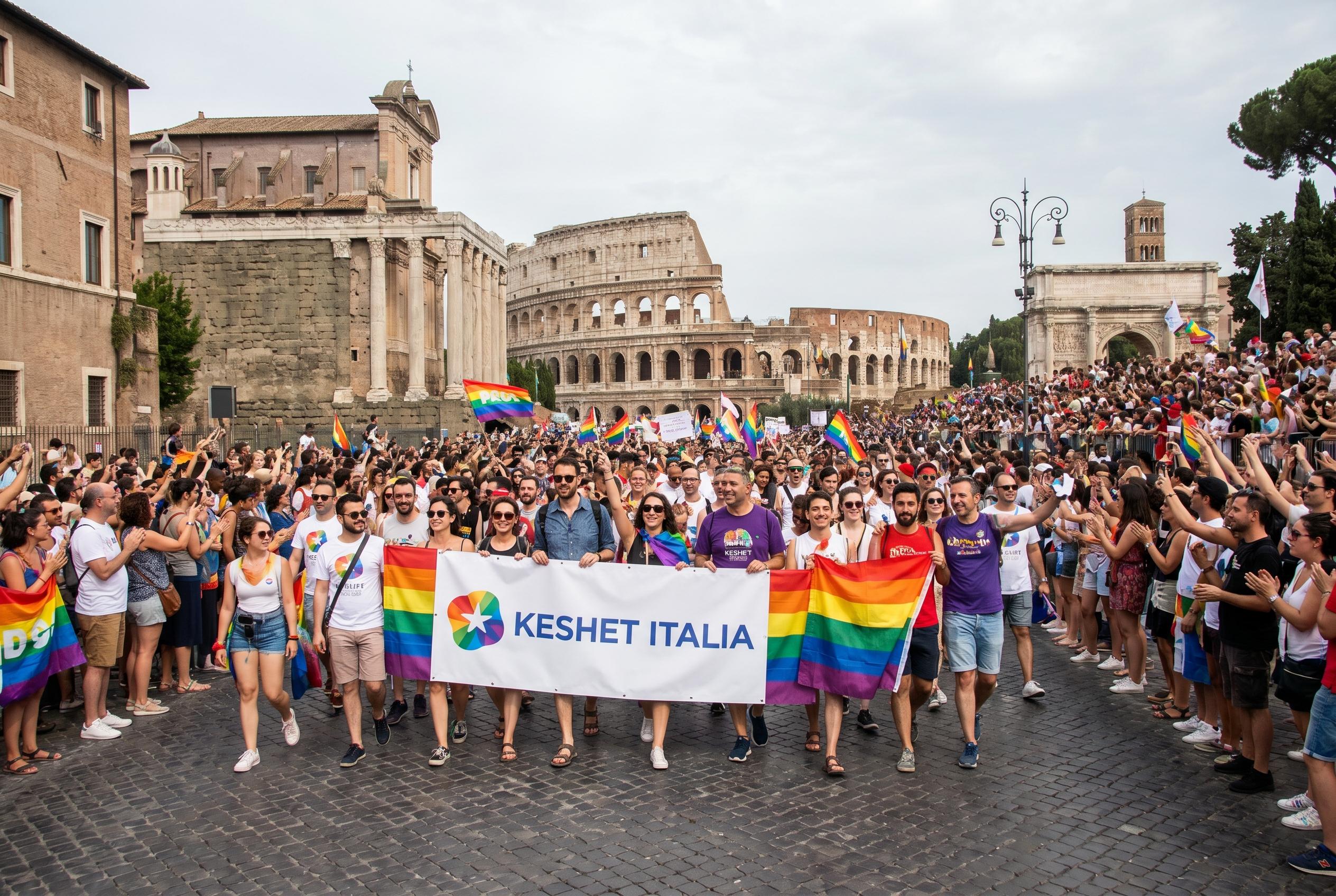
Spotlight the moment: organisers of Rome Pride have barred Italy’s only Jewish LGBT group from marching with a float, sparking debate about inclusion, free expression and whether social movements can demand political litmus tests. Here’s what we know, why it matters and how communities are reacting.
Essential Takeaways
- What happened: Rome Pride organisers refused Keshet Italia a parade float, saying the group hadn’t explicitly condemned Israel’s actions in Gaza as genocide.
- Organisers’ stance: Roma Pride says a float implies endorsement of the parade’s political platform and that the group failed a political "exam".
- Community reaction: Jewish and civil-society organisations criticised the decision as exclusionary and potentially coercive.
- Practical effect: Keshet Italia can still attend on foot but not with a float; the row raises wider questions about who sets the terms of participation.
- Tone and stakes: The dispute blends LGBT visibility politics with international conflict over Gaza, intensifying emotions and public scrutiny.
What the ban actually says , and feels like
Roma Pride’s statement makes a sharp, almost tactile distinction: a float means you endorse the parade’s political platform. That’s the organisers’ organising logic, and it comes with a clear emotional undertone , they say they’re defending a principled stance. According to reporting, organisers told Keshet Italia there weren’t conditions to grant a float because the group hadn’t condemned the alleged genocide in Gaza. The decision landed like a cold surprise for many: Pride is usually about openness, yet here an explicit political alignment was demanded.
How Keshet Italia and Jewish organisations reacted
Keshet Italia responded with anger and hurt, describing the move as an ideological test. They argued the exclusion targeted Jewish LGBT people for not toeing a particular political line. European Jewish bodies, including the European Jewish Congress, warned the decision risks conditioning participation by forcing associations to adopt specific political positions. That pushback turned the row from a parade logistics dispute into a broader civic debate about inclusion, identity and freedom of conscience.
Why this is more than a local spat
This episode sits at the intersection of two charged public conversations: the politics of Pride and the international dispute over Gaza. Events that are normally celebratory have in recent years become platforms for political expression, and organisers are increasingly formal about what messages they’ll host. Critics say that’s understandable; supporters argue it can exclude minority groups who identify with both Jewish and LGBT communities. The result is a tricky balancing act for organisers who want coherence, and for groups who fear being forced to choose between parts of their identity.
Practical fallout for participants and organisers
For Keshet Italia, the immediate impact is logistical: no float at the 20 June march, though members can still attend. For other groups, it sets a precedent , if floats require alignment with the parade’s platform, smaller organisations may be pressured into public stances they’d rather avoid. If you’re an organiser, the lesson is to be transparent early: publish your platform and participation rules so alliances aren’t tested last minute. If you’re a community group, consider whether you’ll seek a formal space or join on foot to keep visibility without endorsing every plank of a host organisation’s platform.
Where this debate might go next
Expect continued statements from Jewish organisations, human-rights groups and Pride networks across Europe. Some will demand rescission of the ban; others will side with Roma Pride’s right to curate its political message. The controversy highlights an awkward truth: movements that champion inclusion sometimes police the bounds of acceptable politics. That tension isn’t new, but when international conflicts are invoked, emotions escalate and the public conversation becomes a referendum on values. Either way, the outcome will matter for future Pride events and for groups navigating overlapping identities.
It's a small shift with big symbolic weight , and one small decision that could alter how Pride parades define inclusivity going forward.
Source Reference Map
Story idea inspired by: [1]
Sources by paragraph: