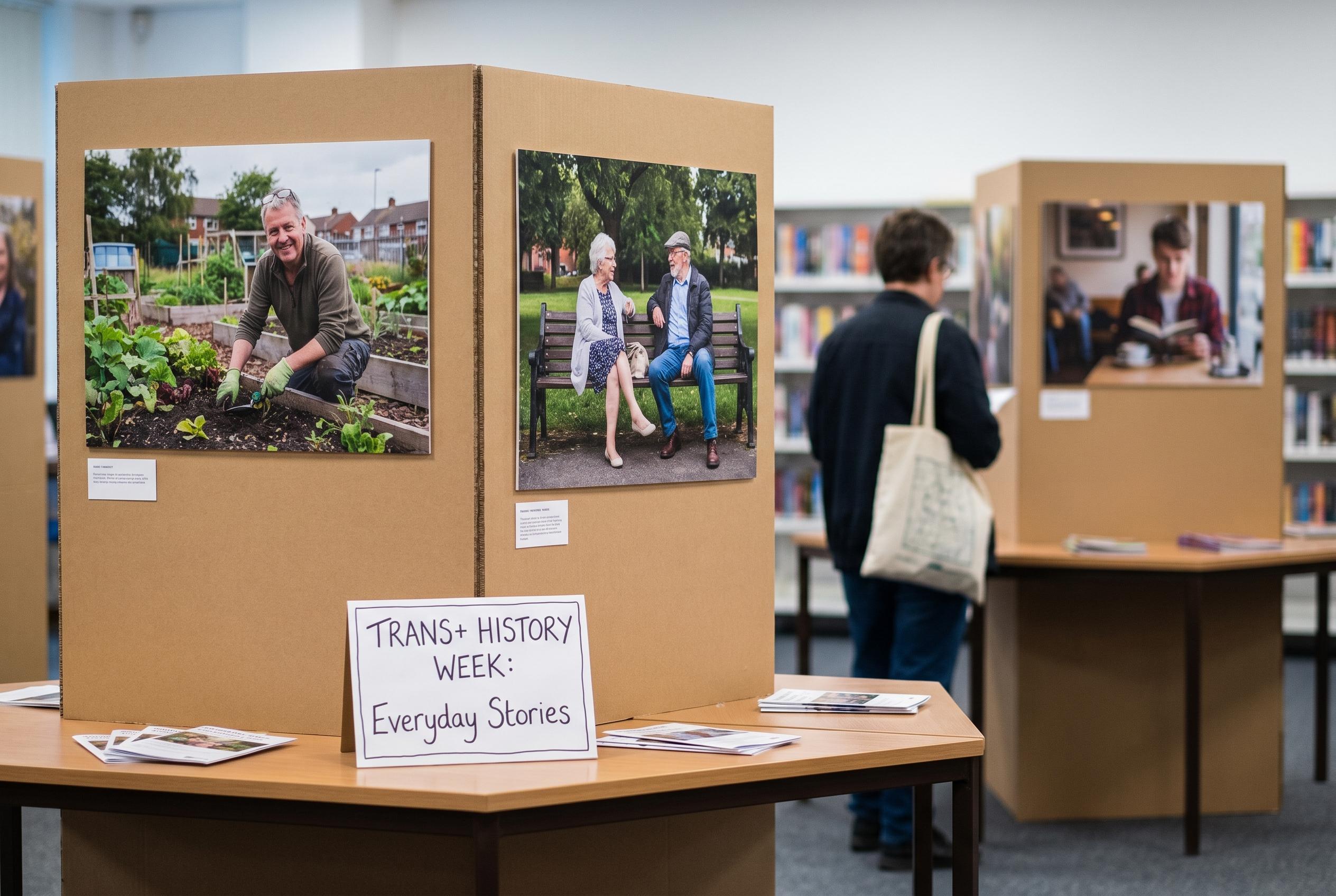
Shoppers and commuters are seeing bold new visuals as Trans+ History Week returns (4–10 May), bringing a national campaign called Reflections to stations, malls and public spaces , and offering live events, creative workbooks and a chance to honour centuries of trans+, non-binary and intersex lives.
Essential Takeaways
- Nationwide visibility: Reflections posters will appear in major hubs like Liverpool Central, Manchester’s Hotel Football and London’s Boxpark Wembley, giving trans+ stories a public stage.
- Creative output: Twenty-one trans+ creatives have produced original storytelling projects, alongside the third-year Trans+ History Week workbook , tactile, readable and community-led.
- Live events in London: Trans+ History Day (6 May) features a QueerAF podcast recording and a storytelling panel; 8 May hosts an all-trans+ comedy fundraiser with rising acts.
- Easy ways to join: Attend Outsavvy-listed events, download the workbook, or look for displays in shopping centres and transport hubs.
- Emotional resonance: The campaign’s slogans , about strength and hidden histories , aim to counter harmful media narratives that many trans+ people say damage their mental health.
Why Reflections matters now , public images with a purpose
The Reflections campaign is loud in a quiet way: striking posters placed where people pass every day, with slogans that nudge you to think twice. That visual presence matters because so much of the current debate about trans+ people is fought in headlines and soundbites, not in galleries or community rooms. According to campaign organisers, these displays are intended to normalise trans+ lives by showing their continuity through history, which can feel comforting and steady. If you’re travelling this week, look up , the artwork is designed to stop a second and invite thought, not lecture.
The creative heart: new stories and a workbook for classrooms
This year’s creative programme pairs 21 trans+ authors and illustrators with QueerAF to publish new work across the week, and the returning workbook offers activities for schools and community groups. The workbook is practical , easy to run in classrooms, adaptable for workshops, and it helps people share history without gatekeeping. For teachers and youth workers, it’s a ready-made resource that avoids jargon while centring lived experience. Expect short, accessible pieces that work well in lesson plans or on a commute.
Events to book: podcast, panels and a comedy night
If you prefer being in the room, there are two headline events in London. On 6 May a live QueerAF podcast recording features hosts and guests from across TV and reality circuits, followed by a panel on storytelling with trans+ creatives. Then on 8 May an all-trans+ comedy showcase turns fundraising into a night out, with emerging names on the roster. Tickets are available via Outsavvy, so book early , these grassroots nights sell out quickly and they’re also a warm way to meet community members and allies.
How the campaign fits into the bigger picture
Trans+ History Week arrives against a fraught political backdrop, coming just before MPs scrutinise changes to the EHRC Code of Practice after last year’s Supreme Court ruling. Organisers frame Reflections as both celebration and resistance: a reminder that trans+ people have always existed and contributed to society. The campaign is part cultural education, part civic presence, and part emotional support , and that mix is intentional. If you follow public affairs, it’s worth noting how cultural visibility feeds into policy conversations.
Simple ways to take part, whether you live nearby or afar
You don’t need a London ticket to join in. Download the workbook from the Trans+ History Week site, follow the creators’ releases online, share posts using the campaign’s messages, or spot the installations while you travel. Small actions , retweeting a story, bringing the workbook into a class, or attending a local meetup , add up. For anyone who wants to support queer media, consider backing outlets and charities that amplify trans+ voices so the work continues beyond a single week.
It's a small, public push that could change how people see the past , and one way to make sure those reflections keep reflecting real lives.
Source Reference Map
Story idea inspired by: [1]
Sources by paragraph: