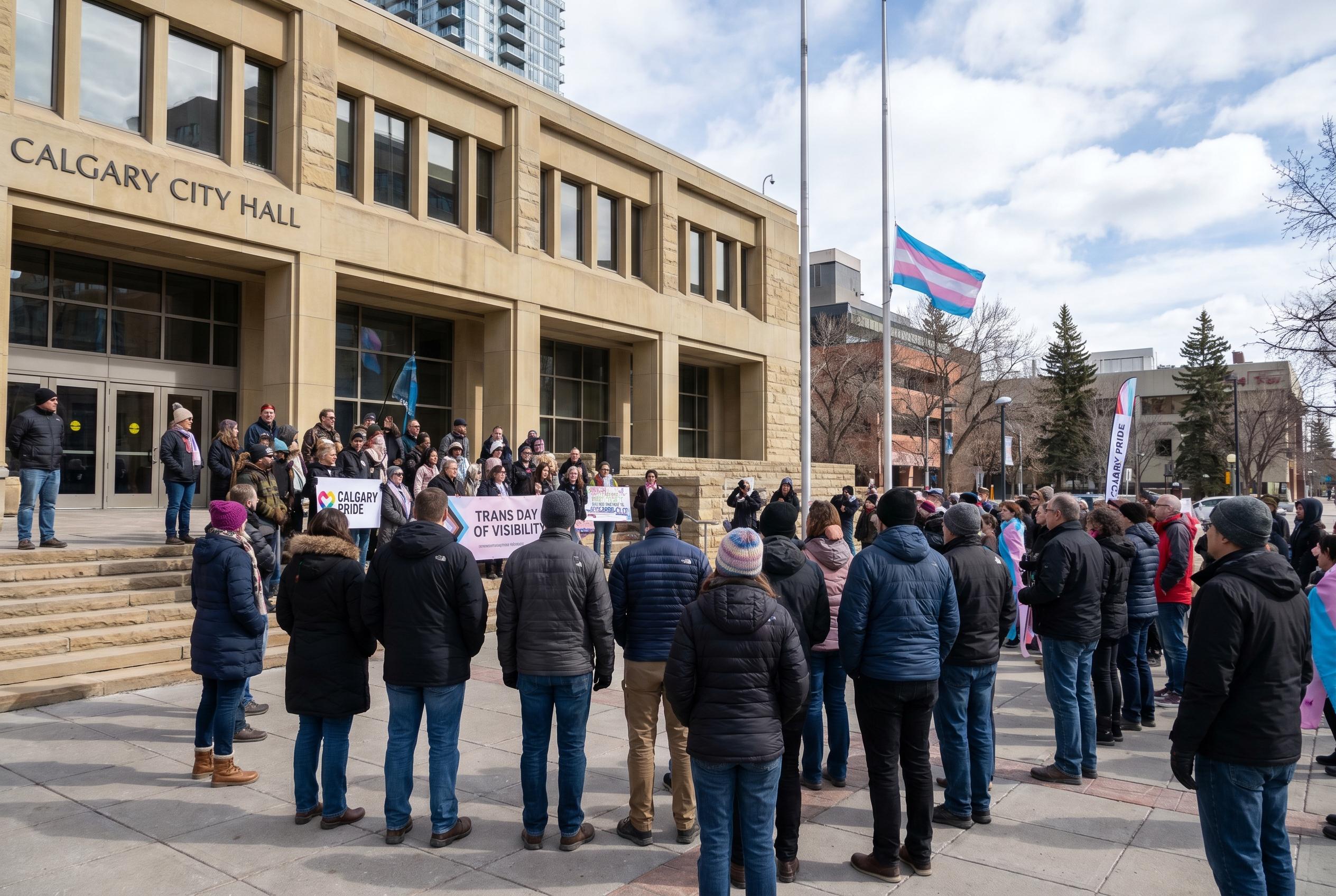
Shoppers, neighbours and activists have gathered on Calgary’s steps for years; this March 31st flag raising at City Hall shows how Transgender Day of Visibility has grown into a yearly moment of celebration, community and political reflection that matters to trans Calgarians and allies.
Essential Takeaways
- Origins: Trans Day of Visibility began in 2009 as a celebratory counterpart to Trans Day of Remembrance.
- Local milestone: Calgary formally recognised TDoV in 2013 with a mayoral proclamation, signalling early civic support.
- Growing turnout: The 2026 flag raising drew 100+ attendees, including city councillors and the mayor, with a lively, hopeful atmosphere.
- Mixed backdrop: Community celebration continues alongside rising concerns about provincial policy affecting trans youth and healthcare.
- Living history: Local elders, activists and artists shared personal stories, linking present visibility to decades of Calgary trans organising.
A vivid tradition: what the 2026 flag raising felt like
The flag rose against a cool spring sky and the crowd’s chatter had the intimate hum of a neighbourhood gathering, not a formal civic ritual. Speakers spoke candidly, laughter and quiet wipes of the eye punctuating moments of memory and pride. According to organisers and attendees, the event blended celebration with sober reminders about ongoing political threats. For many who’ve attended year after year, that mix is familiar , it’s what makes TDoV in Calgary feel both tender and urgent.
How Trans Day of Visibility started , and why it mattered then
Trans Day of Visibility was first imagined in 2009 as a day to celebrate trans people and their contributions, a corrective to the grief-centred Trans Day of Remembrance. Encyclopaedia Britannica and PBS both trace the day’s roots to grassroots activists who wanted a public moment of joy and recognition. In Calgary, the idea found civic expression in 2013 when the mayor proclaimed March 31st as a day to mark trans lives, reflecting local organising and the work of groups like the Trans Equality Society of Alberta.
The 2016 turning point and the decade since
Speakers at the 2026 event recalled a big gathering in 2016 at Jack Singer Concert Hall, when optimism about provincial guidelines supporting gender diversity in schools felt real. Coverage at the time captured that hopeful mood. But the past decade has been uneven: advances in policy and visibility have sometimes been followed by political backlash. Locally, people who accessed gender-affirming care in those years remember how meaningful public support felt , and how precarious that progress now seems.
Voices on the podium: elders, parents and artists
This year’s line-up read like a who’s who of Calgary’s trans community , elders, Two-Spirit knowledge keepers, activists and parents. Karrie-Lynn spoke about childhood and coming out, urging comfort and honesty; community leaders asked attendees to celebrate trans people rather than centre anxiety on policy for that day. The human detail matters: speakers’ stories , soft, wry, fierce , turned the flag raising into an oral history in miniature, connecting personal memory to public life.
Why visibility still matters amid political threats
Visibility isn’t just about parades or proclamations; it’s a strategy for humanising lives targeted by policy. Human Rights Campaign materials and philanthropy profiles show how TDoV has become a global moment for education and support, while local activists caution that celebration must sit alongside ongoing advocacy for healthcare and youth protections. Practically, that means turning out to events, supporting local trans-led organisations, and staying informed about provincial legislation that affects access to care.
How to mark TDoV in a way that helps
If you want to show up meaningfully, attend community events or fundraise for trans-led services, listen to elders’ stories, and donate to groups doing direct support work. For parents and teachers, small actions , affirming language, respecting names and pronouns, learning local resources , matter every day. And if you organise, pair celebration with a clear call to action so visibility builds capacity, not just applause.
It's a small but powerful civic ritual: the flag goes up, voices are heard, and a city keeps adding chapters to its trans history.
Source Reference Map
Story idea inspired by: [1]
Sources by paragraph: