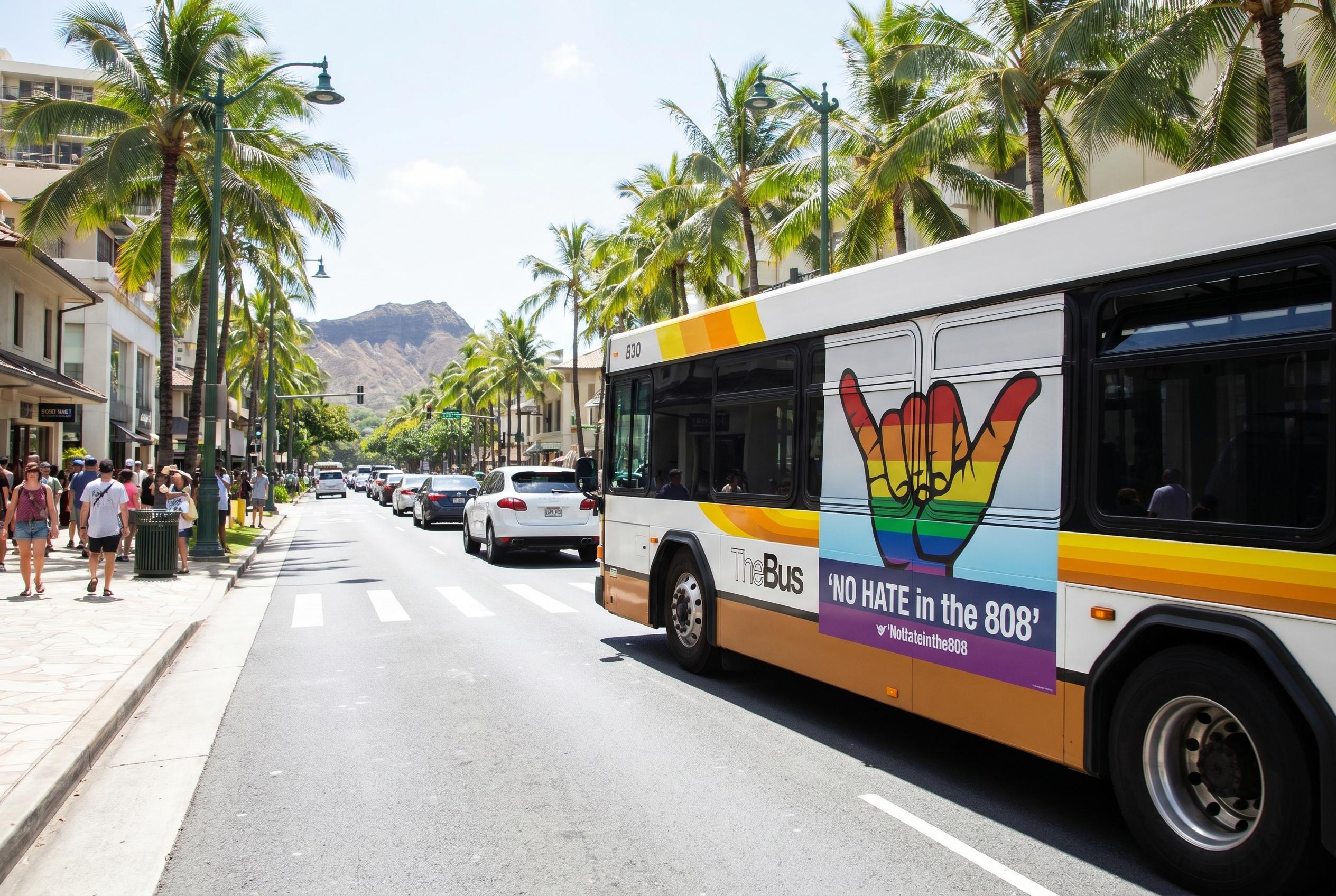
Shoppers, commuters and island residents are noticing a new message on buses and social feeds: a trio of state commissions has launched "No Hate in the 808" to raise awareness of Hawaiʻi’s civil-rights protections and where to turn if you face discrimination. It’s a practical, visible push aimed at keeping communities safe and informed.
Essential Takeaways
- Who’s involved: The Hawaiʻi State LGBTQ+ Commission, Hawaiʻi State Commission on the Status of Women, and the Hawaiʻi Civil Rights Commission partnered with Rainbow Family 808 to run the campaign.
- Where it appears: Bus ads will run on Oʻahu and Hawaiʻi Island from 1–31 May, plus targeted social media outreach; future expansion to other counties is planned.
- Why it matters: Hawaiʻi law bars discrimination in employment, housing and public accommodations across many protected classes, but protections only help if people know them.
- How to act: If you believe you’ve experienced unlawful discrimination, contact the Hawaiʻi Civil Rights Commission at 808-586-8636 or [email protected].
- Local reach: The campaign leverages county nonprofit ad programs and community groups to reach commuters, students and families where they are.
Why three commissions teamed up , and why the timing feels right
Public messaging that’s bold, clear and local can change behaviour, and this partnership is an example of that. The Hawaiʻi State LGBTQ+ Commission, the State Commission on the Status of Women and the Hawaiʻi Civil Rights Commission joined forces to make a single, louder voice about rights and remedies. It’s the first time the three have run a statewide initiative together, and that combination gives the campaign both legal heft and community credibility. For someone who’s ever felt unsure about where to complain or what counts as unlawful treatment, seeing the message on a bus or in your feed makes the legal protection feel tangible.
What the campaign actually says , and where you’ll see it
Expect simple, practical creative aimed at everyday places: buses, digital ads and social channels where residents spend time. The initial rollout starts on Oʻahu and Hawaiʻi Island with bus ads running through May, supported by county nonprofit advertising programmes to expand reach. According to state announcements, the messaging highlights the main protected categories and points people to a single contact point for help. That clarity matters , a quick, recognisable route to assistance reduces the friction of reporting discrimination.
What Hawaiʻi law protects , plain-language guide
Hawaiʻi has some of the broadest civil-rights protections in the country, covering employment, housing, public accommodations and state-funded services. Protections include, among others, sex, gender identity and expression, sexual orientation, race, ancestry, religion, disability, age and even breastfeeding or reproductive health choices. The practical tip: if you feel you were denied service, treated differently at work, or faced harassment, those are the situations this law is designed to address. Keeping a short record of what happened, when and who was there will strengthen any complaint you might make.
Community partners and why small nonprofits matter here
Partnering with Rainbow Family 808 , a local nonprofit that supports families and unaccompanied minors , gives the campaign roots in communities that need extra outreach. Local groups bring trust and channels that a state campaign alone might miss: shelters, youth services and family-centred programmes are natural places to explain rights in person. County ad programmes are also helping with funding, which means ads can run where people actually travel, not just in one-off spots. That combination of state authority and grassroots presence increases the odds the message lands.
How to use this campaign if you or someone you know needs help
If the campaign catches your eye, treat it as a reminder to note your rights and your options. The Hawaiʻi Civil Rights Commission is the main entry point for questions and complaints , call 808-586-8636 or email [email protected]. If you prefer local support first, community groups like Rainbow Family 808 can help you prepare documentation and understand next steps. And if you’re an employer, landlord or business owner, take the moment to review policies and training so staff know how to prevent discrimination before it starts.
It’s a small change that can make every complaint easier to act on.
Source Reference Map
Story idea inspired by: [1]
Sources by paragraph: