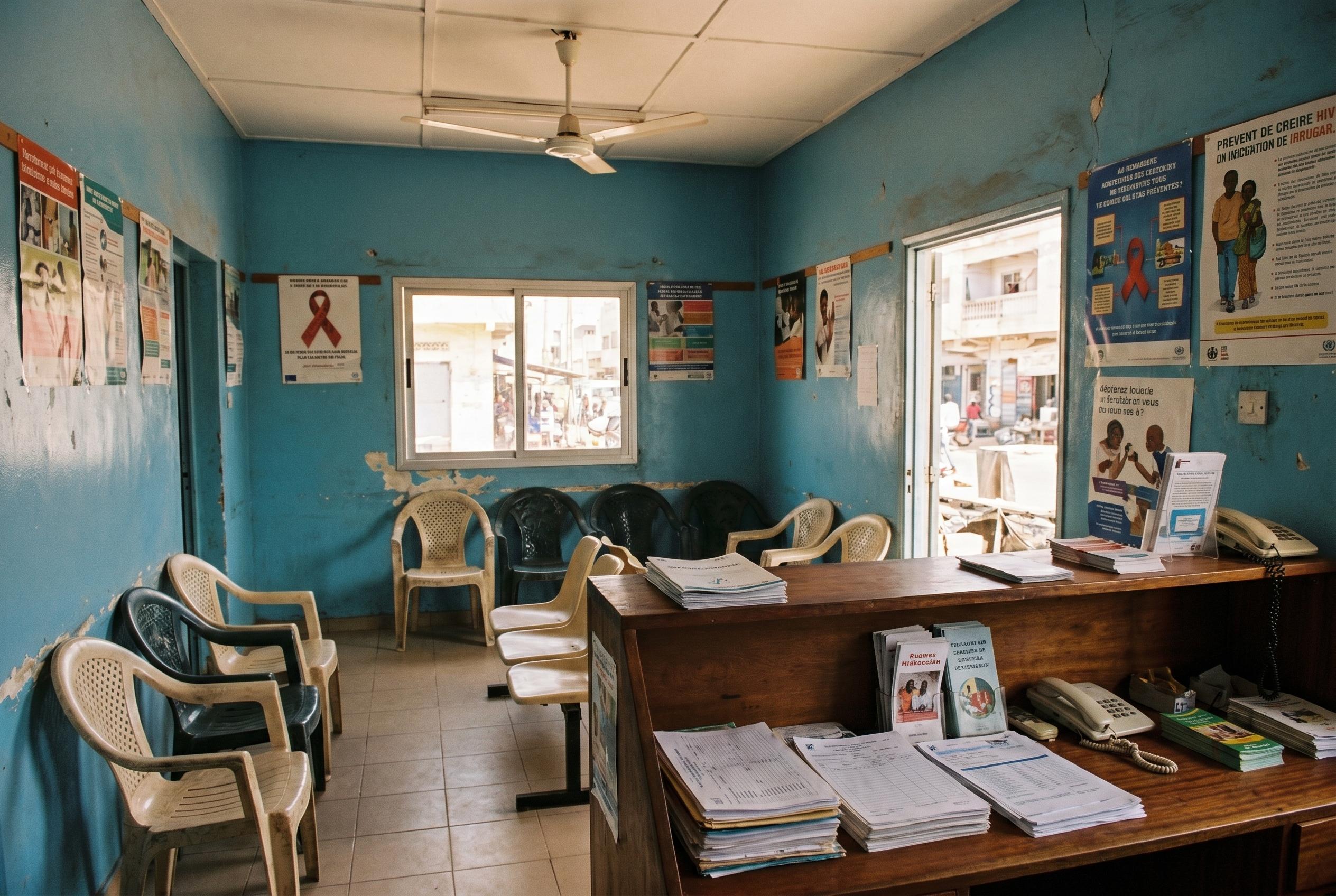
Shoppers are turning away from clinics: patients in Senegal are skipping HIV tests and antiretroviral pickups as a wave of arrests and public shaming makes people afraid to be seen. This matters because disruptions risk reversing progress on prevention and could drive new infections among key groups.
Essential Takeaways
- Attendance fell sharply: Government-linked data show visits to 22 surveyed HIV centres dropped about 25.6% from January to February, signalling people are avoiding care.
- Fear and exposure: Arrests and media reports naming detainees, sometimes with HIV status, have heightened stigma and safety concerns.
- Key populations hardest hit: Men who have sex with men (MSM) face far higher prevalence and are most likely to stop treatment or testing.
- Programmes suspended: NGOs working with key groups have paused outreach, making prevention tools harder to access.
- Health risk: Interrupted antiretroviral therapy increases transmission risk and could fuel a wider rise in new infections.
What changed at the clinics , and why patients stayed away
Clinic staff noticed an immediate, visible drop in footfall, a worrying, quiet shift with a slightly hollowed-out feel to waiting rooms. According to a National Council for the Fight Against AIDS survey, 1,803 patients attended the 22 treatment sites in February versus 2,425 in January. That 25.6% fall lines up with a series of arrests and a new law increasing prison terms and fines for same-sex acts, which people say has made a trip to the clinic feel risky. For many, a routine medication collection suddenly carries the danger of being identified, denounced or targeted in the press.
How criminalisation is undermining public health
There’s a blunt public-health paradox here: laws intended to punish a behaviour are nudging the very people who need services away from them. International health agencies have long warned that punitive laws push people underground, and the recent wave of arrests in Senegal has been followed by media disclosures of names and health details that aggravate stigma. That makes confidentiality , the linchpin of HIV care , harder to guarantee. When community outreach is curtailed and local NGOs suspend programmes, prevention stops where it’s needed most.
Who’s most at risk , and why it matters
HIV in Senegal is concentrated among key populations. Government figures show prevalence among MSM is much higher than the national average, so when men who have sex with men stop collecting antiretrovirals or avoid testing, both their health and wider epidemic control are affected. Stopping treatment raises viral load and transmissibility; missed testing delays diagnosis and prevention. That shift helps explain why international groups warn that criminalisation can reverse progress and why regional infection rates are being watched closely.
Practical steps clinics, NGOs and patients are trying
Front-line health workers are trying to protect patients with stricter confidentiality, discreet delivery options and quiet counselling , small, practical pushes that matter. Some services have explored home delivery or anonymous pick-up points, while peer networks encourage people to keep treatment on hand and not to miss doses. For patients, carrying medication in unmarked containers, arranging pick-ups through trusted intermediaries, or using telemedicine where available can reduce exposure. But these workarounds are stopgaps; sustained access depends on a safer legal and social environment.
The wider outlook: is reversal avoidable?
The immediate crisis looks like a policy ripple with real clinical consequences: rising new infections reported in the region and interruptions to care make for a fragile outlook. International bodies and advocates argue that removing punitive laws and protecting confidentiality are essential to control outbreaks. Meanwhile, community health workers say the emotional toll is heavy , fear, exhaustion and the sense that simply seeking care might become criminalised. Whether Senegal’s HIV response can steady itself will depend on whether services can re-establish trust quickly.
It's a small change in behaviour that can have big public-health consequences , and finding ways to keep people safe, seen and treated matters more than ever.
Source Reference Map
Story idea inspired by: [1]
Sources by paragraph: