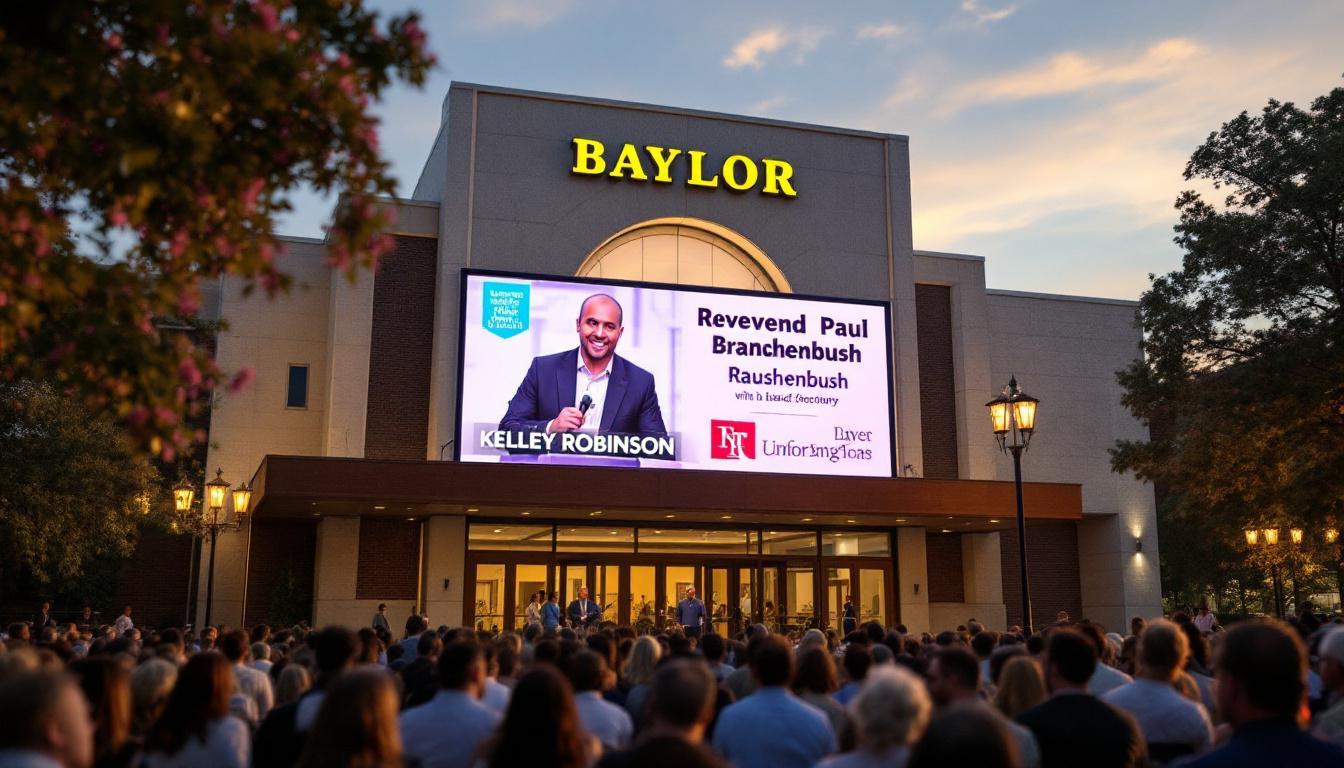
Shoppers of stories and campus watchers have noticed a shift: students at Baylor University staged a public, LGBTQ+-affirming faith event while a conservative group held a closed-door meeting nearby, forcing a debate about access, inclusion and who gets to speak on Christian campuses. Here’s what happened, who turned up, and why it matters for faith and students.
Essential Takeaways
- Public, welcoming gathering: Roughly 350 people attended “All Are Neighbors,” a student-organised LGBTQ+-affirming faith event, creating a warm, conversational atmosphere.
- High-profile speakers: The programme included Kelley Robinson of the Human Rights Campaign and Reverend Paul Brandeis Raushenbush, adding national visibility and varied faith perspectives.
- Contrast in access: Turning Point USA’s simultaneous event was closed to the press and student journalists, prompting concerns about transparency and campus journalism.
- Local reaction: The open event filled much of its venue and underscored student organising power and appetite for inclusive faith conversations.
- Practical note for attendees: If you’re going to similar campus events, check access rules ahead , some are public, some are closed , and expect lively Q&A and community signups.
A packed room and a clear message: what “All Are Neighbors” felt like
You could see it in the seats , the venue was nearly full and the mood was conversational, not confrontational. According to local reporting, about 350 people showed up to hear LGBTQ+-affirming Christian voices. Organisers said they wanted to make space for people who feel sidelined by some faith communities, and the speakers’ tone reflected that: personal, pastoral and policy-aware. That mix matters because it turns abstract debates into human stories that students can relate to. If you’re curious about the vibe, expect testimony, theological reflection and practical resources , things people can take home and talk about with friends or campus chaplains. For future events, arrive early; these draw a crowd and often include stalls or sign-ups afterwards.
Who spoke and why their presence matters
The event brought national figures into a campus conversation. Kelley Robinson from the Human Rights Campaign and Reverend Paul Brandeis Raushenbush of the Interfaith Alliance were among the speakers, which lifted the discussion beyond local campus dynamics. Their presence signals that this moment resonates with advocacy and faith communities across the US , it’s not just an internal college debate. Guests like these add credibility and media attention, and they give students access to broader networks and advice. For students and alumni, that can translate into internships, advocacy contacts or simply feeling seen by national organisations. It’s a reminder that campus occasions can have long tails in careers and activism.
The counterpoint: Turning Point USA’s closed-door gathering
While “All Are Neighbours” welcomed the public, Turning Point USA ran a parallel event that journalists weren’t allowed to attend. Media outlets and student reporters were denied access, which sparked fresh questions about openness and who gets to cover campus life. Closed events aren’t unusual, but when they intersect with high-profile tours or heated cultural topics, restricting press access invites scrutiny and fuels rumours. Campus newsrooms rely on access to report accurately, and exclusion can leave students and the wider public with a partial picture. If institutions or groups restrict coverage, look for official statements afterwards and independent accounts from attendees to build a fuller understanding. Transparency matters when campuses are debating identity, policy and inclusion.
Why this moment reflects a broader campus trend
Across higher education, universities are juggling free expression, student safety, and competing community values. What happened at Baylor fits a wider pattern: student organisers staging inclusive programming in response to outside groups bringing polarising events to campus. That dynamic , counter-programming, as some outlets described it , shows students using their own platforms to reframe debates. It’s a practical step: if you don’t like the message being amplified, mount an alternative that centres other voices. For university leaders, it’s a balancing act. They must protect speakers’ rights while safeguarding campus cohesion. Expect more of these parallel events on other campuses as political touring groups and grassroots organisers keep crossing paths.
Practical tips if you’re attending or organising similar events
Plan ahead: check whether an event is public or press-restricted and RSVP if required. Bring a friend for support; discussions can be emotionally charged and it helps to process afterwards. If organising, line up a mix of voices , speakers with personal stories, faith leaders and policy experts , to reach different audiences. And think logistics: venue size, Q&A moderation and clear codes of conduct keep things respectful. For student journalists, establish relationships with campus groups early and confirm access in writing. When access is denied, document attempts to gain entry and reach out to multiple attendees for corroborating accounts.
It's a small change on paper, but inviting different faith voices into public conversation can shift what campus religious life looks and feels like.
Source Reference Map
Story idea inspired by: [1]
Sources by paragraph: