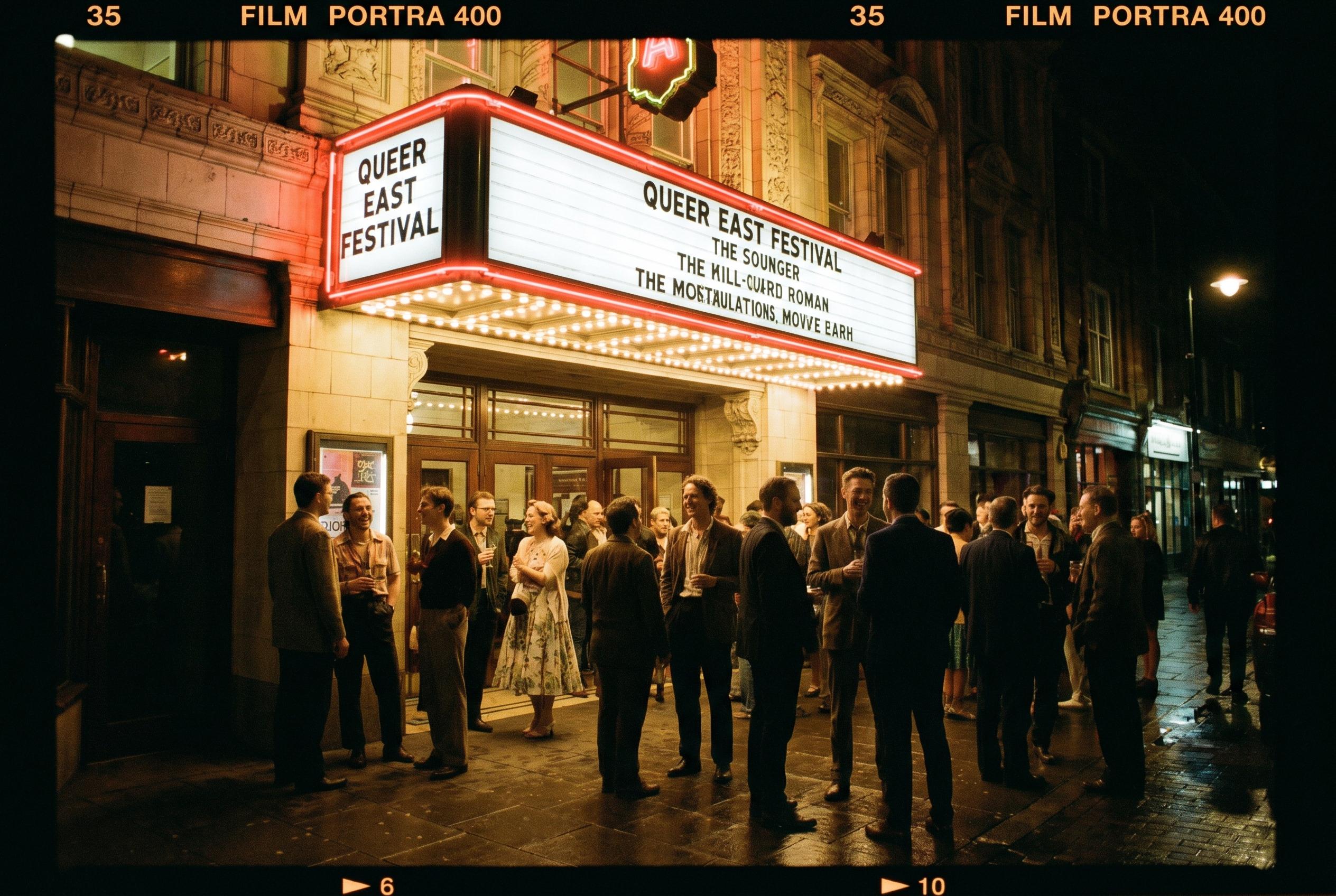
Shoppers of cinema are flocking to London’s Queer East Festival, which returns May 1–June 6 with over 130 films from East and Southeast Asia; it matters because this seventh edition unearths restored classics, bold new debuts and rare prints that reshape how we see queer Asian cinema today.
- Big lineup: Over 130 films across 14 London venues, from big-screen restorations to new features and shorts.
- Heritage restored: The festival opens with a 4K restoration of The Outsiders, now showing previously cut scenes and a richer, hallucinatory texture.
- Standout premieres: Major new works include South Korea’s 3670 and Thailand’s Oscar entry A Useful Ghost , emotionally sharp and visually striking.
- Varied tone: Expect comedies, romances, documentaries and political critiques , the mood ranges from playful drag comedy to urgent social commentary.
- Community feel: Talks, workshops, a late-night rave and an industry day mean it’s as much about connection as it is about screenings.
Why this year feels like a turning point for queer Asian cinema
The opener alone explains the buzz: a 4K restoration of The Outsiders, screened at the Barbican, brings back deleted scenes and a restored intensity that changes how you remember the story. Audiences will feel that cinematic texture , grain, colour and the original cut , in a way digital streams rarely replicate. The festival is deliberately foregrounding heritage work alongside new voices, which makes the programme feel both archival and urgently contemporary.
This approach grew from the festival’s mission to map queer experiences across East and Southeast Asia, and you can see it in the curation. Program director Yi Wang has talked about building bridges between past and present, and the mix of 35mm prints, restorations and new premieres demonstrates that commitment. If you care about film history or simply love great storytelling, this edition is curated to satisfy both instincts.
New films you won’t want to miss
There’s genuine momentum behind several titles. Park Joon-ho’s 3670 has been flagged as a milestone for South Korean queer cinema, tracing the secret codes of Seoul’s gay scene with visual confidence. Thailand’s A Useful Ghost , the country’s international Oscar submission , skewerings cultural hypocrisy with a clear-eyed, sometimes black-comic edge.
Other picks that deserve pages in your diary include Joan Chen-starring Montreal, My Beautiful, and Jota Mun’s Between Goodbyes, a documentary that probes adoption, identity and painful legacies. These films show the festival’s breadth: intimate character pieces sit next to political documentaries, all united by a queer frame.
Screenings, events and the social programme
This isn’t just about watching films , it’s about conversation. The festival spreads across 14 London venues, including the Barbican and BFI Southbank, and mixes screenings with Q&As, panels and workshops. There’s a late-night rave on May 16, and an Industry Day at BFI Southbank on May 24 aimed at filmmakers and exhibitors to discuss production, distribution and the unique challenges facing queer Asian cinema.
If you’re a festival-goer who likes to meet filmmakers or wants to learn what happens behind the scenes, block out time for the panels. They’ll be lively, practical and sometimes provocatively political , exactly the kind of exchange that makes festivals feel alive.
Heritage prints and why they matter on the big screen
One of the festival’s pleasures is the chance to see rare 35mm prints from Japan alongside restorations dating back decades. Those screenings are tactile: the flicker, the soundtrack warmth, the frame imperfections all contribute to a different kind of viewing intimacy. For younger audiences used to streaming, these prints are revelations.
Curation emphasises how queer cinema across Asia has been shaped by censorship, exile and local politics. Showing these films in their intended formats restores context , and gives older works their proper theatrical afterlife. It’s a gentle corrective to the idea that queer film history begins with a few recent hits.
What to pick and how to plan your visit
If you’re overwhelmed by 130 choices, start with the opener at the Barbican and then pick one new feature and one archival screening a week. Look out for sessions with filmmaker Q&As to get deeper insight; they tend to be the screenings that linger in the memory. Buy tickets in advance for big venues, and check the programme for shorts bundles , they’re compact and often deliver surprising variety.
Bring cash or card for late-night events and treats, and wear layers in case the venues are cool. Most importantly, go with curiosity: these films are best enjoyed when you let them upend expectations.
It’s a small change in your diary that’ll broaden the way you see queer cinema.
Source Reference Map
Story idea inspired by: [1]
Sources by paragraph: