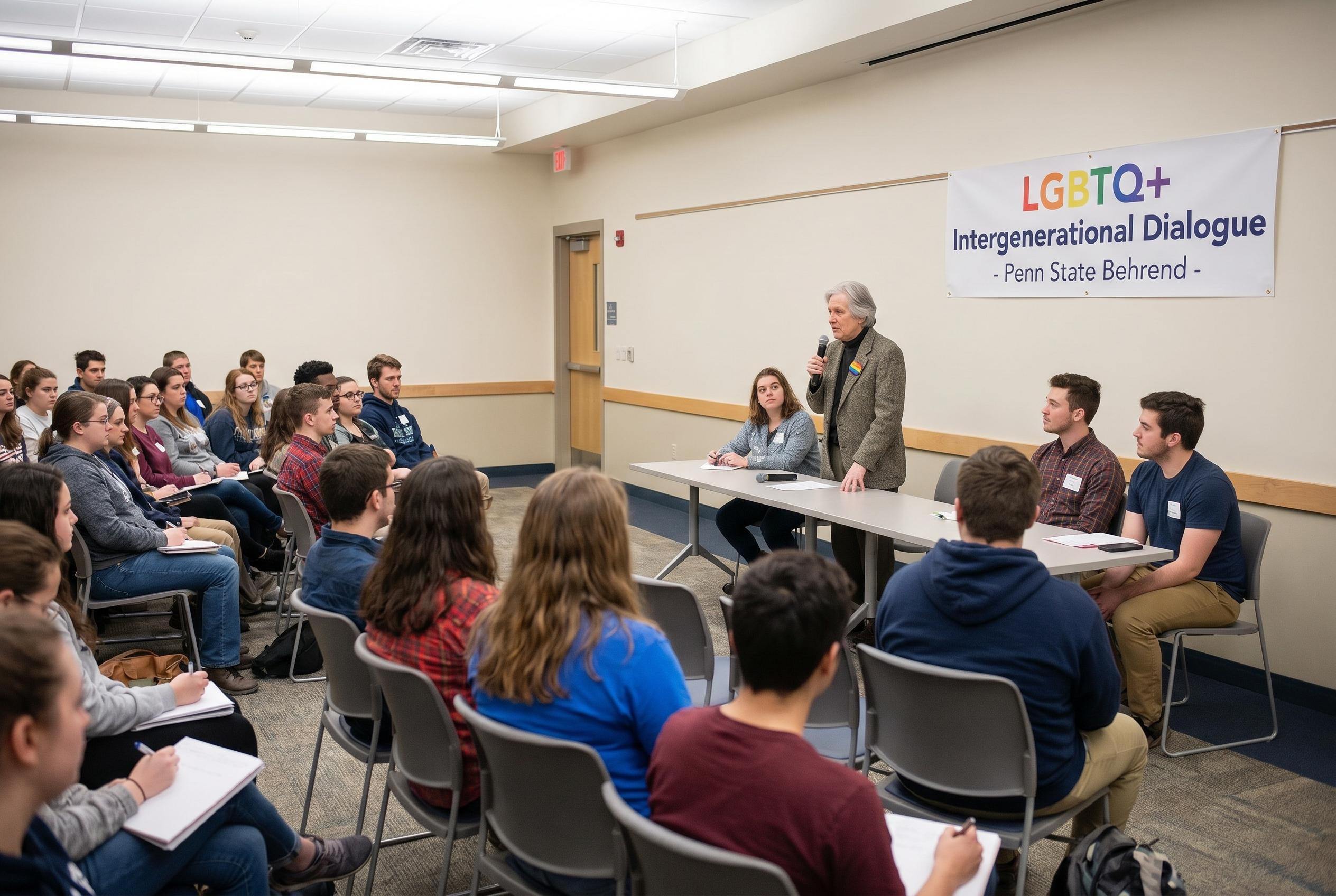
Watching older LGBTQ+ people speak plainly in a classroom can shift how young helpers think, and students at Penn State Behrend got exactly that , a lively, lived‑experience panel with Aging With Pride and Erie Gay News that brought queer history, mental health, and activism into sharp, practical focus.
Essential Takeaways
- Voices across eras: Panel included a retired federal employee, an AIDS‑crisis volunteer, a mental health professional and a local activist, giving students a textured sense of queer lives.
- Students engaged: Attendees asked thoughtful, career‑relevant questions, especially useful for those training in health or social care.
- Bridging generations: The event modelled respectful dialogue between youth and elders, with real stories rather than textbook summaries.
- Practical learning: Panelists offered concrete insights about service needs, stigma, and resilience , things future practitioners can use tomorrow.
- Community connection: Organisers from Aging With Pride and Erie Gay News said they appreciated the chance to speak directly to the next generation of helpers.
A straight talk starter , why panels like this matter
There’s a particular hush when older people begin to tell their stories, and students noticed the texture , the weary laugh, the quiet pride. According to organisers, the panel was part of the Sexuality Through the Lifespan course at Penn State Behrend and aimed to give classroom theory a human face. For students eyeing social work, nursing or counselling roles, hearing lived experience can alter assumptions faster than any lecture.
Context matters: many older LGBTQ+ people lived through legal and medical crises that shaped their relationships with healthcare and community. Bringing those voices into campus conversations helps future professionals understand why trust building is central to good care.
What the panel brought into focus for future carers
Panelists represented varied backgrounds , a retired federal worker, someone who volunteered during the AIDS crisis, a mental health clinician and a local activist , so students heard about both institutional barriers and grassroots responses. That range gave practical takeaways: pay attention to a client’s history with institutions, ask about past trauma sensitively, and never assume family structures look the same as heteronormative templates.
Teachers and students both walked away with clearer ideas about concrete adjustments in practice, from intake forms to language use. For instance, small changes like inclusive paperwork and asking about chosen family were highlighted as immediate, low‑cost improvements.
Bridging the generational gap , students asked the questions
The class didn’t sit politely; students posed thoughtful, sometimes personal questions that showed they were already thinking like professionals. The discussion also flipped a useful script: elders weren’t just subjects of study but active educators, shaping how future helpers will work. Organisers told organisers said they welcomed the dialogue, especially because many students intend to enter helping professions.
This kind of two‑way exchange does more than inform , it normalises intergenerational care and reduces the distance that often exists between campuses and the communities they serve.
Why community media and groups matter in education
Groups such as Aging With Pride and publications like Erie Gay News play a quietly powerful role by connecting lived experience to learning environments. Community outlets often carry local history and everyday realities that national media miss, and campus events help amplify those narratives. That amplification benefits students and the groups alike, creating networks of mutual support.
For educators, inviting local activists and journalists into the classroom is an efficient way to deepen curriculum and prepare students for real‑world complexities.
Practical tips for organisers and students planning similar events
If you’re thinking of organising a panel, start local and aim for diversity of role and era , include people who worked in institutions, volunteered in crises, practised clinically and organised locally. Prepare students with pre‑reading so questions go beyond curiosity and focus on application. Finally, allow time for informal conversation; that’s often where trust and honest storytelling happen.
It’s a small intervention with big payoff: more empathetic professionals and stronger community ties.
It's a small change that can make the next generation of helpers better listeners.
Source Reference Map
Story idea inspired by: [1]
Sources by paragraph: