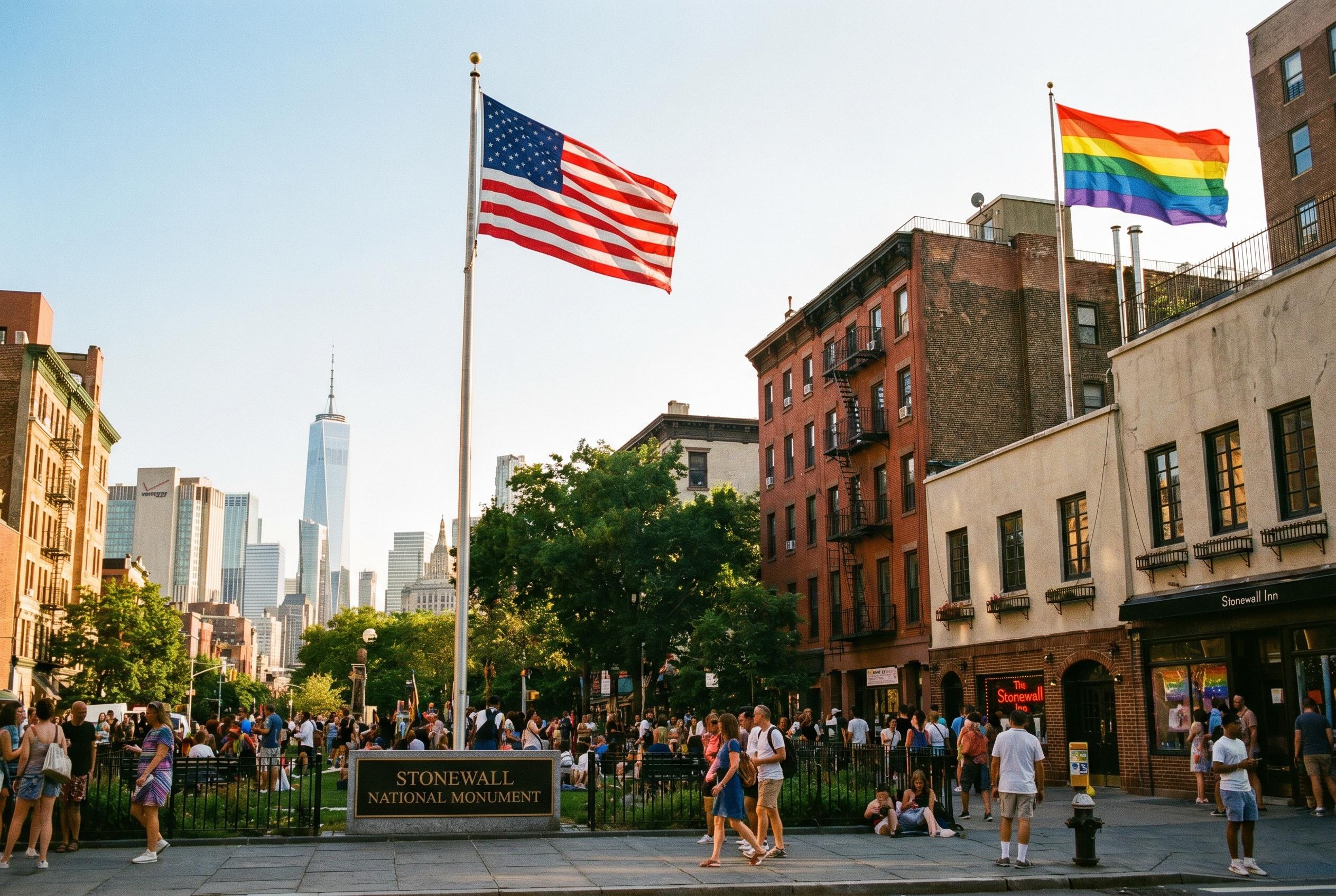
Shoppers are turning to headlines about flags , in this case, a landmark legal rollback that lets the rainbow fly again at New York’s Stonewall National Monument. The Trump administration agreed to reinstall the Pride flag after lawsuits, a symbolic win that matters for history, community recognition and how federal sites handle protest iconography.
Essential Takeaways
- Flag restored: The federal government agreed to let a rainbow Pride flag fly at Stonewall again, reversing an earlier removal.
- Legal pressure worked: LGBT advocacy groups sued the Department of the Interior and the National Park Service, prompting the settlement.
- Historic resonance: Stonewall is widely seen as the birthplace of the modern LGBTQ+ rights movement, so the flag carries strong symbolic weight.
- Local leaders pleased: New York officials hailed the change as a defence of civic memory and dignity.
- Practical note: The dispute highlights tensions over how government sites decide which symbols are official or allowed.
Why this small act feels so big
The image of a flag fluttering can be deceptively powerful; at Stonewall it’s visceral, almost tactile , the bright stripes signalling belonging. According to AP and PBS reporting, the Interior had earlier directed the National Park Service to remove non-agency flags from federal sites, which is what touched off the dispute. That technical-sounding policy suddenly felt like erasure to many who view the rainbow not just as decoration but as a marker of history and struggle.
The decision to reverse course followed lawsuits by LGBT groups who argued the flag is entwined with Stonewall’s story. Metro Weekly and The Guardian chronicled the legal filings and community reaction, and it’s clear this was as much about recognition as it was about a piece of fabric.
How the litigation changed the outcome
Legal action sharpened the debate from protest to procedure. Plaintiffs sued Interior Secretary Doug Burgum and the National Park Service, arguing the policy’s application at Stonewall ignored the flag’s historical role, reports ABC News. The settlement to fly the flag again shows how litigation can be used to press for cultural acknowledgment at federal sites.
Practical takeaway: when communities can point to sustained historic ties between a place and a symbol, courts may be willing to weigh preservation of meaning alongside neutral rules about government property.
What Stonewall represents beyond New York
Stonewall Inn and the surrounding Greenwich Village streets are widely credited as the spark for the modern LGBTQ+ movement after the 1969 riots; that context was central to the plaintiffs’ case. Local officials including New York Mayor Zohran Mamdani and Manhattan Borough President Brad Hoylman-Sigal framed the decision as defending the city’s memory, as reported by the Guardian and the Associated Press.
That matters because monuments and memorials are shorthand for what a society chooses to remember. Restoring the Pride flag at Stonewall signals a broader willingness , at least in this instance , to let federal spaces reflect contested but significant histories.
What this means for other monuments and symbols
There’s a ripple effect here. If a symbolic flag can be defended at Stonewall, communities will naturally ask whether other sites deserve similar leeway for emblems tied to local movements. PBS and AP coverage point to an emerging pattern: rules about “official” displays can collide with community expectations, and courts may become the arbiter.
If you care about a local memorial or symbol, the practical step is organising documentation: gather affidavits, local records and sustained community testimony that show the symbol’s historic link to the site. That’s the sort of evidence that helped the Stonewall plaintiffs.
A civic moment that’s also a reminder
This episode is a reminder that small gestures carry outsized meaning. The Pride flag’s return isn’t just a visual restoration; it’s an affirmation that history won’t be airbrushed away without a fight. For visitors, activists and policymakers alike, the settlement underscores how cultural memory gets contested in real time.
It’s a small change that can make a big difference to how a place feels.
Source Reference Map
Story idea inspired by: [1]
Sources by paragraph: