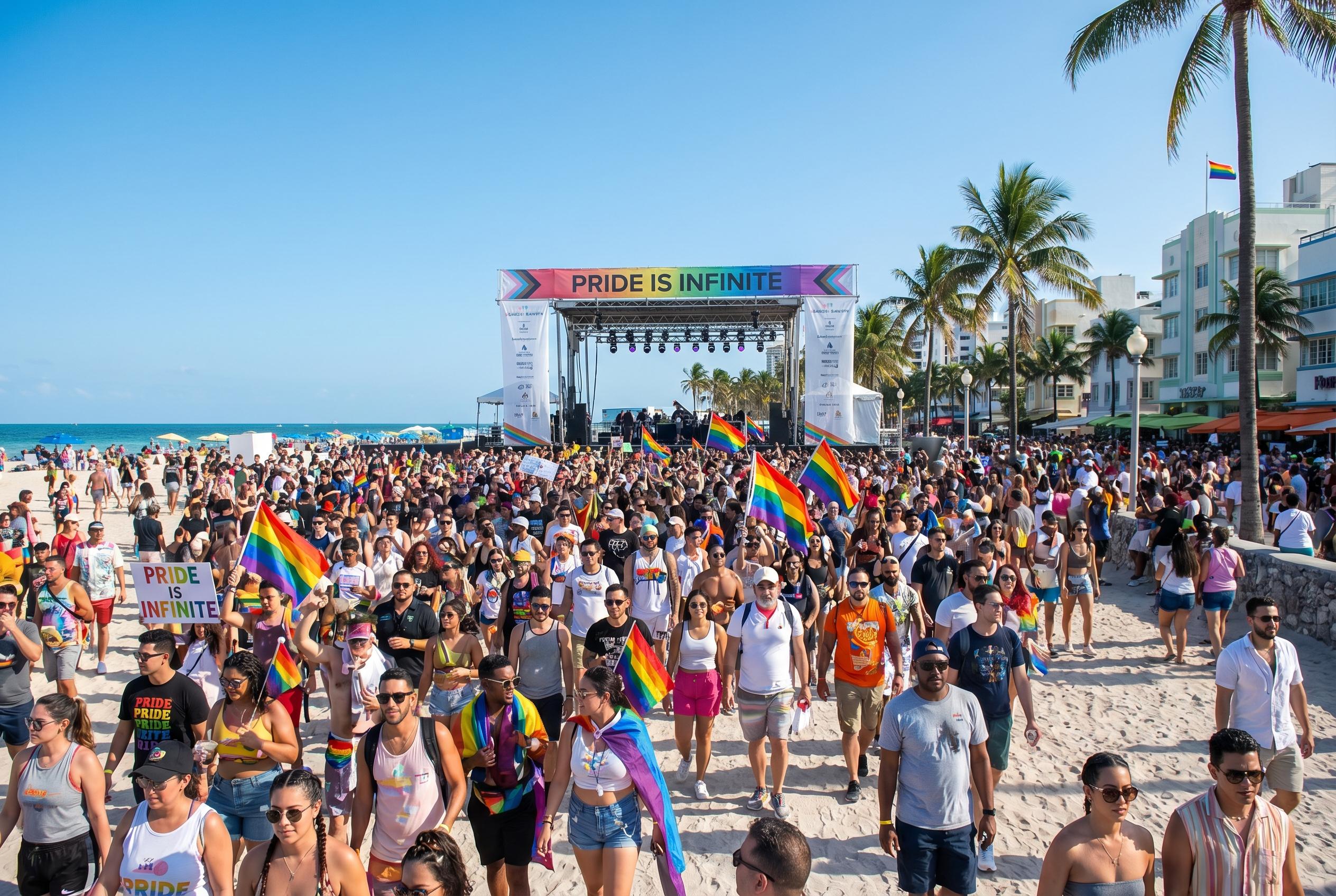
Shoppers, students and families flocked to South Beach as Miami Beach Pride returned in full colour; the 10-day festival drew more than 150,000 people, mixed activism with celebration, and showed why Pride remains a crucial public stage for the LGBTQ+ community.
Essential Takeaways
- Huge turnout: More than 150,000 people packed Ocean Drive for the 18th annual Miami Beach Pride parade, a loud, bright and emotional finale to a 10-day festival.
- Theme with meaning: This year’s theme, “Pride Is Infinite,” framed events around resilience and visible community support.
- Campus partnership: University of Miami students enjoyed free transport, breakfast on the beach, event access and a Pride tee as part of a long-running UM–Pride collaboration.
- Range of programming: Events included a flag-raising, family picnic, queer art showcase, pageant, drag shows and community mixers , accessible to all ages and backgrounds.
- Community and protest: For many attendees, Pride was both celebration and political statement amid ongoing national and state challenges to LGBTQ+ rights.
Opening Hook: colour, crowd and a clear message
Ocean Drive looked like a moving rainbow, and it felt as if every beat of music carried a little more conviction this year. According to organisers, Miami Beach Pride’s parade day pulled more than 150,000 people, a striking contrast to the first event in 2009 and a visual reminder that Pride here has grown from a modest march into a major civic moment. The banner theme, “Pride Is Infinite,” set a reflective tone that balanced joy with urgency.
How the 10-day festival built momentum
Miami Beach Pride didn’t just blink into life on parade day; it built a week-and-a-half of activity that met different needs. The season opened with a flag-raising at City Hall and moved through family-friendly picnics, queer art shows and late-night drag concerts. According to the festival programme, this layering of events helps embed Pride in everyday civic life, not just on Ocean Drive. For locals and visitors alike, that variety makes it easier to find the parts of Pride that matter most to them.
Why the theme matters in today’s political climate
The festival’s theme reflected something many attendees said they felt , resilience. Organisers and community leaders pointed out that visibility matters more now, with national and state-level setbacks shaping conversations about queer rights and health services. Many in the crowd treated Pride as both celebration and demonstration, a place to be seen and to remind policymakers of the human faces behind legislative debates. That dual purpose keeps Pride legal, cultural and emotional.
University of Miami’s role and young people’s presence
University of Miami’s partnership with Miami Beach Pride has become a familiar sight: students travelling together, wearing matching tees and taking part in events curated by UM’s LGBTQ Student Center. That institutional support makes attendance easier and normalises campus engagement with queer civic life. Younger participants, especially, bring an energy that veterans described as powerful , for some it’s the first time they’ve felt truly seen, which can be life-changing.
Programming that mixes party with practical support
Beyond floats and glitter, the festival spotlights community resources. Information hubs, outreach groups and service providers set up booths during the festival and parade, amplifying services that might otherwise go unnoticed. That practical angle is part of why Pride is more than a one-day celebration for many: it’s a place to find support, advocacy and networks that persist long after the confetti clears.
A look back and a look ahead
Miami Beach Pride has come a long way since 2009, when attendance numbered in the thousands rather than hundreds of thousands. That growth shows how public visibility and community organising can build cultural institutions. Yet organisers and attendees both made clear that vigilance is still necessary; Pride remains a response to ongoing threats and a rehearsal for future advocacy. Expect next year’s theme and programming to keep that balance of celebration and civic purpose.
It's a small change that can make every parade, picnic and panel feel like both party and protest , and make Pride matter in more ways than one.
Source Reference Map
Story idea inspired by: [1]
Sources by paragraph: