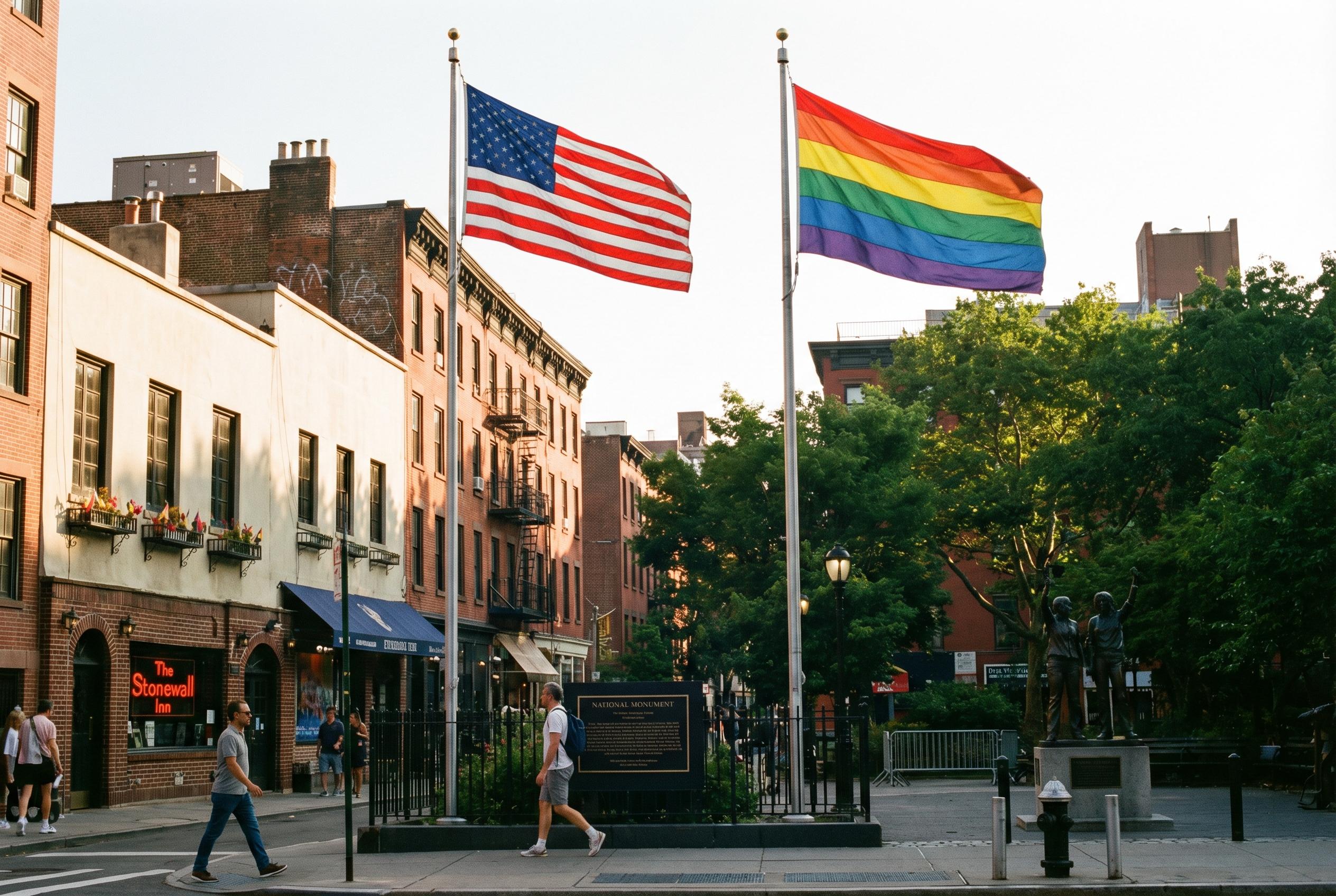
Shoppers of headlines and supporters of rights noticed a small but meaningful shift this week: the rainbow Pride flag will remain at Stonewall National Monument in New York, after the federal government agreed to a settlement. It matters because Stonewall is symbolic, local leaders pushed back, and the decision sets a tone for flag policy at national sites.
Essential Takeaways
- Settlement outcome: The Trump administration agreed to let the Pride flag fly at Stonewall National Monument under a legal settlement.
- What sparked it: A January directive sought removal of all flags but the U.S. flag from Interior sites, prompting a lawsuit from LGBTQ+ and preservation groups.
- Local pushback: Manhattan leaders re-hoisted the flag in February, creating a high-profile standoff and civic solidarity.
- Legislative follow-up: A bill introduced in Congress would formally authorise the Pride flag for National Park Service sites; it has several cosponsors.
- Practical note: Advocates view the settlement as a precedent for symbol recognition at historic federal sites.
A reversal that felt quietly celebratory
For visitors who’ve paused to look up at the rainbow at Christopher Street, the flag’s return feels vivid and reassuring, a colourful interruption to grey bureaucracy. According to the Associated Press, the administration’s announcement comes as part of a legal settlement that ends the specific dispute over Stonewall’s banner. There’s a tactile sense to this moment: it’s less about fabric and more about recognition and memory.
How a January order became a courtroom fight
The row traces back to an executive directive in January that limited flags and banners on Interior Department properties to the U.S. flag. That prompted LGBTQ+ advocacy groups and historic preservation organisations to file suit, arguing Stonewall’s flag is tied up with the site’s meaning. Coverage from national outlets outlines how the litigation framed the issue not as a policy quibble but as a defence of cultural memory and civil-rights symbolism.
Local leaders made it a civic story
When Manhattan officials, led by the borough president, re-raised the Pride flag in February, it turned a federal policy debate into a community moment. Reporters noted the fast local reaction and the way elected figures used civil disobedience and public ceremony to underline the flag’s significance. For residents and visitors, that move made clear the flag isn’t merely decorative , it’s a marker of a place where people fought for safety and rights.
A legislative nudge: turning a settlement into policy
Beyond the courtroom, lawmakers moved quickly. A bill was introduced in the House to designate the Pride flag as an authorised flag eligible for display at National Park Service units. If it reaches law, the measure would reduce the need for site-by-site disputes and give parks a clearer allowance to acknowledge history and community. Expect more political debate, of course, but for now the settlement removes an immediate flashpoint.
What this means for other sites and visitors
The Stonewall decision could ripple across national monuments and parks where local history intersects with public symbols. Advocates and park visitors should know that while a settlement settles one case, it doesn’t automatically change every flag policy. If you care about a site, contact local representatives, join preservation groups, or support legislative efforts , small civic actions often matter here.
It's a small change that can make every visit feel a bit more rooted in history and recognition.
Source Reference Map
Story idea inspired by: [1]
Sources by paragraph: