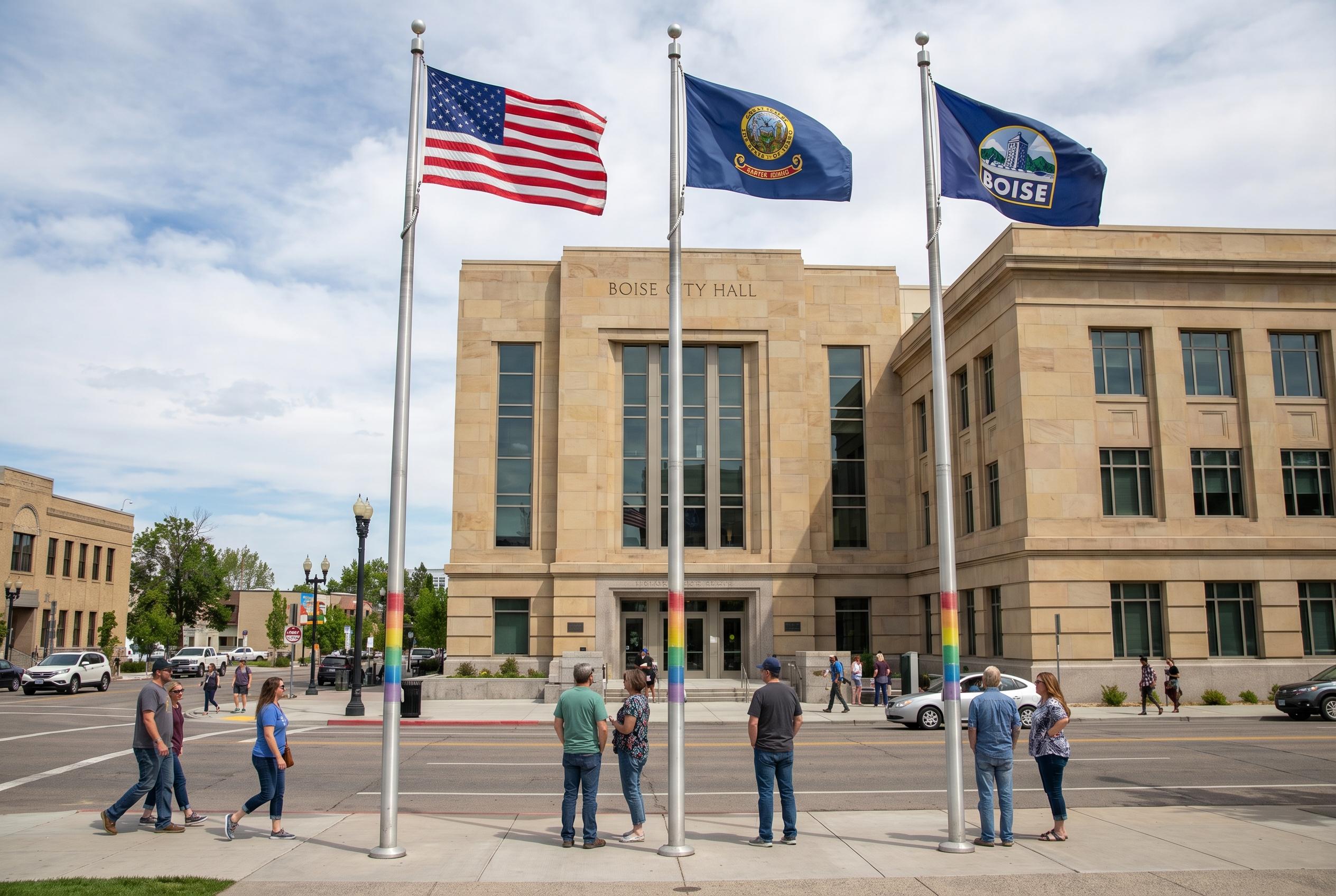
Shoppers and residents have noticed a colourful workaround in Boise after Idaho’s new law banned Pride flags on government property; city leaders wrapped flagpoles in rainbow colours and added signage as a symbolic, compliant show of support for the LGBTQ community. Here’s what happened, why it matters, and what people are saying.
Essential Takeaways
- New state law: Idaho’s HB 561 restricts Pride flags and similar displays on government property, prompting local responses.
- Creative workaround: Boise officials removed the Pride flag but installed rainbow-coloured wraps on flagpoles and signs inside City Hall, a visually bold compromise.
- Mixed reactions: Supporters call the move affirming and inclusive, while critics label it performative and a misuse of public funds.
- Practical detail: City leaders framed the wraps as not being flags, saying the action complies with the law while signalling support.
- Local context: The dispute follows a 2025 Boise City Council decision to make the Pride flag an official city flag and prior resistance to restrictions.
What the new law says and why Boise moved fast
The Idaho legislature passed HB 561 to limit flags on government property, a change that forced action in cities that had embraced the Pride banner. According to reporting, Governor Brad Little signed the bill and city officials had to take down official displays that now fall under the ban. For Boise, where the council had earlier made the Pride Flag an official city flag, this was a high-profile clash between state and local preferences. The new measure aimed to standardise what can fly on public grounds, and cities like Boise responded quickly to both comply and communicate values.
The wrap strategy: a subtle protest or simple compliance?
Boise City Hall chose a literal middle way: rather than leaving poles bare, staff installed rainbow-coloured wraps directly on flagpoles and placed supportive signage inside the building. City Council President Meredith Stead explained the wraps are not flags and therefore align with the law, while still offering a visible sign of inclusion. The effect is striking , a splash of colour where a fabric flag used to fly , and it’s meant to be both legal and symbolic. For many, the visual cues deliver the same warm, visible message as a flag, without risking a statutory violation.
How residents and social media reacted
Reactions split fast. Supporters praised the move as clever and heartfelt, saying it keeps a message of welcome visible to those who need it. Others accused officials of performative gestures or wasting taxpayer dollars, with some social posts using harsher language to voice disapproval. The debate underscores how symbolic acts in civic spaces can trigger strong emotions, and how visual protest now often plays out online as much as in public squares. City leaders say their commitment to visibility and safety for LGBTQ residents hasn’t changed; critics say the gesture doesn’t substitute for policy.
Legal context and the tug-of-war between city and state
This episode sits within a broader legal tug-of-war: cities that adopted Pride flags faced renewed state scrutiny, and Boise’s previous decision to keep flying the flag after earlier legislative attempts raised tensions. Media outlets and legal observers noted that enforcement mechanisms and the exact definitions in HB 561 were central to the dispute, leaving room for creative interpretations like pole wraps. For municipal officials, the choice was practical as well as principled: comply with the letter of the law while signalling values that matter to local communities.
Practical takeaways for other cities watching Boise
If you’re a local councillor or civic campaigner considering a similar approach, think about clarity and cost. Make sure any display really avoids prohibited definitions in the statute, document legal advice, and be ready for public pushback on spending and optics. Communicate why a visual signal matters to vulnerable residents, and consider complementary measures , policy changes, community support programmes, or events , that go beyond symbolism. In other words, colour the pole, but also back it up.
It's a small change that can make every public message clearer and more inclusive.
Source Reference Map
Story idea inspired by: [1]
Sources by paragraph: