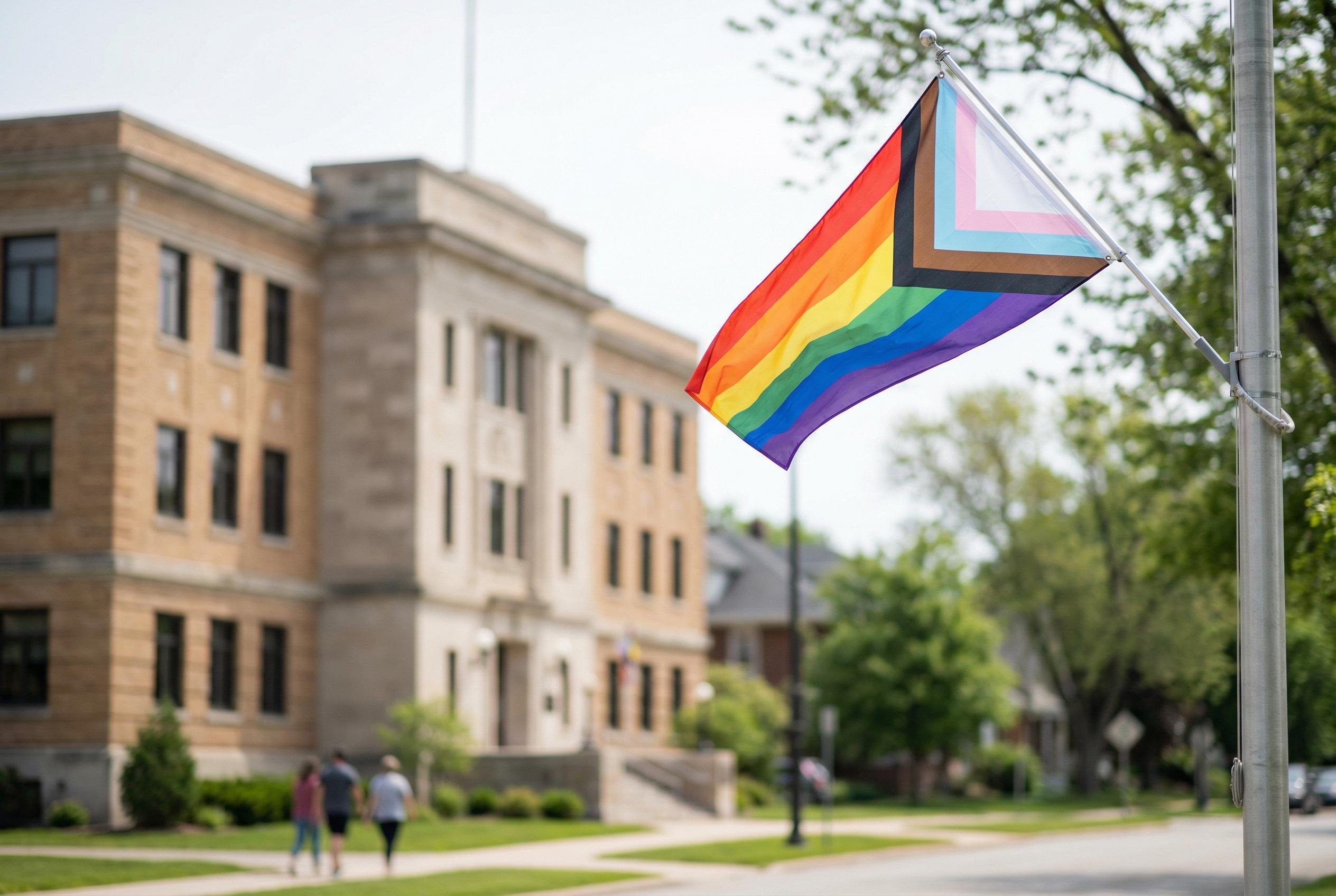
Shoppers and residents have noticed Plymouth City Council’s bid to fly the Progress Pride flag from the Guildhall , a visual pledge to be a “proud city” that has prompted legal and rights-based objections, a council defence and a new formal flag policy that matters to anyone who cares how public spaces represent community values.
Essential Takeaways
- What’s proposed: Plymouth City Council has applied to hoist the Progress Pride flag on central flagpoles during LGBTQ+ History Month, Pride month and May 17, the International Day Against Homophobia, Transphobia and Biphobia.
- Why it matters: The Progress Pride flag adds black, brown and trans-inclusive chevrons to the rainbow to highlight marginalised groups and ongoing progress in equality.
- Who’s objecting: The Christian Legal Centre and a women’s rights group have said flying the flag could be unlawful and a political statement, warning of potential legal challenges.
- Council stance: Plymouth argues the rainbow and trans flags aren’t party-political symbols but a way to recognise residents, and it has a new flag-and-lighting policy to manage requests.
- Practical effect: The policy formalises two-month lead times for requests and aims to reduce last-minute demands, while setting a framework for what’s flown on civic flagpoles.
What the council wants to fly and why it looks and feels symbolic
Plymouth City Council has told residents it wants to fly a wider range of flags from the Guildhall flagpoles to reflect the city’s diversity and mark key calendar moments. The Progress Pride flag , a version of the rainbow flag with additional chevrons for marginalised groups , is intended to feel inclusive and visible, especially during months and days linked to LGBTQ+ history and rights. For many, a flag on a civic building is a simple, visual way of saying you belong; for others it’s an unambiguous political gesture.
The new flag-and-lighting policy: rules, timings and the end of last-minute asks
The authority recently agreed a formal Commemorations and Celebrations Policy that standardises how flags and civic lighting are approved. Requests must be submitted online at least two months in advance, which councillors say will stop the scramble of ad-hoc appeals. That procedural clarity is practical , it helps the council plan which flags to fly and when , but it also means every flag decision is exposed to public scrutiny and challenge.
Legal and rights objections: what opponents are arguing
Groups including the Christian Legal Centre and a women’s rights organisation have argued flying the Progress Pride flag crosses into political territory and could breach duties of political neutrality under the Local Government Act 1986. Critics also link the gesture to recent court judgements and public debates about single-sex spaces, saying the move signals alignment with positions they oppose. Those objections show how a symbolic act like flag flying can quickly become a legal and cultural flashpoint.
Council response and the practical reality of civic flags
Plymouth City Council has been clear: it sees rainbow and trans flags as representing people rather than parties, and says flying them is part of recognising the identities present in the city. The council’s statements frame the flags as a welcome sign to residents, staff and visitors, and as consistent with equality and inclusion aims. In practice, the new policy gives councillors a framework for handling requests while exposing those decisions to public comment and, possibly, court scrutiny.
What residents should know and how to respond
If you care about what flies over civic buildings, the new policy gives you a route to ask for flags or challenge decisions , but you’ll need to plan ahead because of the two-month lead time. Think about why a flag matters to you: is it visibility, safety, solidarity or protest? Shops, community groups and individuals can make formal requests, and public engagement will shape what becomes accepted civic symbolism over time.
It’s a small change with an outsized impact on how a city shows who belongs.
Source Reference Map
Story idea inspired by: [1]
Sources by paragraph: