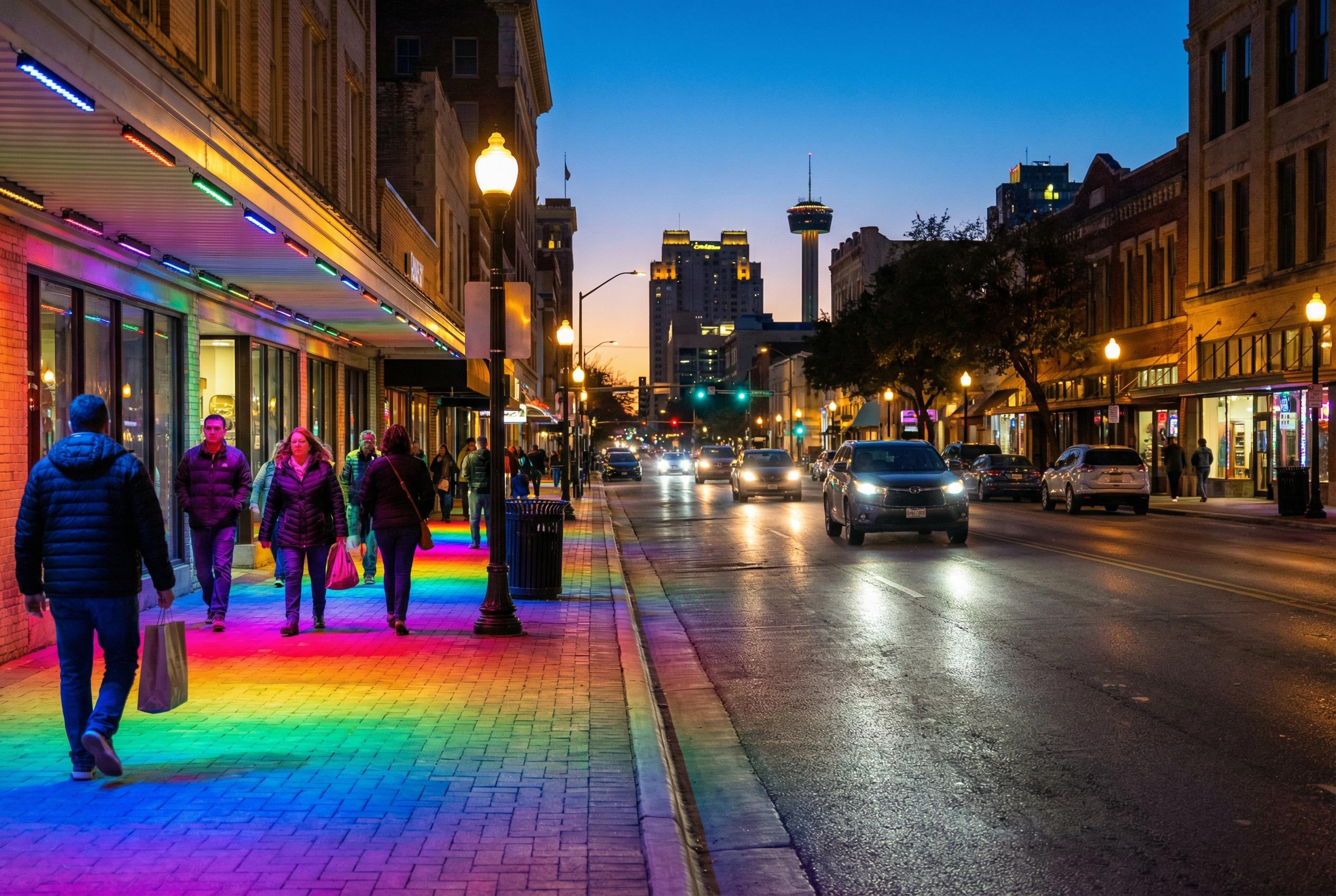
Shoppers and locals are already stopping to look , San Antonio has just dedicated rainbow sidewalks along Main Avenue to mark its newly named Pride Cultural Heritage District, a bold visual answer after state-ordered removal of rainbow crosswalks and months of debate. It matters for visibility, local business, and the city’s message about belonging.
Essential Takeaways
- Visible and vibrant: The sidewalks stretch along Main Avenue from Laurel to Park, painted in six colours with progress flag elements and a sturdy, more permanent feel.
- City-funded: Installation cost about $170,000, paid by San Antonio; the project was supported by multiple council members and opposed by two conservative councillors.
- Community reaction mixed: Many local businesses and activists praised the move as a show of support, while some tensions remain after a lawsuit paused work.
- Art plans ahead: City officials plan an art installation that may repurpose parts of the removed crosswalks, with a community call for artists expected.
- Practical result: The sidewalks are more visible than the old crosswalks and intended to be a lasting symbol that resists erasure.
A striking answer to removal: big colour, bigger message
San Antonio’s rainbow sidewalks are hard to miss; they run the length of Main Avenue in saturated hues and include the trans and people-of-colour elements from the progress flag, giving the strip a jubilant, confident look. According to Texas Public Radio, the dedication came after months of dispute triggered when the state ordered the removal of rainbow crosswalks that had stood since 2018. The new sidewalks feel intentional , not a quiet concession, but a statement that the city will find other ways to show support.
City leaders framed the installation as a response to outside pressure. District 1 Councilwoman Sukh Kaur described it as a small act of stubborn pride, noting the sidewalks are the city’s way of saying the state might control streets, “but you can’t control our sidewalks.” That kind of rhetoric landed with many residents who felt the crosswalk removal was an erasure, and the pavement now feels like both a practical and symbolic reclamation.
How the city paid for visibility , and who objected
The project cost roughly $170,000 and was funded by the city, the report says, which underlines how municipal budgets can be used to protect cultural identity. The council vote wasn’t unanimous: two conservative members opposed the move, and a lawsuit filed earlier by Pride San Antonio and a conservative group briefly paused work in January. That legal pause triggered local heat , protests, criticism at board meetings, and a wider conversation about who gets to speak for community organisations.
Owners of bars on The Strip, including Sparky’s Pub and The Heat, welcomed the investment. They said the city has stepped up where other municipalities have pulled back, and they hope the painted stretch becomes a gathering place that’s visibly inclusive. For businesses, the sidewalks are both décor and a signal to customers that the area is intentionally welcoming.
Activists, organisers and the politics behind the paint
Reactions in the queer community have been layered. Some activists see the sidewalks as a win , more visible, permanent and inclusive than crosswalks , while others remain frustrated about the сначала-removal of the crosswalks and the internal divisions it revealed. Pride San Antonio board members faced vocal criticism over the lawsuit’s perception, prompting leadership changes and a membership meeting in March to appoint new board members.
James Poindexter, speaking for Pride San Antonio, said the group never opposed visibility but wanted to contest the removal of the crosswalks they helped fund. That tension points to a broader lesson: symbolic displays matter, but so do the processes that lead to them , funding, decision-making and who gets a seat at the table.
What’s next: art, memory and repurposed materials
The city isn’t stopping at paint. Officials say they’ll invite artists to propose an installation, with a possibility of using material salvaged from the removed crosswalks. Michael Rendon, chair of the city’s LGBTQIA+ Advisory Board, said the goal is to keep those pieces in the district where everyone can see them, a choice that would transform a contested moment into a communal artwork.
For artists and residents, this is a chance to craft a narrative: turn what was removed into something that commemorates struggle and resilience. If you’re interested, Rendon suggested contacting the advisory board once the call for artists goes out.
Practical tips if you visit or plan something similar
If you’re a business owner or community organiser thinking about similar projects, take these small lessons: document funding and permissions early, be ready for legal or political challenges, and involve the community in design choices so the work reflects many voices. And if you’re visiting the Strip, bring camera-ready shoes , the sidewalks are bright, bold and meant to be walked on.
It's a small change on the pavement that aims to make a lasting difference in visibility and welcome.
Source Reference Map
Story idea inspired by: [1]
Sources by paragraph: