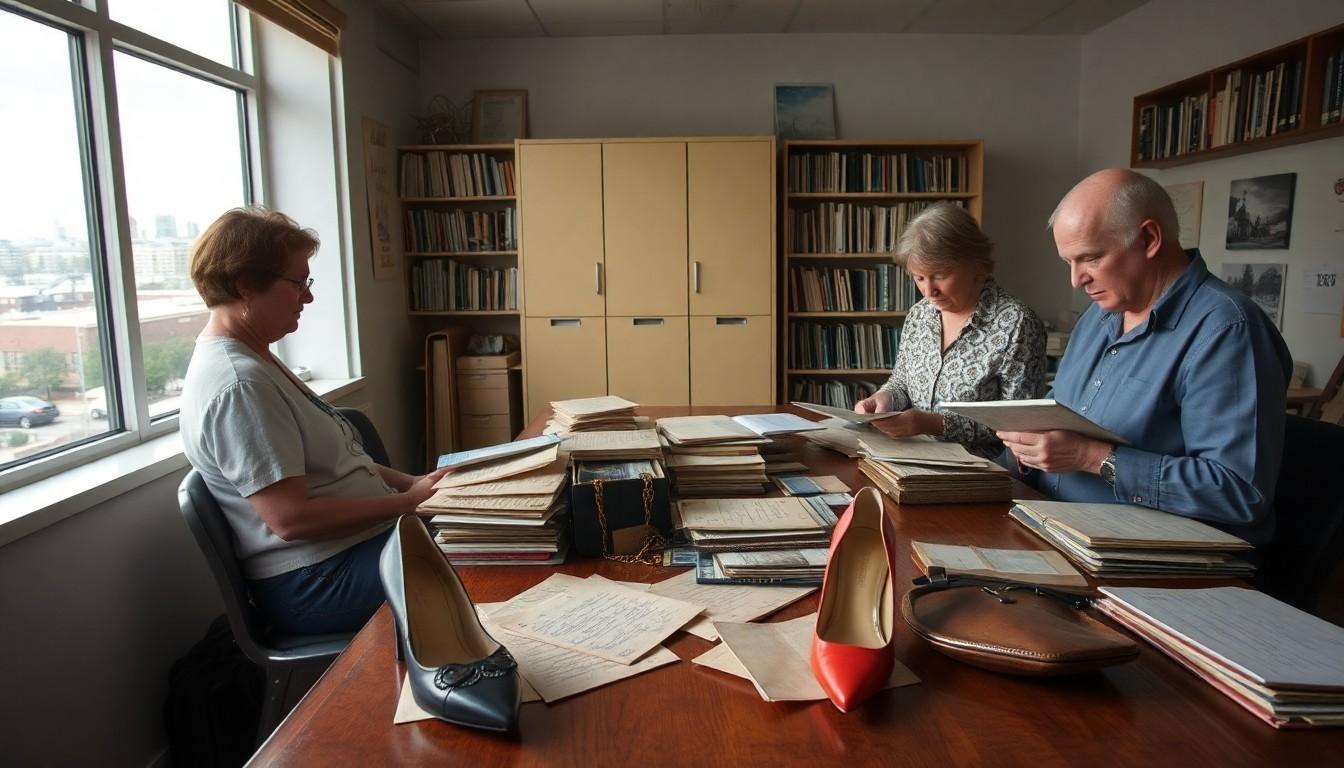
Colourful costumes, handbag throws and high-heel skipping put a distinctly Perth spin on community sport decades before the city was chosen to host the international Gay Games in 2030. Now volunteers are preserving the local Gay Olympics’ stories and photographs, bringing fresh attention to a playful tradition that also offered visibility, connection and support.
Essential Takeaways
- A local tradition: Perth’s Gay Olympics ran annually from 1979 to 1999, blending sport, entertainment, parades and fundraising.
- More than a spectacle: The events gave LGBTQ+ people a chance to gather publicly and supported community organisations, including a counselling service.
- History in pictures: Photographer Tim Grant’s images capture the events, while West Pride Archives volunteers are collecting photographs, documents and personal memories.
- A different set of Games: Perth’s local competitions were separate from the international Gay Games, which began in San Francisco in 1982.
- Perth’s next chapter: The city has been confirmed as host of Gay Games XIII in 2030; Auckland withdrew from the selection process in 2025.
Handbag throwing had a bigger purpose
A handbag flying through the air or competitors skipping in high heels might sound like a sporting day with a mischievous streak. In Perth, those events were part of the local Gay Olympics, an annual gathering that ran from 1979 to 1999.
But the fun had a serious side. ABC News reports that public visibility and the chance to come together without shame mattered to LGBTQ+ people living with discrimination. Consensual sex between men remained illegal in Western Australia until reforms began in 1990, giving those gatherings significance beyond the costumes and laughs. [2]
The games also helped keep support services going
The competitions brought people together, but they also raised money for gay and lesbian charities and support services. ABC News reports that fundraising helped cover practical costs for the Gay Lesbian Counselling Service, including its telephone bill.
It’s a modest-sounding detail with a clear human point: community events could help sustain services people relied on. The same gatherings also built connections at a time when people were campaigning for legal change. [2]
Photographs bring the celebrations back into view
Tim Grant photographed the Gay Olympics during the 1980s, recording the outfits, competitions and crowds. His pictures now form part of a historical record of a community whose social life wasn’t always easy to document.
ABC News reports that taking photographs inside gay bars and clubs was generally not permitted at the time. The public games offered a rare chance to capture people celebrating together, and West Pride Archives volunteers are now gathering photographs, documents, memorabilia and personal accounts to help preserve those stories. [2]
If you have material connected to the events, sharing it with an archive can help keep the history from slipping out of view. The aim is not just to save images, but to make room for the memories and people behind them. [2]
Perth’s local Gay Olympics weren’t the international Games
The names may sound similar, but Perth’s community-run Gay Olympics and the international Gay Games are different traditions. The Federation of Gay Games traces its first event to San Francisco in 1982, founded by Dr Tom Waddell as an inclusive setting for LGBTQ+ athletes. [5][6]
The international event puts participation, inclusion and personal best at its centre, welcoming people across sexual orientations, gender identities and athletic abilities. That broader movement will arrive in Perth for Gay Games XIII in 2030, a ten-day celebration of sport and culture, according to the Federation of Gay Games. [3]
Auckland bowed out, and Perth took the stage
Auckland was one of three finalist cities considered for the 2030 Games, alongside Perth and Denver. The Federation of Gay Games says Tātaki Auckland Unlimited withdrew the bid in May 2025, citing insufficient local-government funding after changes to support for major events. [4]
Perth was later confirmed as host, with the Federation announcing that the host agreement had been signed. The city now has an international event to prepare for, alongside a local history that gives the Games a particularly meaningful backdrop. [3]
For New Zealand supporters, Perth’s selection also keeps the 2030 celebration across the Tasman rather than making it a distant prospect. And the rediscovered local story shows how a sporting tradition can be both light-hearted and quietly powerful.
Perth’s history began with a handbag in the air, but its lasting legacy is a community that made space for one another.
Source Reference Map
Story idea inspired by: [1]
Sources by paragraph: