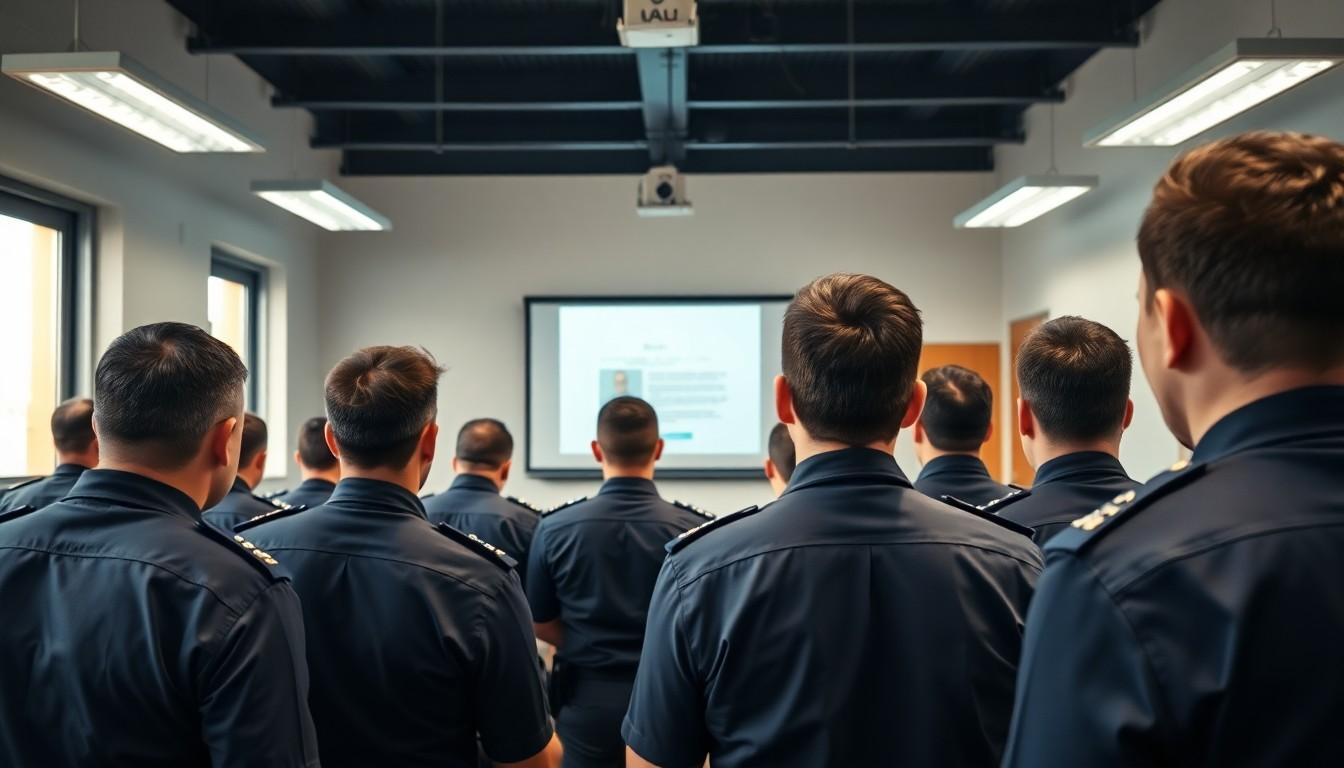
Police in Setúbal have trained around 100 officers to improve how they communicate with and support LGBT+ people. The four sessions covered equality, legal rights and practical ways to recognise discrimination and violence, with particular attention to transgender and non-binary people. The programme reflects a wider Portuguese push to make public services more respectful and responsive.
Essential Takeaways
- Around 100 officers took part: Setúbal’s Public Security Police held four training sessions across October and November.
- Practical skills were included: Officers discussed communication, identifying discrimination and violence, and worked through case examples.
- Trans and non-binary people received particular attention: The course covered sexual orientation, gender identity and expression, and sex characteristics.
- The work fits a wider national effort: Portuguese plans and partnerships have promoted training for public services and security forces.
Four sessions aimed to make police contact better
A police interaction can feel very different depending on whether someone is listened to and treated with respect. In Setúbal, around 100 Public Security Police officers took part in four sessions designed to strengthen their knowledge and practice when dealing with LGBT+ people, particularly transgender and non-binary people.
The sessions were held on 29 October and 12, 19 and 26 November, and included officers from operational and administrative services. Topics ranged from sexual orientation and gender identity to equality, non-discrimination and the legal framework. The lead report does not specify the year of the sessions.
From terminology to practical police work
This was not just a glossary exercise. Participants considered how to communicate appropriately, identify discrimination and violence, and apply what they had learned through practical cases and questions.
That focus echoes guidance in a Council of Europe training manual, which is designed for police trainers and frontline personnel as well as investigators and managers. It covers relevant terminology, human rights and anti-discrimination approaches, hate-crime investigations and co-operation with civil-society organisations.
A longer-running Portuguese training effort
Setúbal's sessions sit within a broader pattern of professional training. Portugal's Commission for Citizenship and Gender Equality says a co-operation protocol involving public authorities and security services was intended to build skills, improve support for LGBTI people and help prevent homophobic and transphobic violence.
Earlier work offers useful context, too. The Commission and Council of Europe presented a police training manual in 2019, with a course aimed at criminal-police bodies and the Public Prosecution Service. The European Union Agency for Fundamental Rights later recorded a national police-training programme launched in 2022, while distinguishing it from local initiatives.
Why the legal context matters
Respectful communication is important, but so is understanding the rights behind it. Portugal's Law No. 38/2018 recognises rights relating to gender identity and expression, protects sex characteristics and prohibits discrimination connected with those rights. It also sets out a confidential procedure for changing a person's recorded sex and given name.
Portugal's action plan on discrimination based on sexual orientation, gender identity and expression, and sex characteristics calls for training across public services. In the area of safety, it includes training police bodies to investigate hate crimes, alongside measures to identify and record incidents. Clear procedures can make a difficult moment less confusing for both the person seeking help and the officer responding.
Partnership can turn training into better service
The Setúbal police thanked the Commission for Citizenship and Gender Equality for its collaboration, saying the partnership helped strengthen the relationship between police and the local community. That link matters: training is more useful when it supports consistent day-to-day practice, rather than remaining a one-off discussion.
The four sessions are one local part of a wider effort to improve how institutions respond to people who may face discrimination. For anyone dealing with a public service, being heard clearly and treated with dignity should be the ordinary standard.
Better training is a practical step towards making that standard real.
Source Reference Map
Story idea inspired by: [1]
Sources by paragraph: