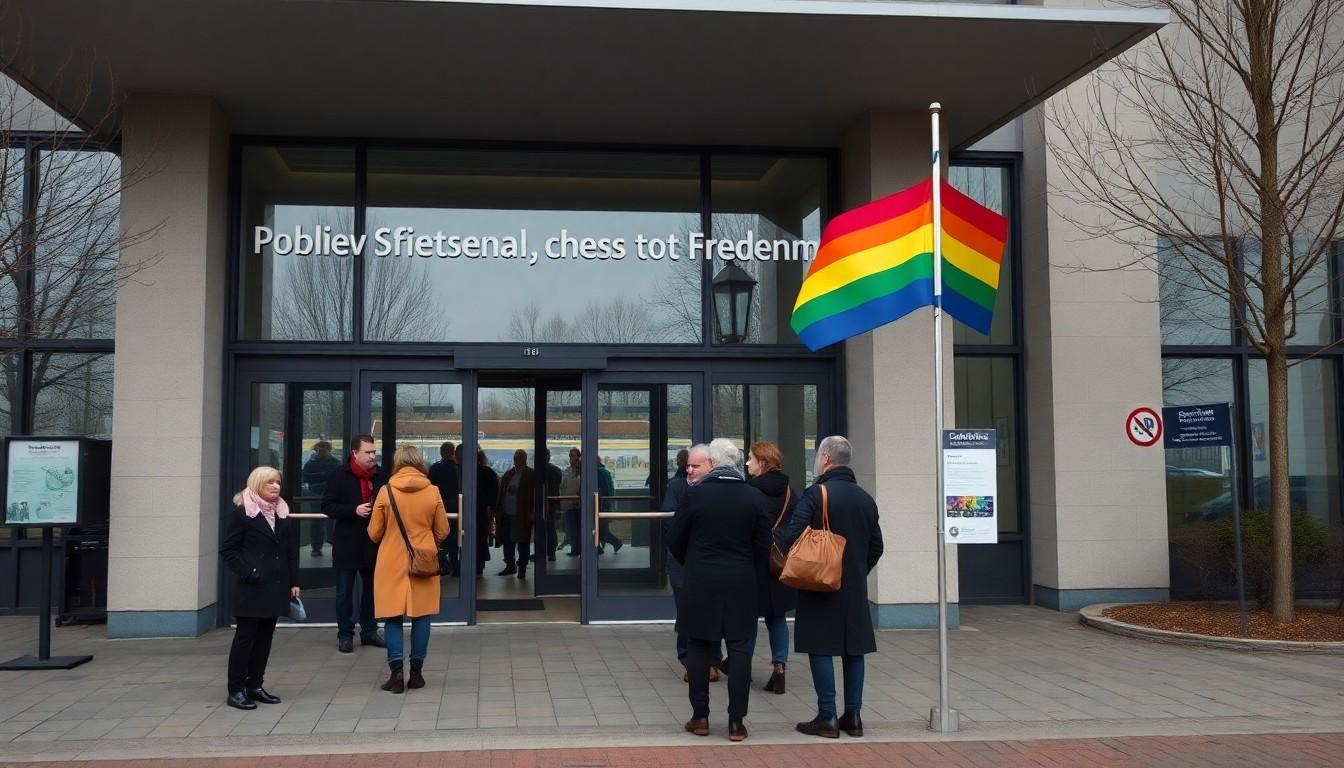
A German Christian Democratic LGBT organisation has adopted a wide-ranging resolution on protecting Jewish and queer communities, against a backdrop of violence and rising concern over extremism. The proposals include stronger security at Pride events, action against hate speech and changes to how authorities handle threats. The debate now turns on how those measures could work in practice.
A Berlin attack sharpened the security debate
The attack linked to Berlin’s Christopher Street Day celebrations left one woman dead and 31 people injured, according to Berlin.de. Reports described a vehicle driven into a crowd in the Tiergarten, followed by an assault with a bladed weapon. It’s a grim backdrop to a resolution whose central concern is whether public spaces can be made safer for everyone.
Tagesschau reported the attack the following day, citing authorities’ initial toll of 29 injured. The difference from Berlin.de’s later figure is a reminder that early casualty counts can change as information is updated.
What Germany’s LSU resolution proposes
At its federal assembly in Koblenz, LSU Deutschlands adopted a resolution titled “Living in Security and Freedom: A Rule of Law That Protects Queer Life”. The Jerusalem Post reported that it passed by a nearly unanimous vote, following a proposal from the organisation’s Hesse branch.
The plan calls for Jewish institutions and LGBT centres to feature equally in security assessments, alongside effective vehicle barriers at Pride events and funding for security at smaller gatherings in rural areas. It also proposes dedicated LGBT liaison officers at police stations and public prosecutors’ offices.
Other measures range from prosecuting hate preachers and limiting foreign funding for religious institutions that spread hatred to withdrawing public money from organisations that support antisemitism or anti-LGBT hatred. The resolution also backs three months of IP-address retention to help tackle online threats, and regulated use of AI video analysis in high-risk areas, subject to judicial approval.
A previous court case raises hard questions
The resolution calls for a full investigation into why the Berlin suspect remained at liberty, and proposes nationwide standards for electronic monitoring and preventive detention. It also argues that adult criminal law should generally apply from age 18 in terrorism and extremism cases.
Berlin’s public prosecutor’s office confirmed that the suspect had been convicted by a juvenile court in May 2026, receiving a youth sentence of one year and ten months. The official account documents the earlier proceedings, while leaving the resolution’s broader questions about the handling of the case to be examined separately.
The statistics need careful reading
LSU’s resolution points to figures for politically motivated offences, including anti-queer and antisemitic incidents. A factsheet from LSVD+ reproduces the 2025 figure of 2,070 offences recorded under the “sexual orientation” category, up 17.28 per cent from 2024. That supports one part of the statistical picture, but it doesn’t verify every figure cited in the resolution.
The Federal Criminal Police Office’s published figures supplied here cover 2024, not 2025. They show 6,236 antisemitic offences that year, up from 5,164 in 2023, but shouldn’t be treated as confirmation of later totals. Keeping reporting years and category definitions distinct matters: statistics can inform the debate without settling every claim.
Extremism, protest and the line between them
The resolution also raises concerns about links between far-left and Islamist circles, arguing that antisemitism and hostility towards Israel can bring extremist groups together. Germany’s domestic intelligence agency describes shared mobilisation and overlapping activity among some extremist currents in its 2024 report, while cautioning against treating those findings as a judgement on all left-wing politics or pro-Palestinian activism.
That distinction matters. Protecting Jewish and LGBT people from intimidation is a clear aim; deciding how to prevent threats without sweeping legitimate protest into the same category is a more difficult task for lawmakers and authorities.
For now, the resolution sets out a broad test: whether safety measures can protect Jewish and queer life while upholding the rule of law.
Source Reference Map
Story idea inspired by: [1]
Sources by paragraph: