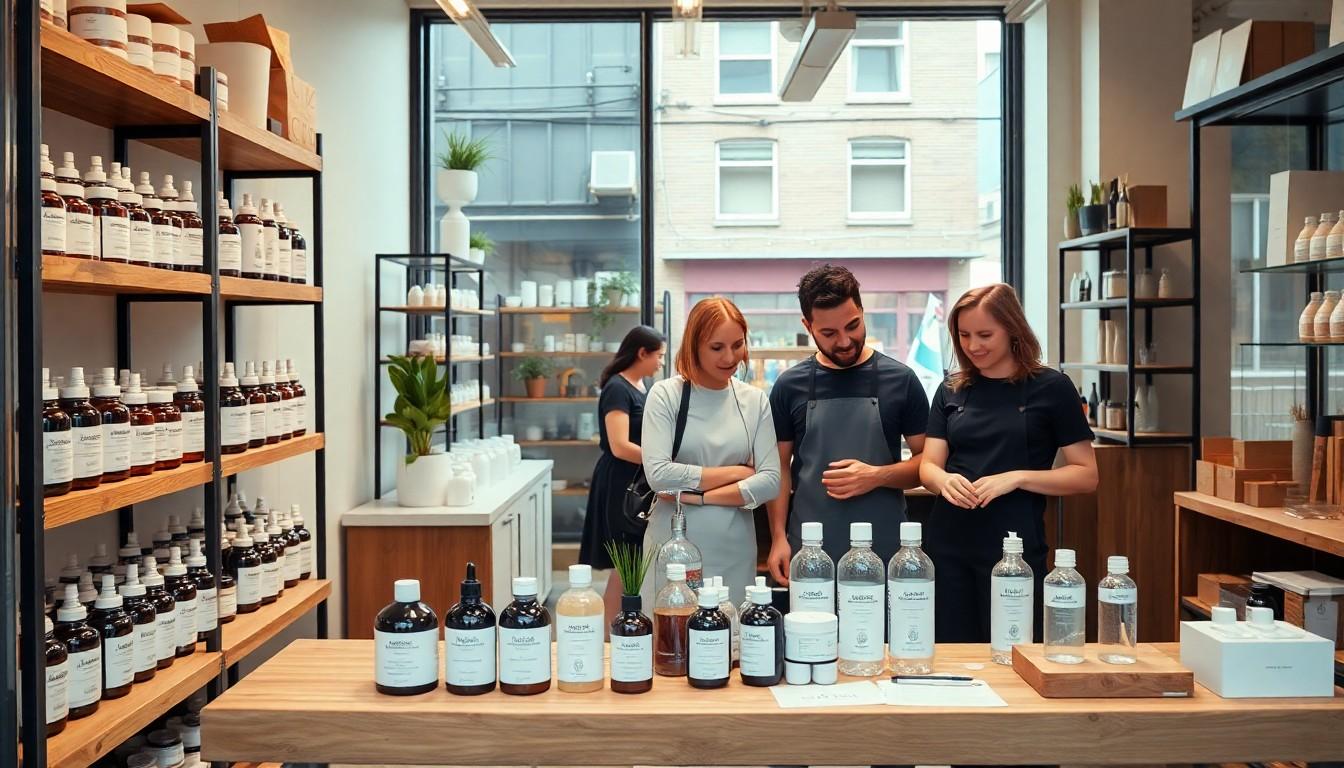
Beauty brands are beginning to leave the old pink-for-her, rugged-for-him playbook behind. Queer-founded businesses are making room for gender-inclusive products, personal expression and clearer conversations about ingredients, while consumer research points to a sizeable US beauty audience whose trust can’t simply be assumed. The opportunity is real, but so is the need to back bold branding with evidence.
Essential Takeaways
- A meaningful US market: LGBTQIA+ consumers account for 9.5 per cent of US beauty buyers and 9.6 per cent of beauty spending, NielsenIQ reports.
- Inclusive brands are widening the frame: NOTO Botanics centres gender-fluid, multi-use beauty, while ONE/SIZE promotes self-expression and belonging.
- Clean beauty needs proof: Plant-based or “natural” positioning doesn’t establish that a product is safe or suitable for every skin type.
- New founders can use existing formulas: NourishUs Naturals offers private-label and semi-customised products, but businesses still need to check the precise ingredients and claims.
- US cosmetics sellers carry responsibility: The FDA says businesses are responsible for product safety and truthful labelling, and it hasn’t defined “natural” for cosmetic labelling.
The beauty aisle is loosening its old rules
Beauty packaging once leaned on familiar signals: pink and delicate for women, dark and rugged for men. Queer entrepreneurs are helping push beyond that formula, with products that make room for different identities, routines and ways of expressing yourself.
NOTO Botanics, founded by makeup artist Gloria Noto, describes its range as gender-fluid and multi-use, with products for face, body and hair. Meanwhile, ONE/SIZE, founded by Patrick Starrr, frames its makeup around self-expression and making space for everyone to belong. Neither approach asks customers to fit neatly into a men’s or women’s aisle before choosing a product.
The shift isn’t just about changing the look of a label. NielsenIQ’s analysis of beauty trends says consumers increasingly expect brands to consider values and transparency alongside appearance, with conscious attributes growing faster than the overall beauty category in its market data.
The numbers point to an audience brands shouldn’t overlook
NielsenIQ’s 2025 report puts LGBTQIA+ consumers at 9.5 per cent of US beauty buyers and 9.6 per cent of beauty spending. It also identifies spending across categories including bath and shower products, cosmetics and nail care, hair care, and sun care.
But those figures don’t guarantee customer loyalty. NielsenIQ found that 51 per cent of LGBTQIA+ consumers were neither especially favourable nor unfavourable towards large businesses, compared with 35 per cent of US consumers overall. The report also highlights the importance of how companies support employees and communities, so a bright campaign may be a start, not the whole story.
For a new business, that means treating trust as something to earn through consistent choices. Inclusive packaging can help signal who a brand wants to serve, but it doesn’t replace honest product information or thoughtful engagement with that community.
Clean beauty offers room to stand out, not a shortcut
Interest in ingredient transparency and sustainability creates space for smaller beauty businesses to make a clear case for their products. NielsenIQ’s clean-beauty analysis points to growing interest in attributes such as vegan formulations, cruelty-free claims and sustainable packaging, alongside consumer expectations that brands explain their choices.
Still, “clean”, “natural” and “inclusive” aren’t interchangeable promises. A plant-based formula isn’t automatically right for every skin type, and gender-neutral packaging says little by itself about what’s inside. Founders need to assess individual formulations and be clear about what their products can, and can’t, claim.
That distinction matters for customers, too. If a product is making a specific promise about ingredients, suitability or sourcing, look for details about that product rather than relying on broad brand language.
Start with a real customer need
A new beauty founder doesn’t have to invent a formula from scratch, but should begin with a clear audience and a problem worth solving. Talking to potential customers about what they struggle to find, which ingredients they avoid and where existing brands fall short is a more grounded starting point than guessing what an entire community wants.
NourishUs Naturals says its private-label service offers existing base products, with options for semi-customisation. Its listed categories include serums, cleansers, creams, body care and hair care, which may let a founder focus more effort on branding and reaching customers than on developing every formula from the beginning.
That route still calls for close checks. NourishUs Naturals says modifications need to be considered for ingredient compatibility and production feasibility, and businesses should review the exact product specification, terms and suitability for their intended audience before making claims.
In the US, “natural” isn’t a regulatory definition
The US Food and Drug Administration says the business responsible for a cosmetic must ensure its safety and use truthful, non-misleading labelling. It also says it hasn’t established a regulatory definition of “natural” for cosmetic labelling.
So a supplier’s clean-beauty positioning doesn’t remove a founder’s responsibility to examine ingredients, safety information and label claims. The FDA says ingredients described as natural or organic aren’t automatically safe, and that the business named on the label is generally responsible for having adequate support for product safety.
For shoppers, the practical lesson is simple: look beyond a tidy label and check the product-specific information. For founders, it’s a reminder that trust comes from what a brand can substantiate, not just what it stands for.
Inclusive beauty can make the aisle feel more welcoming, but the strongest brands will pair that welcome with clear, careful product choices.
Source Reference Map
Story idea inspired by: [1]
Sources by paragraph: