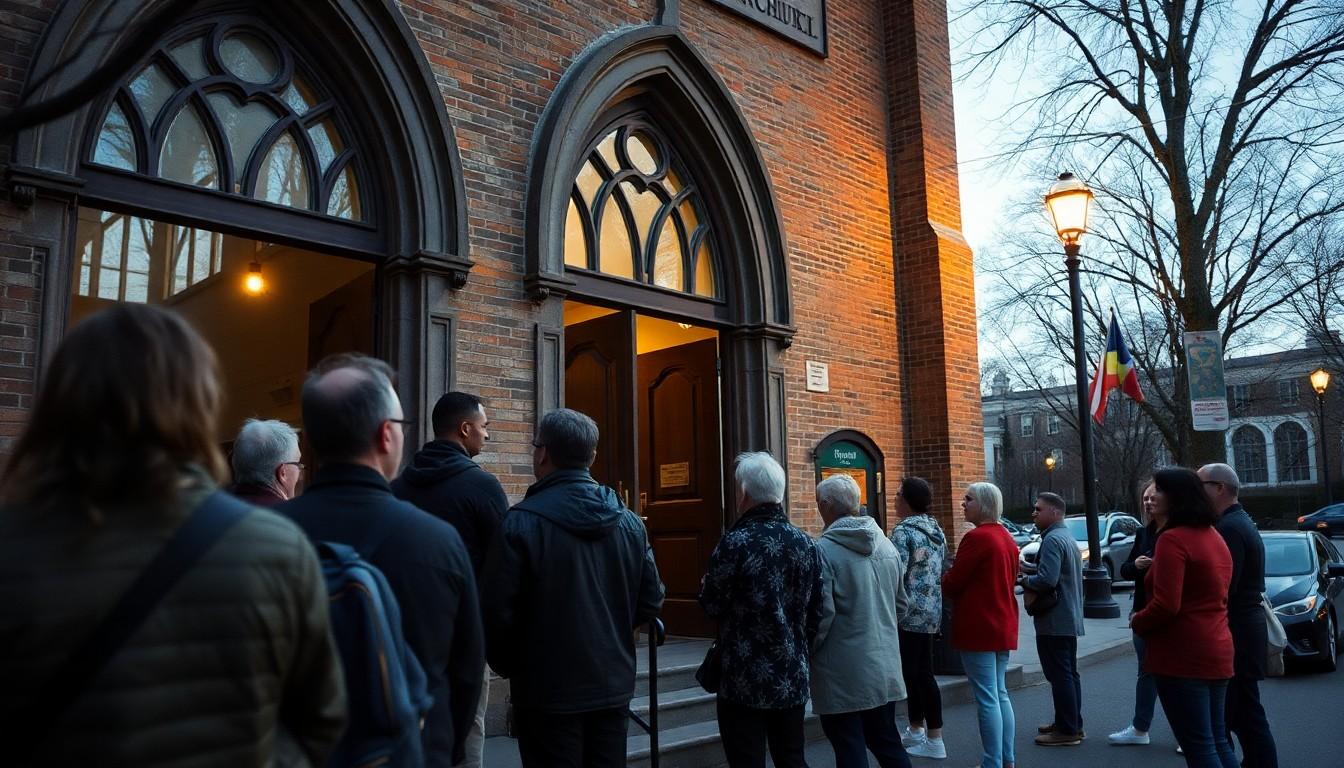
Community members and allies gathered at Washington DC’s Metropolitan Community Church for the annual Transgender Day of Remembrance, a service honouring transgender people lost to violence and recognising survivors. Through performances, personal testimonies and a quiet altar ritual, the gathering brought remembrance into the room - and renewed attention to safety, dignity and community solidarity.
Essential Takeaways
- A shared remembrance: The service was held on 20 November at the Metropolitan Community Church of Washington, DC.
- Art and testimony: Speakers, performers and survivors took part in a programme centred on remembrance and resilience.
- A tribute to SaVanna Wanzer: Rayceen Pendarvis honoured the DC activist, who founded several transgender community initiatives.
- Names spoken aloud: Clergy led a ceremony in which names of people lost to violence or suicide in 2026 were read.
- A call for safety and dignity: Councilmember Brooke Pinto presented a proclamation and spoke about the need to protect transgender residents.
A quiet ceremony made space for grief
Names filled the church as drums played softly. At the altar, Rev. Dr Akosua McCray dropped a stone into clear water for each person remembered, while people in the congregation were invited to call out names of their own.
The annual service took place on 20 November at the Metropolitan Community Church of Washington, DC. The event listing on Action Network described its purpose as naming transgender people lost during the year and renewing a commitment to community safety. It also invited people to attend in solidarity with transgender neighbours.
The Washington Blade reported that clergy from Unity Fellowship of Christ Church Washington, DC led the altar ceremony. Dr Terrsa Tygart and Sue Keitelman read the Mourner’s Kaddish, and Brooke Collins and Jazmyn Smalls shared personal survival testimonies.
Performances and personal stories shaped the programme
The service balanced its solemn rituals with music, spoken word and a guest address. Ti Malik Coleman was the guest speaker, while Rayceen Pendarvis, Diana Chase and Zion Peters served as emcees.
Dee Tum-Monge performed “These Bodies” by The Many, Tessa Jelani presented the spoken-word piece “I will be heard”, and rapper Ariella Effortless performed “Survival Mode”. The range of contributions gave the gathering room for both mourning and expression.
That mix matters: remembrance can be a formal observance, but it can also make space for people to speak, perform and be heard. Here, the personal testimonies sat alongside the public ritual of reading names.
SaVanna Wanzer’s community legacy was remembered
Pendarvis paid tribute to SaVanna Wanzer, a prominent DC transgender activist who died in April of natural causes. Wanzer founded DC Trans Pride, DC Black Trans Pride and May Is All About Trans.
McGuire Funeral Service’s obituary describes Wanzer as an advocate for human rights, transgender rights and HIV rights, and says she helped build community spaces and campaigns. The Washington Blade’s earlier report on her death also noted her volunteer work with Whitman-Walker Health and her role in establishing those initiatives.
Pendarvis said Wanzer had created a movement and legacy that would continue beyond her. It was a personal tribute, but also a reminder that community organising can leave something tangible for others to carry forward.
Public promises put safety in focus
Japer Bowles, director of the DC Mayor’s Office of LGBTQ Affairs, presented a proclamation from Mayor Muriel Bowser. Councilmember Brooke Pinto also offered brief remarks and presented a proclamation from the DC Council.
Pinto spoke of a commitment to keep working towards safety, dignity and authenticity for every transgender neighbour. The words echoed the event’s wider purpose: remembering those lost, while insisting that the living deserve care and protection.
The Trans Remembrance Project describes 20 November as an annual day honouring transgender people who have died. Its history traces the observance to a candlelight vigil established in 1999 for Rita Hester, a Black transgender woman murdered in Boston in 1998.
Remembrance can be both personal and public
For anyone attending a service like this, there is no single right way to take part. Listening, saying a name, bringing a friend or simply being present can all be meaningful; Action Network’s event listing explicitly encouraged people to attend together and noted that the service would also be streamed for those unable to be there in person.
The church gathering brought those choices together in one space: a public observance, a programme of performance and a ceremony that made room for individual grief. And when names are spoken aloud, remembrance feels less like a date on a calendar and more like a community promise.
A name remembered is a life honoured, and a reason to keep working towards safety for all.
Source Reference Map
Story idea inspired by: [1]
Sources by paragraph:
- Paragraph 1: [2], [3]
- Paragraph 2: [2]
- Paragraph 3: [2]
- Paragraph 4: [2]
- Paragraph 5: [2]
- Paragraph 6: [2]
- Paragraph 7: [2]
- Paragraph 8: [2], [4], [5]
- Paragraph 9: [4], [5]
- Paragraph 10: [2]
- Paragraph 11: [2]
- Paragraph 12: [2]
- Paragraph 13: [6]
- Paragraph 14: [3]
- Paragraph 15: [3]
- Paragraph 16: [2], [3]