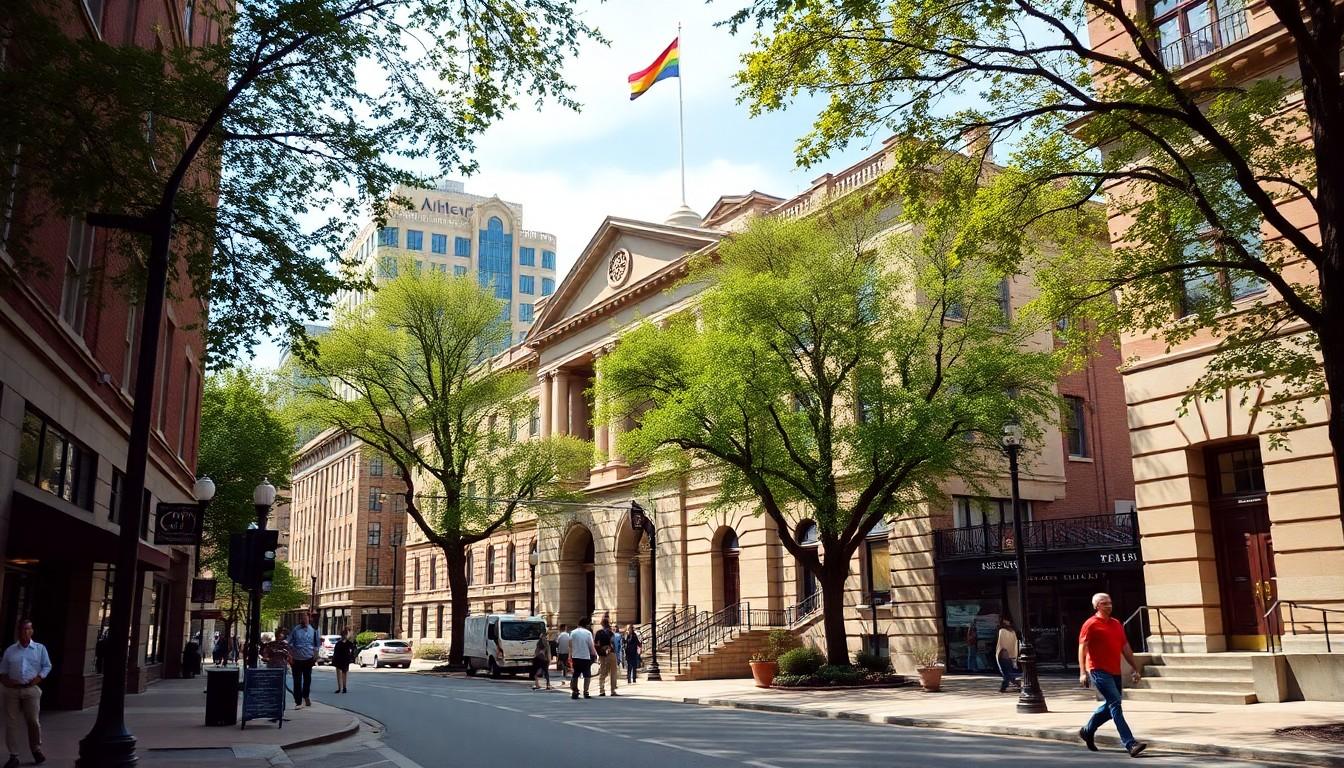
Pittsburgh’s ninth consecutive perfect LGBTQ+ equality score offers a moment to celebrate, while a welcoming fencing club shows how belonging can take shape locally. This Thanksgiving week, QBurgh’s Slay Weekly also spotlights chosen family and its December print issue deadline, bringing together policy, community and a little swordplay.
Essential Takeaways
- A strong policy result: Pittsburgh received a score of 100 in the Human Rights Campaign’s Municipal Equality Index for the ninth consecutive year.
- Policies behind the score: The city’s measures include LGBTQ+ nondiscrimination protections, gender-affirming healthcare benefits for municipal employees, an LGBTQIA+ Commission and a conversion-therapy ban.
- A club with a wider purpose: Hilt and Helm Pittsburgh Fencing Club is a Black- and queer-owned Historical European Martial Arts organisation in Squirrel Hill.
- The score has limits: A perfect policy result doesn’t mean every LGBTQ+ resident experiences equality in daily life.
- A print-issue reminder: The newsletter gives 23 November 2026 as the deadline to subscribe in time for the December QBurgh newspaper.
Pittsburgh’s perfect score is worth celebrating
A perfect score sounds like a neat ending, but it’s better understood as a marker of the work behind it. Pittsburgh has earned 100 in the Human Rights Campaign’s Municipal Equality Index for nine consecutive years, recognising city policies intended to support LGBTQ+ residents and employees.
QBurgh reports that the policies include nondiscrimination protections, gender-affirming healthcare benefits for municipal employees, the LGBTQIA+ Commission and a municipal ban on conversion therapy. The Human Rights Campaign’s 2025 scorecard, the latest scored edition referenced by QBurgh, also assesses areas such as municipal services, employment, law enforcement and city leadership.
What the equality index can - and can’t - tell us
The score measures policy, not every person’s experience of the city. QBurgh’s reporting makes that distinction clear: a perfect result doesn’t guarantee that every LGBTQ+ Pittsburgher feels safe, welcomed or able to access the support they need.
That caveat doesn’t make the recognition meaningless. It simply keeps the number in perspective: inclusive rules matter, while the work of making people feel secure and included in daily life carries on.
Hilt and Helm makes room to learn
In Squirrel Hill, Hilt and Helm Pittsburgh Fencing Club brings together sword training and community. QBurgh describes the Black- and queer-owned club as a place to study Historical European Martial Arts, build confidence and learn without having to hide who you are.
Founder Chris Shelton set out to create a different kind of fencing environment after experiencing racism and homophobia at a previous club. The club’s own website describes training in several weapon systems and offers newcomers the chance to observe a class or tour the facility. For anyone curious, that’s a more approachable first step than imagining they need to arrive ready for a duel.
Fencing can be about confidence, not just swords
QBurgh’s feature follows reporter Kalliyan Winder onto the fencing floor, where she learns about the club’s approach and faces its “Jarl”. The story presents the practice as more than combat: it’s also about patience, trusting yourself and finding people who welcome you as you are.
There’s a lovely contrast in that idea. Learning to stand your ground can begin in a room where you don’t have to defend your identity first.
Chosen family belongs at the table
The newsletter’s Thanksgiving message looks beyond the picture-perfect holiday. Family might mean relatives around a table, but it can also mean friends who show up, a supportive community or the people who make space for you to be yourself.
That theme ties the week’s stories together. City protections, welcoming spaces and close friendships may look different, but each can help people feel they belong. QBurgh also reminds readers that 23 November 2026 is the stated deadline to subscribe in time for its December print issue.
A little more room for people to be themselves is worth building, at the table and beyond.
Source Reference Map
Story idea inspired by: [1]
Sources by paragraph: