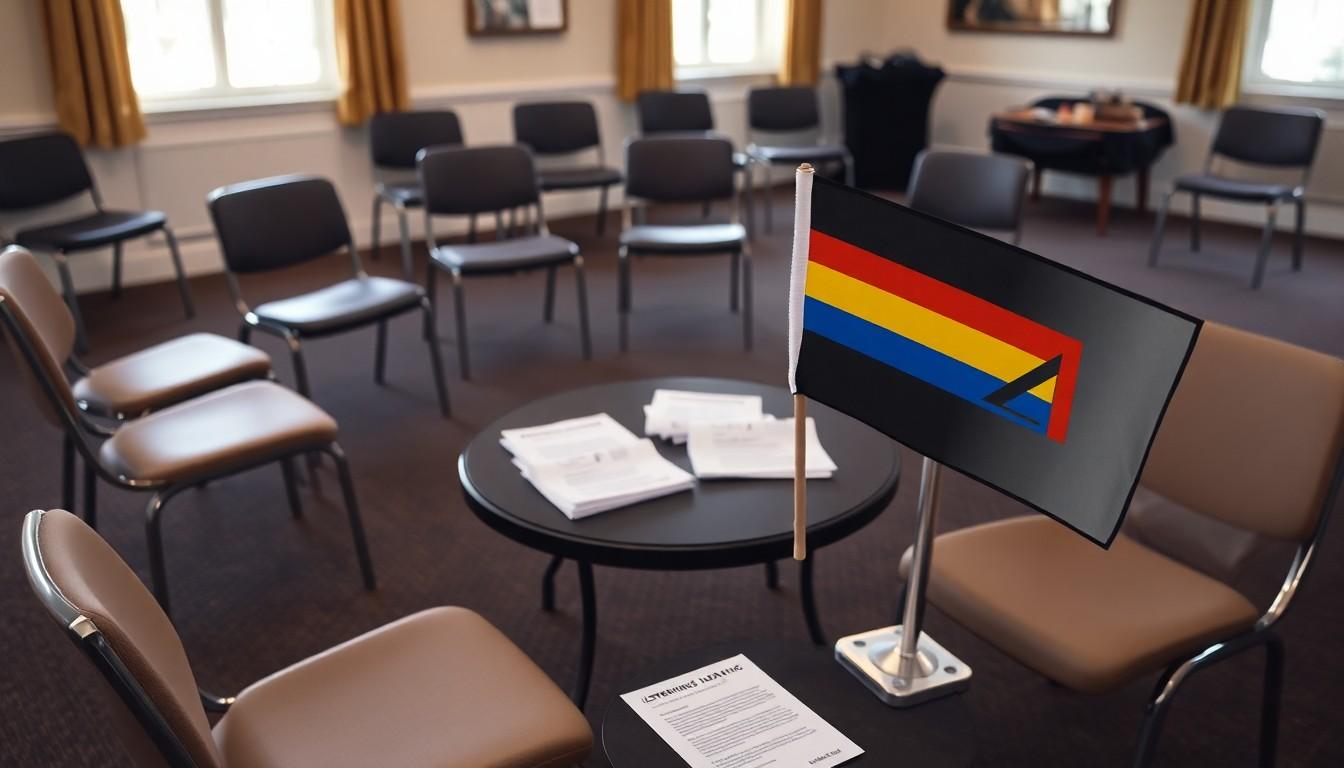
A black-and-white flag crossed by a rainbow A is a familiar symbol of LGBTQ+ allyship, but its creator remains unknown. Guides from the University of Colorado Boulder and the Human Rights Campaign explain what its colours can represent, while PFLAG’s latest advice makes a wider point: support is about listening and taking action, not just displaying a symbol.
Essential Takeaways
- The design: The straight ally flag pairs black and white horizontal stripes with a rainbow-coloured A.
- The meaning: Guides commonly connect the stripes with straight or cisgender allies, the rainbow with LGBTQ+ people and the A with allyship or advocacy.
- The origin: The designer is unknown, and a 2001 record of a proposed striped heterosexual flag doesn’t establish when the ally flag was first created.
- The distinction: A plain black-and-white striped flag is not the same design as the ally flag with its rainbow A.
- The everyday work: PFLAG encourages allies to listen, learn, respond constructively to mistakes and support equality in their communities.
A rainbow A makes the difference
The straight ally flag is visually simple: black and white horizontal stripes beneath a bright, rainbow-coloured A. The contrast gives the design a clear focal point, and the University of Colorado Boulder’s Pride Flag Guide explains the stripes as representing the straight flag, with the rainbow standing for people under the LGBTQ+ umbrella.
The A is for “ally or advocate”, according to the university guide. SexualDiversity.org offers a slightly broader reading of the stripes, describing them as representing straight and/or cisgender allies. That difference is a useful reminder that flag guides explain common interpretations, rather than setting a single universal rule. [2][3]
The flag’s creator is still a mystery
There’s no confirmed designer in the university guide, and the Human Rights Campaign also lists the creator as unknown. The HRC describes the flag as a way for straight, cisgender people to show support for LGBTQ+ communities without claiming those identities as their own. [2][4]
The historical trail doesn’t settle the question. A note dated 5 February 2001, preserved by Flags of the World, records contributor Steve Kramer’s recollection of a proposed heterosexual flag with six alternating black and white stripes. That is a record of a striped design, not proof of when the later flag with a rainbow A was created. [5]
Don’t mistake stripes for the full ally flag
The rainbow A matters. SexualDiversity.org distinguishes the straight ally flag from plain black-and-white “straight pride” designs, which it says may be used in opposition to the Pride movement. Its guide treats the A-and-rainbow design as the signal of support for LGBTQ+ people. [3]
So, if you’re trying to identify the ally flag, look for the rainbow A rather than the stripes alone. Parade’s flag guide also describes flying the design as a way to signal support for queer people, while the Human Rights Campaign frames it as solidarity rather than an identity claim. [4][6]
Allyship means more than flying a flag
A flag can make support visible, but PFLAG National’s 2025 guide places the emphasis on everyday behaviour as well as public action. The guide is the fifth edition of a resource first published in 2007, when it was titled the Guide to Being a Straight Ally. Its broader framing recognises that LGBTQ+ people can be allies too. [7]
PFLAG encourages readers to listen, learn about LGBTQ+ experiences, ask respectful questions and use language thoughtfully. It also advises allies to respond constructively when someone makes a hurtful remark, and to acknowledge and correct their own mistakes without turning the moment into a defence of their intentions. [7]
Make support visible, then keep showing up
The Human Rights Campaign’s description offers a handy way to think about the flag: it communicates support without claiming an identity that isn’t yours. Parade likewise presents it as a public sign of solidarity. Neither guide establishes that every LGBTQ+ person has the same view of the symbol, so it’s best treated as one possible expression of allyship, not the whole story. [4][6]
PFLAG’s practical advice points beyond the flag itself, towards supporting equality in civic life and in local communities. A symbol can start a conversation; listening and thoughtful action help carry it forward. [7]
A rainbow A can show where you stand, but everyday support is what gives it meaning.
Source Reference Map
Story idea inspired by: [1]
Sources by paragraph: