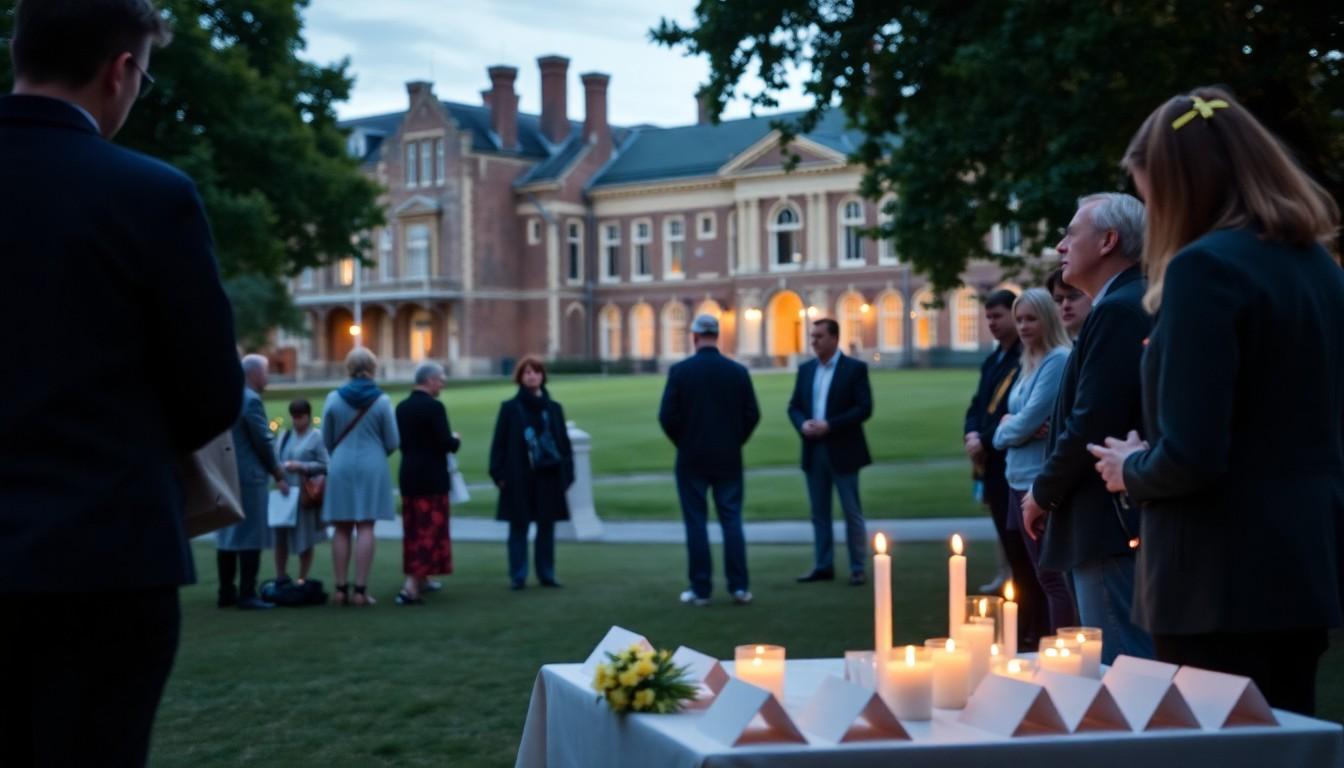
Students and community members gathered at Brown University for a Trans Day of Remembrance vigil, where organisers spoke about grief, exhaustion and the importance of remembering people killed in anti-trans violence. The event offered a quiet, deeply personal counterpoint to statistics: each name belongs to someone whose life was more than the way they died.
Essential Takeaways
- A campus vigil: TRANSformation organised the gathering on Brown University’s main green, with speakers from the group addressing attendees.
- A stark global count: Trans Europe and Central Asia reported 273 documented murders of trans and gender-diverse people during its 2026 monitoring period.
- A number with limits: TGEU says its figures cover cases it could document, not every murder or every form of violence.
- Remembering lives, not only deaths: Organisers described reading names aloud as a way to honour people beyond the circumstances of their deaths.
- A call to be present: The vigil included a period of silence and a walk to a bonfire.
A vigil that made room for grief
At Brown University, a list of names became the centre of a gathering on the main green. Steve Ahlquist reported that TRANSformation organised the Trans Day of Remembrance vigil, where attendees came together to mourn people lost to anti-trans violence.
The occasion carried both sorrow and a sense of togetherness. Organiser Kal Mehta spoke about the strain of compiling the names each year, while Levi Kim described how grief had shaped their first understanding of transness. Their words made the event feel less like a formal ceremony and more like a community making space for feelings that are often difficult to hold alone.
Brown describes TRANSformation as a student group that welcomes people across a range of gender identities and runs social, discussion and creative activities. That wider role helps explain why a remembrance event can also be a gathering place: mourning and community life aren't separate things.
What the 2026 figure tells us - and what it can't
Trans Europe and Central Asia reported 273 murders of trans and gender-diverse people across 35 countries between 1 October 2025 and 30 September 2026. TGEU described that total as one reported murder every 32 hours, a grim measure that organisers referred to during the vigil.
But the figure needs careful reading. TGEU says it counts cases that could be documented, not every murder worldwide, and warns that under-reporting and limited monitoring can hide cases. The numbers are a record of known cases within a defined period, not a complete account of violence or an individual measure of risk.
The report also found that seven in ten documented murders took place in Latin America and the Caribbean. Its country totals include 29 reported cases in the United States, while the underlying tables show 86 in Brazil and 29 in Mexico. Those differences point to the need for context: raw totals can show where cases were recorded, but they don't tell the whole story about how safely people can live.
Why reading names aloud matters
For Mehta, compiling and reading the names was difficult, but necessary. A list can't capture a person's humour, friendships or daily life; still, saying each name aloud can resist the reduction of someone to a headline or a statistic.
That tension ran through the vigil. Kim spoke about trans people being scrutinised and turned into political symbols, while also describing the possibility of finding peace and community through self-understanding. The event held both realities at once: anger at violence and care for the people who remain.
The vigil also included a period of silence and a walk towards a bonfire, where attendees were invited to offer leaves carrying the names. Those gestures were simple, but they gave the gathering a way to remember together without pretending that grief can be neatly resolved.
A day of remembrance, not just a list
Transgender Day of Remembrance is observed on 20 November to honour trans people who have died because of violence. The Associated Press traces its beginnings to 1999, following the killing of Rita Hester in Massachusetts, and notes that vigils and memorials are common ways to mark the day.
The Brown gathering also made room for poetry. Kim referred to Jackie Sabbagh's "Having a Great Time Being Transgender in America Lately", a poem listed on Sabbagh's website as published in Poetry magazine in June 2024. Its title carries a pointed contrast, though the vigil's wider message was not limited to a single reading or speech.
Mehta asked attendees to stay for as long as they could without harming their wellbeing. That request recognised a practical truth of remembrance: showing up matters, but people also need to look after themselves as they do it.
Keeping remembrance human
Statistics help reveal the scale of documented violence, but they can't stand in for the people behind the numbers. TGEU's monitoring gives a clearer picture of what has been recorded, while the organisers' words at Brown brought the human cost into sharper focus.
There was no easy answer offered at the vigil, and perhaps none could be. Instead, the gathering returned to a simple act: staying together, listening and carrying the names forward.
Remembering someone as more than the way they died is a small act of care, but it matters.
Source Reference Map
Story idea inspired by: [1]
Sources by paragraph: