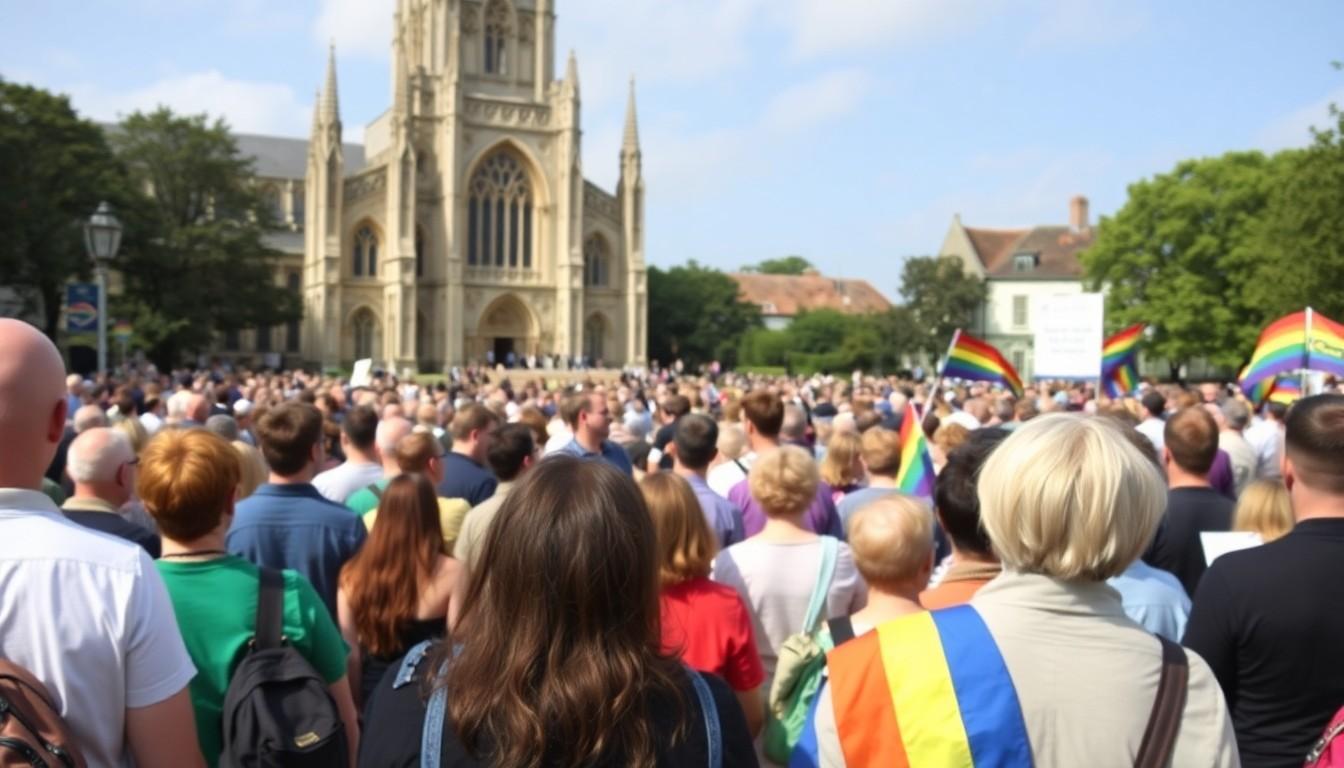
More than 2,500 people joined Chichester’s March for Unity, organisers estimated, gathering after racist and homophobic incidents to make a public show of solidarity. From the Festival Theatre to Cathedral Green, residents and local figures called for a city where everyone feels welcome. The turnout was striking, but organisers said the real measure would be what happened next.
Thousands turned out to make a point
The procession from Chichester Festival Theatre to Cathedral Green brought a powerful sea of people and signs into the city centre. Organisers estimated that more than 2,500 joined the march, which was held after a series of racist and homophobic incidents.
The aim was clear: to show that discrimination and hate aren’t welcome in Chichester. The official Chichester Together campaign describes its purpose as helping people from different backgrounds feel safe, valued and included, with local organisations and community groups behind the effort.
A call for welcome, dignity and respect
Aimee Massey, founder of Future Act, opened the rally by saying that people who live, study, work or visit in Chichester deserve to feel welcome. The Very Reverend Dr Edward Dowler, Dean of Chichester, followed with a call for dignity, respect and civility.
Chichester Cathedral was among the organisations supporting the event, alongside cultural and civic bodies including Chichester Festival Theatre, Chichester College and the University of Chichester. The breadth of that backing made the rally feel like more than a single organisation’s statement: it was a public appeal for the whole city to stand together.
Theatre abuse brought the issue close to home
Justin Audibert, artistic director of Chichester Festival Theatre, spoke about the distress caused to the cast and crew of A Midsummer Night’s Dream by racist and homophobic incidents. Actor Munya Chawawa had also spoken publicly about the abuse experienced by members of the company.
The Independent reported that Chawawa described racist, xenophobic and homophobic abuse during the company’s time in Chichester. It also reported an alleged homophobic attack on a cast member, which Sussex Police treated as a hate crime. That context helps explain why the march’s message was not abstract: it was tied to experiences that had affected people working and visiting in the city.
Counter-protesters met with a show of unity
A small group of counter-protesters waved St George’s flags and heckled speakers. In response, people stepped forward with Chichester Together flags and signs, creating a visible contrast between disruption and the rally’s message of welcome.
Chichester MP Jess Brown-Fuller urged residents to report hate crimes they witness, noting that some incidents may go unreported. The Independent’s account of the incidents involving the theatre company also records Chawawa’s call for people to challenge abuse when they see it. Reporting concerns, alongside speaking up, is one practical way residents can help make sure incidents are recognised.
The real test comes after the banners
The Sussex Express reported that designer Wayne Hemingway spoke about challenging racist slurs and jokes, while Mayor Sean McHale told the crowd that hate and harassment had no place in the city. The rally also included a direct appeal to the small group of counter-protesters from Brown-Fuller.
Organiser Annika Small said the lasting test would come in the days and weeks after the march, once the banners had been put away. It’s a useful reminder that a large crowd can make a statement, but everyday choices matter too: whether people challenge prejudice, support those affected and report incidents.
A united crowd made its message visible; keeping it alive is the work that follows.
Source Reference Map
Story idea inspired by: [1]
Sources by paragraph: