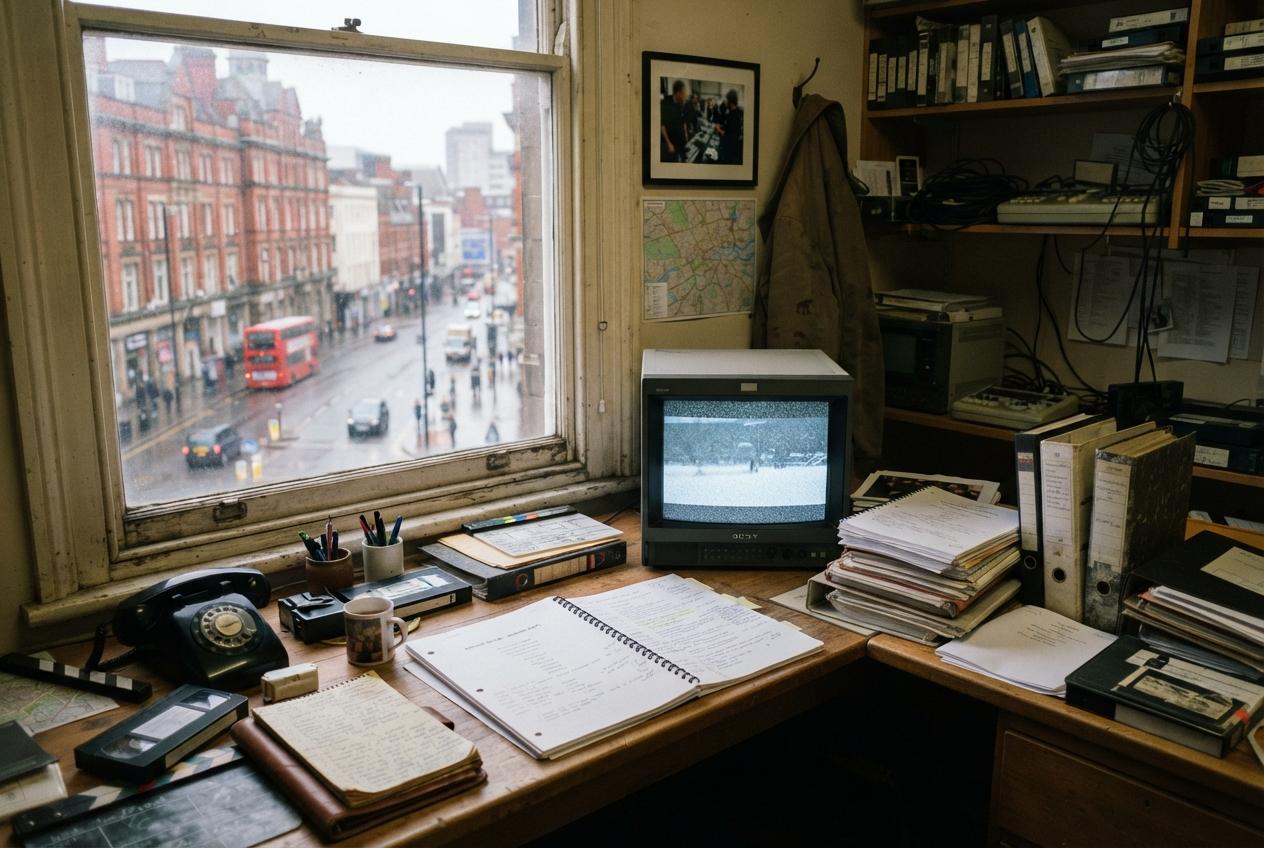
A quick-witted tour through five decades of British television, Russell T Davies’s memoir The Queerest of Folk moves from children’s programmes and Granada Studios to Queer as Folk and Doctor Who. It matters not just for the behind-the-scenes stories, but for its portrait of how comedy, queer visibility and sheer creative persistence helped reshape what television could show.
Essential Takeaways
- A career-led memoir: Davies organises the story around his television work, rather than offering a full account of his private life.
- A turning point in tone: After The Grand failed to find an audience, advice to write more comically helped him discover his voice.
- Queer television with impact: Queer as Folk brought funny, vivid and frank stories about gay men to screens in 1999.
- Warm, but not uncritical: Davies is affectionate about colleagues and sharp when recalling difficult encounters with powerful industry figures.
- A moving final note: The memoir’s most direct personal passages concern his husband, Andrew, who died in 2018.
A career memoir with a lively voice
The strongest impression is of a storyteller talking across the table: brisk, funny and eager to get to the next tale. In its review, The Guardian describes The Queerest of Folk as a warm, gossipy account of five decades in television, propelled by the programmes Davies made rather than a chronological telling of his private life.
That structure keeps the pace up, but it also tells you what matters most to him. The book looks at the work behind the finished programmes: ideas, meetings, pitches, setbacks and the moments when a creative instinct finally clicks. Penguin frames television itself as the memoir’s central subject, and as a medium with the power to connect people.
From puppets to finding his funny side
Davies’s route into television began after studying English at Oxford, when a friend suggested that his enthusiasm for the medium might be more than a pastime. He went on to work in children’s television before joining Granada Studios in Manchester, where he worked alongside Sally Wainwright, Paul Abbott and Kay Mellor.
One useful lesson came after his period drama The Grand failed to hold viewers’ attention. A friend told him he was funny and should write that way; The Guardian’s review presents the advice as a turning point. It’s a pleasing reminder that a creative career can change direction not through a grand plan, but because somebody spots the quality you’re not yet using.
How Queer as Folk changed the conversation
The memoir’s account of Queer as Folk sits at the heart of its wider story about representation. The Guardian notes that, when the Channel 4 series arrived in 1999, queer stories on television were scarce and often solemn. Davies’s comedy was vivid and frank by comparison, challenging the assumption that a drama about gay men had to be earnest.
Scene magazine sees the book as especially valuable to queer readers because it traces visibility back to individual scripts and persistent creative work. That perspective gives the industry anecdotes a broader meaning: they’re not only stories about how television gets made, but glimpses of how more lives found a place on screen.
Doctor Who, difficult meetings and stories left untold
Davies’s return to Doctor Who in 2005 was the fulfilment of a long-standing enthusiasm, and the book follows his relationship with the series through later changes and a return to the programme. The Guardian finds affection rather than score-settling in his account. For readers hoping for answers to every question around the show’s later period, The Doctor Who Companion cautions that the memoir leaves some mysteries unresolved.
It does, however, offer a peek at ideas that never reached the screen. The Doctor Who Companion highlights an unmade Christmas special involving an English village, a large spaceship and a festival called Winternox. Its reviewer also advises reading the book in sequence, rather than jumping straight to the Doctor Who chapters: the wider story is a career in television, not simply a dossier on one beloved series.
Affection, grief and a case for creative freedom
Davies is generous about many colleagues, yet the memoir also recalls tense exchanges and unsettling encounters with powerful figures. The Independent’s coverage similarly draws attention to the book’s mixture of professional stories and personal history, including its account of Davies’s husband, Andrew Smith, who died in 2018.
The Guardian identifies those passages about Andrew as the book’s most emotionally direct. In its closing stretch, the memoir turns towards the future, making a case for invention, optimism and creative freedom at a time when the arts face threats from autocrats, AI and collapsing budgets. Davies’s affection for television’s range is part of that argument: the form needn’t choose between high culture and popular entertainment.
For anyone curious about how British television gets made, this is a lively place to start.
Source Reference Map
Story idea inspired by: [1]
Sources by paragraph: