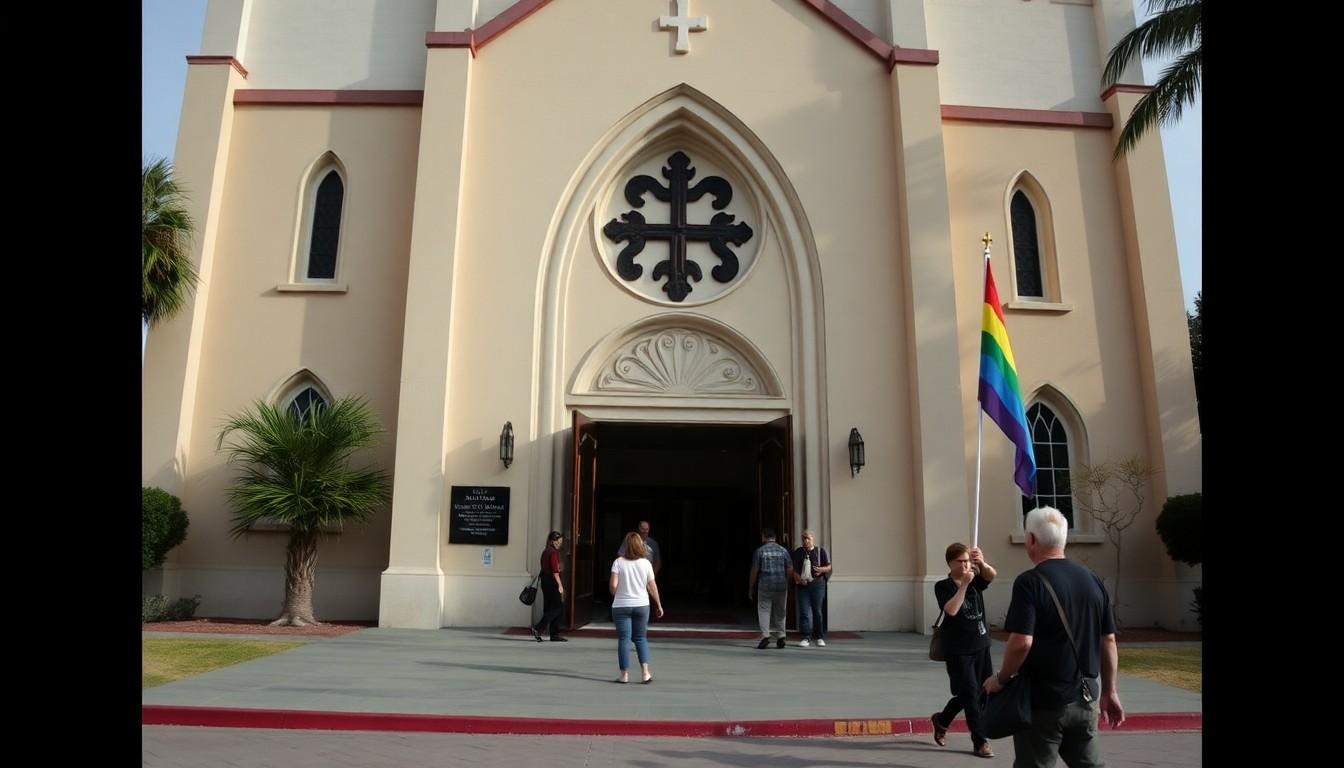
A San Diego welcome Mass and Pope Leo XIV’s first US bishop appointment have become tangled in a heated online debate. But the events involved different bishops, and the available reporting offers a more careful picture than the headline suggests. Here’s what happened in Detroit, San Diego and the case involving Father Carlos Martins.
Essential Takeaways
- Detroit dismissals: Sacred Heart Major Seminary dismissed theologians Ralph Martin and Eduardo Echeverria, and canon lawyer Edward Peters, in 2025.
- Different San Diego bishops: Auxiliary Bishop Ramón Bejarano celebrated an annual Mass welcoming LGBTQ+ community members; Michael Pham was Pope Leo XIV’s first US bishop appointment.
- A narrower court outcome: Criminal misdemeanor charges against Father Carlos Martins were dismissed, but that does not settle every claim made about him.
- Distinct disputes: The reporting describes disagreements over seminary governance, pastoral outreach and church leadership, not proof of a single wider crisis or formal doctrinal change.
The headline links events that need separating
The San Diego Mass was an annual welcome service, while Pope Leo XIV’s first US bishop appointment was Michael Pham. The distinction matters: the available reports do not say Pham approved or celebrated the Mass.
The Southern Cross, the Diocese of San Diego’s newspaper, reported that Auxiliary Bishop Ramón Bejarano celebrated the liturgy at St John the Evangelist Church on 13 July 2025. It described the gathering as pastoral outreach, with Bejarano encouraging Catholics to listen to and accompany LGBTQ+ people.
That account doesn’t make the debate disappear, but it does clarify what the diocese said the Mass was for. A welcome service and a change to church teaching aren’t interchangeable claims.
What happened to the Detroit seminary scholars?
Three long-serving Sacred Heart Major Seminary faculty members were dismissed in 2025: theologians Ralph Martin and Eduardo Echeverria, and canon lawyer Edward Peters. NCR reported that the scholars had publicly criticised Pope Francis on issues including moral reasoning, marriage and the death penalty.
Martin said Archbishop Edward Weisenburger cited concerns about his theological perspectives. The National Catholic Register reported that the reasons given to the other two men were not publicly stated, and outlined a faculty member’s concerns about governance and academic freedom.
There’s institutional context, too. The National Catholic Register noted that canon law gives the local bishop authority over his diocesan seminary. That doesn’t resolve the dispute over the dismissals, but it helps explain why the episode has raised questions about both oversight and academic freedom.
A bishop’s appointment is not the same as a Mass
KPBS reported that Pope Leo XIV named Michael Pham bishop of the Diocese of San Diego on 22 May 2025. It was Leo’s first appointment of a US bishop; Pham was already serving in the diocese and welcomed the chance to remain there.
Pham and Bejarano are separate people, with separate roles in the stories. The Southern Cross identifies Bejarano as the bishop who celebrated the July welcome Mass. Keeping those details straight makes it easier to assess headlines that place the appointment and the Mass side by side.
Them also covered the San Diego event and related discussion of LGBTQ+ inclusion in the Church. Its account places the Mass within wider debates about pastoral outreach and doctrine, rather than presenting it as evidence of a formal change in teaching.
What Father Carlos Martins’s case does, and doesn’t, show
EWTN News reported that misdemeanor charges against Father Carlos Martins were dismissed after an incident at a parish in Joliet, Illinois, in 2024. The report cited a statement from his legal representatives saying he had been cleared of the charges.
That is a meaningful outcome in that particular criminal case. But it doesn’t establish that every allegation made about Martins was false, or prove broader claims about media bias. A court result has a defined scope; wider conclusions need evidence of their own.
Read the claims with the details in view
Across these stories, the sharper distinctions are also the most useful: a dismissal is not, by itself, proof of every interpretation attached to it; a welcome Mass is not automatically a doctrinal change; and Leo’s first US bishop appointment wasn’t the appointment of the bishop who celebrated that Mass.
In a debate charged with strong language, checking who did what, and what each report actually establishes, is a sensible place to start.
Keep the people, events and claims distinct before drawing a wider conclusion.
Source Reference Map
Story idea inspired by: [1]
Sources by paragraph: