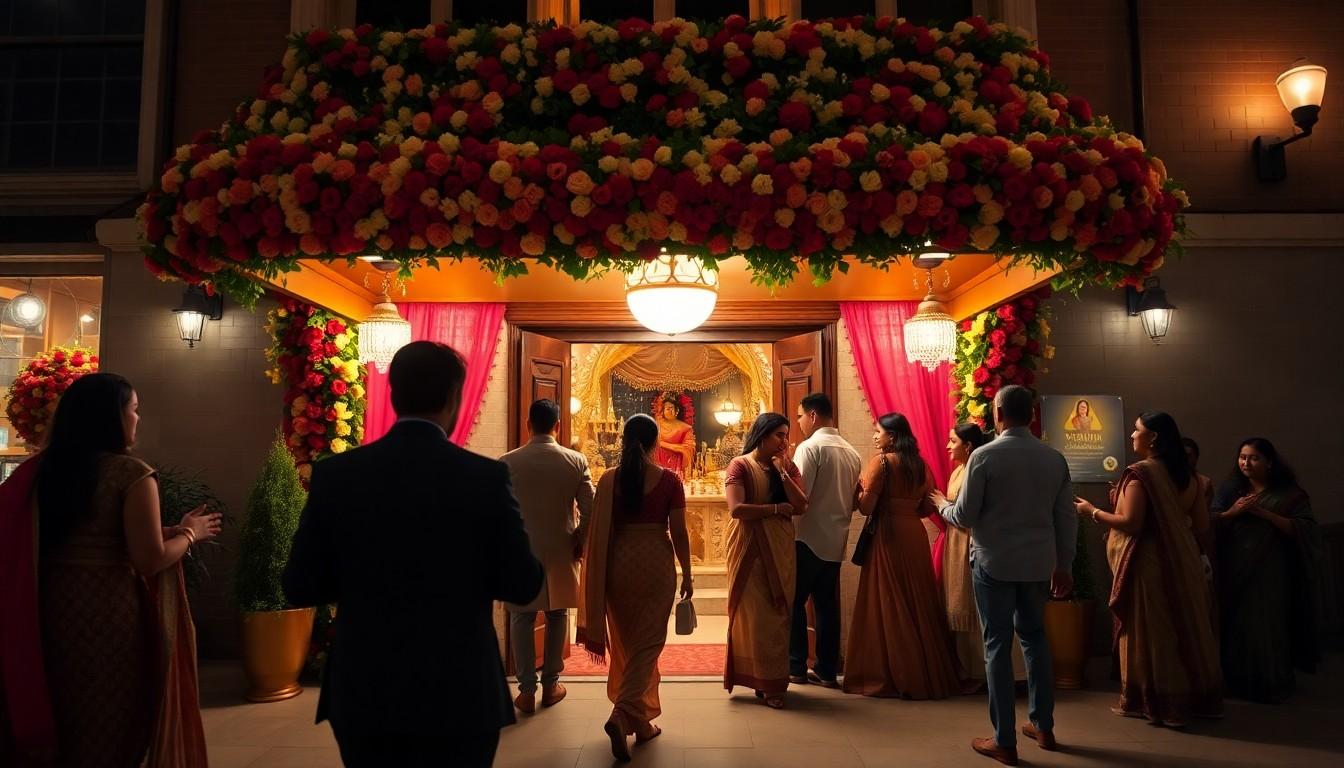
A Brooklyn celebration is showing how a queer Diwali ball can make room for culture, faith and LGBTQ+ identity at once. More than 200 guests gathered for Desi Rainbow’s annual event, where drag, Bollywood music and bright South Asian formalwear shared the floor with children, parents and grandparents.
Essential Takeaways
- A lively gathering: More than 200 people attended the fourth annual Queer Diwali Ball in Brooklyn.
- A community fundraiser: The event raised about $35,000 for Desi Rainbow, which supports LGBTQ+ South Asians and their families.
- Culture without concealment: Guests celebrated Diwali with drag performances, Bollywood music and the “Rang Mahal” theme, meaning “Palace of Colors”.
- Support beyond the dance floor: Desi Rainbow offers support groups and peer support for LGBTQ+ South Asians and their relatives.
In Brooklyn, Diwali came with jasmine and sequins
Tea lights, marigolds and the scent of fresh jasmine set the scene at the Queer Diwali Ball, where guests in saris, lehengas and kurtas danced alongside drag performers. Religion News Service reported that more than 200 people of different ages, faiths and sexualities came together for the fourth annual event.
The ball offered a vivid answer to a familiar tension: people shouldn’t have to hide who they are to celebrate the traditions they love. Same-sex couples danced together, non-binary guests wore colourful South Asian formalwear, and the crowd cheered as performers took to the floor in lehengas and gold jewellery.
A family support group grew into a bigger community
The gathering grew out of a need for support. Religion News Service reports that Aruna Rao began a group for South Asian families after her son came out as transgender, finding little help available for parents navigating identity, culture and stigma.
That group developed into Desi Rainbow, a nonprofit supporting LGBTQ+ South Asians and their families. Its own website describes ongoing support groups, family resources and one-to-one peer support, putting the annual ball in the context of work that continues well beyond one evening.
The party had a purpose, too
The “Rang Mahal” theme means “Palace of Colors”, and the event brought that idea to life with drag, Bollywood music, vendors and a market atmosphere. The Brooklyn Pride Center listing describes the ball as a fundraiser for Desi Rainbow, while the event campaign recorded $35,183 raised from 209 supporters.
The money matters because the celebration is also a gathering place for people who may feel isolated in other settings. Religion News Service reports that some LGBTQ+ Hindus and their families find it difficult to celebrate in religious spaces where their identities are not openly welcomed. Here, the dancing and glitter made room for a different kind of welcome.
Parents and allies found room to show up
For some parents, support means learning how to talk about identity across generations and languages. Religion News Service reports that Fahmida Rashid turned to Desi Rainbow after her children came out, and now offers support to queer South Asians whose families have cut them off.
Others came as allies. Tina Jacob Sandhu attended with her mother, Gita, who had travelled from India; the two wanted to show support for LGBTQ+ friends and relatives. That mix of generations and relationships is part of what makes the ball feel less like a niche night out and more like a family celebration.
Why events like this resonate
Desi Rainbow’s event page presents the ball as both a cultural celebration and a fundraiser for support, education and advocacy. The organisation also lists regular programmes for LGBTQ+ South Asians, parents and relatives, including peer support through its Saathi programme.
And that balance is the point. A festive evening can be joyful in its own right, while also giving families a place to meet, learn and feel less alone. Sometimes belonging starts with something as simple as being welcomed onto the dance floor.
A little colour, a shared song and an open door can make a powerful combination.
Source Reference Map
Story idea inspired by: [1]
Sources by paragraph: