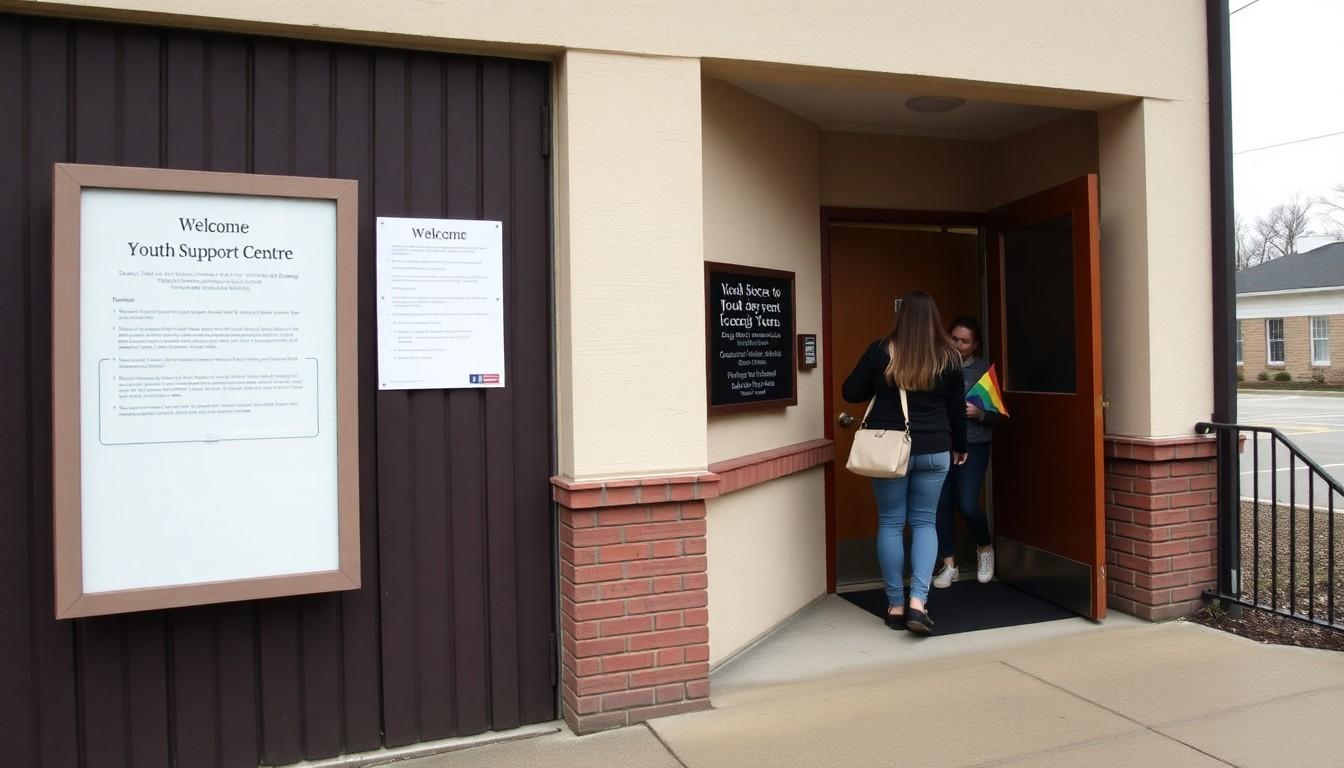
A proposed Pennsylvania bill would expand crisis support for LGBTQ+ young people facing family rejection and housing insecurity. Ciora Thomas, a Pittsburgh advocate who experienced homelessness as a teenager, wants the plan to combine emergency housing, a round-the-clock crisis line and school training. The proposal puts a spotlight on a problem that can be hidden behind a friend’s sofa or a relative’s spare room.
Essential Takeaways
- A three-part support plan: The proposed Protecting LGBTQIA+ Youth from Homelessness Act would provide emergency housing and crisis services, create a 24-hour crisis line and train school staff.
- Housing insecurity can be invisible: Young people may stay with friends or relatives, or leave home because they don’t feel safe.
- Trans and non-binary young people face heightened risks: Research cited by the CDC and The Trevor Project finds higher rates of housing instability and homelessness.
- Affirming help matters: Support from schools, families and service providers can help young people reach appropriate resources.
A bill shaped by one advocate’s experience
A sofa at a friend’s home may look like a safe landing spot, but it can also be a sign that a young person has nowhere stable to stay. Ciora Thomas, founder and executive director of SisTers PGH, says she was pushed out of her childhood home in Pittsburgh as a teenager for being trans. She now wants Pennsylvania to do more for LGBTQ+ young people facing rejection and homelessness.
SisTers PGH works in Pittsburgh and Allegheny County, offering support to transgender and gender-nonconforming people of colour. The organisation’s leadership page describes services including housing-related assistance and a youth collective, alongside advocacy for social and economic justice.
Thomas’s proposal, the Protecting LGBTQIA+ Youth from Homelessness Act, would combine emergency housing and crisis services with a 24-hour line connecting young people to local services and welfare agencies. It would also require school staff training on identifying family rejection and housing instability, and on connecting students with available support.
Why LGBTQ+ youth housing insecurity can go unseen
Homelessness doesn’t always mean sleeping on a pavement or in a shelter. The Trevor Project’s research says housing instability can include staying with friends or relatives, or not having a consistent place to sleep. That makes the problem easy to miss, especially when a young person has somewhere temporary to go.
Family conflict and rejection can play a part in young people leaving home or being forced out. The National Low Income Housing Coalition reports that up to 40% of young people experiencing homelessness identify as LGBTQ+, while The Trevor Project’s research brief links housing instability among LGBTQ+ young people with family conflict about sexual orientation or gender identity.
The risks can extend beyond losing a stable home. The National Low Income Housing Coalition says LGBTQ+ young people experiencing homelessness are more likely than cisgender and heterosexual peers to face physical or sexual assault. Polaris Project also explains how unmet needs and a lack of safe relationships can leave young people vulnerable to exploitation.
Research points to greater risk for trans young people
The CDC’s 2024 report on the 2023 Youth Risk Behaviour Survey found that 10.7% of transgender students reported unstable housing in the previous 30 days, compared with 2.1% of cisgender boys and 1.8% of cisgender girls. The report also describes stigma, discrimination, family rejection and violence as possible pressures, and notes that harassment in shelters or foster care can create further barriers to finding safety.
A 2025 Trevor Project research brief found that transgender and non-binary young people had 73% greater odds of having ever experienced homelessness than cisgender lesbian, gay and bisexual young people. The report also links economic insecurity with poorer mental-health outcomes, while cautioning that these findings show associations rather than proving that housing insecurity alone causes them.
Those figures underline why a safe place to sleep is only part of the picture. A young person needs support that recognises their identity and circumstances, rather than sending them into a service where they may face further rejection.
What Pennsylvania’s proposal would change
Thomas’s proposal would also criminalise forced homelessness due to family rejection and require parental education about LGBTQ+ rejection. The lead report says Thomas argues that existing Pennsylvania laws should already protect minors from being abandoned, but that such cases are not often treated as crimes.
The bill would place schools among the potential points of connection for young people who need help. That approach fits with the CDC report’s emphasis on supportive school environments, links to services and staff development on supporting LGBTQ+ students.
For families, Thomas is calling for both support and accountability. The lead report says she wants families to have access to mandatory counselling on LGBTQ+ inclusion, while also arguing for consequences if rejection continues or is severe.
Practical support needs to be affirming
For adults who are worried about a young person, the first useful step is to listen without dismissing what they say about home. The Trevor Project’s research highlights the importance of supportive adults and affirming services, while Polaris Project points to the value of connecting young people with appropriate help when housing insecurity or exploitation is a concern.
Service providers matter, too. The National Low Income Housing Coalition recommends welcoming, culturally competent staff, affirming services, mental-health support and resources tailored to LGBTQ+ young people. A temporary bed is important, but feeling safe enough to ask for help is part of the support as well.
SisTers PGH’s leadership page describes the organisation’s housing and youth-support work in Pittsburgh and Allegheny County. Thomas’s wider proposal asks lawmakers to build a broader response across Pennsylvania, so young people aren’t left relying on chance or a single local service.
Closing Line
For Thomas, the message is clear: young people need both a safe place to turn and a system ready to protect them.
Source Reference Map
Story idea inspired by: [1]
Sources by paragraph:
- Paragraph 1: Lead article only
- Paragraph 2: [7]
- Paragraph 3: Lead article only
- Paragraph 4: [2]
- Paragraph 5: [5], [2]
- Paragraph 6: [5], [6]
- Paragraph 7: [3]
- Paragraph 8: [4]
- Paragraph 9: [3]
- Paragraph 10: Lead article only
- Paragraph 11: [3]
- Paragraph 12: Lead article only
- Paragraph 13: [2], [6]
- Paragraph 14: [5]
- Paragraph 15: [7], Lead article only
- Paragraph 16: Lead article only